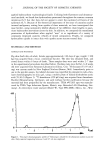
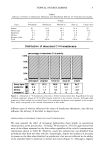
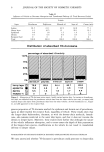
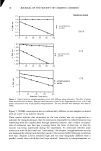
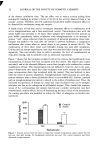
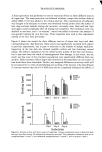
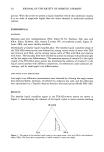
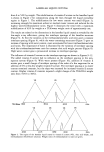
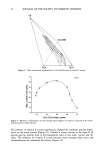
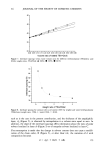
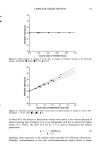
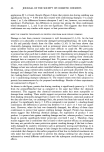
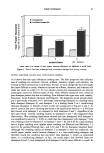
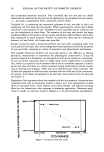
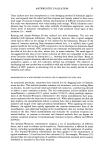
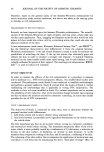
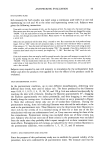
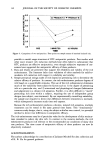
18 JOURNAL OF THE SOCIETY OF COSMETIC CHEMISTS 1.5 1.4 1.3 1.2 1.1 1.0 0.9 I I I ' I ß 0 20 40 60 80 I00 • AAHistamine AA Ref Relative Rate 100% 1.40 .38 1.36 1.34 1.32 .30 .28 [] AA Putresc•ne ß AA Ref 20 4O 60 80 I00 21% 1.3 1,2 o 1.0 [] &A Hydroxylamine ß z•, Ref 17% I I I 0 20 40 60 80 Reaction Time (min) Figure 3. Optical assay for transglutaminase activity with different amine substrates. The effect of amine donor on reaction rate is shown. Reaction conditions were as listed in the Experimental section, with 2 mM amine concentration and 10 }xl purified transglutaminase. The rate obtained with histamine was taken as 100%. Figure 5. NADH consumption was not substantially different in hair samples incubated with an active or an inactive enzyme. These results indicate that glutamine on the hair surface was not recognized as a substrate for transglutaminase, that the interaction responsible for colloid formation was interfering with the coupled assay through ammonia removal, that covalent incorpora- tion of cadaverine into hair was occurring below the limit of detection, or that the enzyme was being inactivated during the experiment. To determine whether some interaction with the hair itself was "inactivating" the enzyme, transglutaminase activity was reassayed by adding back dimethyl casein to the reaction buffer following incubation with hair, Enzyme activity remained high and was only marginally different from a parallel control from which hair had been omitted. Inasmuch as transglutaminase re-

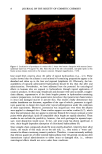
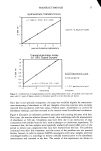
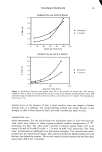
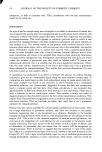
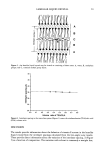
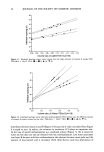
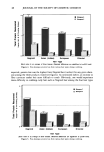
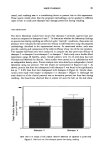
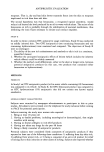
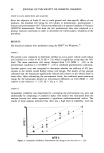
TRANSGLUTAMINASE 19 1.7 1.6 c 1.5 1.4 1.3 1.2 Cadaverine as Amine Donor I I I I 0 I 0 20 40 60 8 1 O0 120 Reaction Time (min) m No Enzyme ß + Enzyme Histamine as Amine Donor 2.4 2.2 E 2.0 o 1.8 I•i No Enzyme • ß + Enzyme 1.6 1.4 0 100 200 Reaction Time (min) Figure 4. Interference observed with optical assay due to the presence of human hair. The reaction conditions were as listed in the Experimental section, using 10 pJ purified transglutaminase and 2 mM cadaverine (top) or histamine (bottom). Hair was used at a concentration of 12.5 mg/ml. The total reaction volume was 2 ml. mained active in the presence of hair, a more sensitive assay was sought to further evaluate hair as a substrate. An isotope-labeling method was chosen because it was thought to offer a lower detection limit and make interferences easier to trace. RADIOISOTOPE ASSAY Initial measurements. For the initial study two incubation times (2- and 4-hr) and two rinse times were chosen to assess enzyme-catalyzed covalent incorporation of •4C- putrescine into hair. The "short rinse" involved 15-minute stirred rinses (x3) in an excess (250 ml) of 50 mM Tris (pH = 7.5) with 10 mM "cold" putrescine. The "long rinse" incorporated an additional rinse that lasted overnight. Two controls were incor- porated into the experimental design. One control included the labeled putrescine with the hair, but lacked the enzyme. The second control included enzyme that had been heat inactivated (100øC for 5 minutes).
Purchased for the exclusive use of nofirst nolast (unknown)
From: SCC Media Library & Resource Center (library.scconline.org)