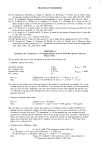
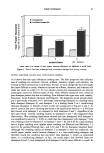
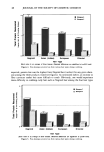
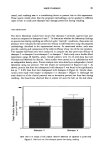
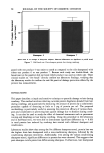
28 JOURNAL OF THE SOCIETY OF COSMETIC CHEMISTS A) 50E-06 Ci x 1E-03 mol/l15E-03 Ci = 4.3E-07 mol [•4C] B) 4.3E-07 mol/2E-03L = 2.1E-04 M stock [14C] (diluted 1:10 for incubations) C) 2.1E-05 mol/L X 10E-061/3.74E05 cpm = 5.7E-16 = 0.6 fmol/cpm 4. Estimation of isotope binding (cpm) expected on hair, where the following assumptions were made: a) counting efficiency was the same, i.e., ref. 43 cpm = 0.67 dpm b) putrescine and spermidine have the same relative affinity c) the glutamine active site/unit area was the same on hair, but a 1:2 ratio of surface areas was actually used in incubations d) our greater concentration of enzyme allowed complete reaction with hair during incubation and e) 7500 dpm would have been observed from a complete reaction with the sperm surface. A) 7500 dpm x 0.67 x V2 x 7.5 fmol/cm = 19,000 fmol [•4C]-spermidine bound to sperm B) 19,000 fmol X cpm/0.6 fmol = 32,000 cpm for same amount of [•4C]-putrescine bound to hair Thus, based on the assumptions listed above, approximately 32,000 counts per minute were expected for complete reaction of all available glutamine sites on the hair surface.

j. Soc. Cosmet. Chem., 46, 29-38 (January/February 1995) $olubilization of vitamin E acetate in a lameliar liquid crystal GUO RONG, STIG E. FRIBERG, and ANDRe-JEAN BRIN, Center for Advanced Materials Processing and Department of Chemistry, Clarkson University, Potsd•am, NY 13699-5814 (G.R., S.E.F.), and Laboratoires Dr. N. G. Payot, 7 Boulevard d'Osny-Cergy St. Christophe, F-95808 Cergy Pontoise, France (A.-J.B.) Received November 3, 1994. Synopsis Vitamin E acetate was solubilized into a lamellar liquid crystal formed by water and triethanol/oleic acid in a 35/65 weight ratio, and the geometrical dimensions of the lamellar liquid crystal were determined using low-angle x-ray diffraction. The solubilization was huge, with maximum values reaching 63% by weight. The presence of the vitamin E acetate did not change the dimension of the amphiphilic layer of the liquid crystal, but strongly reduced the water penetration into the amphiphilic layer at small solubilization levels. INTRODUCTION Vitamin E has a significant interest for cosmetic formulations due to its anti-oxidative action. It is well known that the UV radiation from the solar spectrum damages the skin by forming free radicals (1), highly reactive molecules causing lasting damage to the skin structure by lipid peroxidation and oxidative modification of proteins and DNA. The observation that skin cancer is one of the most frequent forms of human cancers (2) is an excellent illustration of the perils related to sun radiation exposure. Vitamin E absorbs UV radiation (3), also forming radicals but of a less-reactive kind: the vitamin structure stabilizes the unpaired electron structure, and the radical molecule is comparably harmless to the skin. Unfortunately, the epidermis contains lower concen- trations of vitamin E than most other tissues in the human body, and it is essential to find a suitable vehicle to enhance and replenish the vitamin lost by UV-radiation exposure. Vitamin E itself is an oil, and its direct application is far from satisfactory from a cosmetic point of view, because of its tackiness and oily appearance. This problem is also experienced for products in which the vitamin is emulsified in water to more than a few 29
Purchased for the exclusive use of nofirst nolast (unknown)
From: SCC Media Library & Resource Center (library.scconline.org)