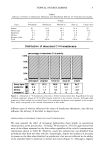
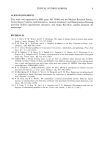
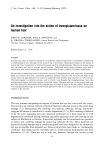
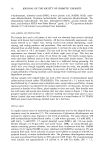
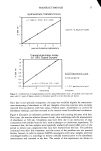
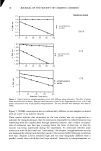
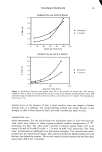
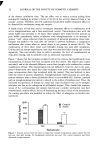
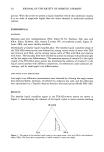
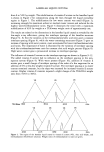
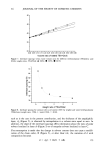
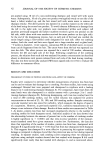
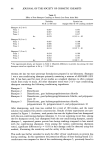
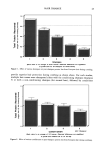
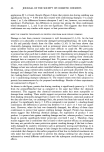
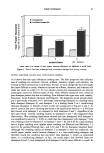
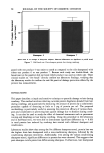
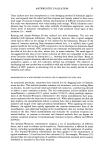
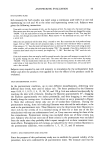
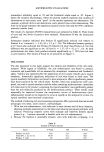
TOPICAL HYDROCARBONS 5 Table I Influence of Vehicle on Hexadecane Absorption and Transdermal Delivery (% Total Recovered Label) Vehicle Layer Petrolatum Polydecene Mineral oil Soya oil Cream (w/o) Surface 83 64.2 58.3 56.4 56 Horny layer 16.3 34.8 40.4 41.8 41.6 Epidermis 0.4 0.4 0.5 1.0 1.2 Dermis 0.3 0.6 0.8 0.8 1.1 Receptor fluid 0 0 0 0 0 Total 100.0 100.0 100.0 100.0 99.9 Distribution of absorbed C1 4-hexadecane lOO% 75% 50% 25% 0% percentage of absorbed C14-activity petrolatum polydec. miner. oil soya oil cream horny layer epidermis ß 2,2 dermis F• 1 receptor fl. I=1=1 o 97,2 1,1 1,7 o g•i,8 1,3 1,9 o 95,9 2,4 1,7 o 94,7 2,7 2,•I o Figure 2. Absorption of •4C-hexadecane across intact, freshly excised porcine skin. Regardless of the type of vehicle employed, almost all of the label remains restricted to the stratum corneum. Although small quantities of label reached the nucleated layers of the epidermis and dermis, none appeared in the receptor fluid, which corresponds to the vascular compartment in this model. different types of vehicles influenced the extent of hexadecane absorption, they did not influence the delivery of the label to deeper layers. PENETRATION OF DOCOSANE THROUGH INTACT PORCINE SKIN We next assessed the effect of increasing hydrocarbon chain length on penetration characteristics across porcine skin. Utilizing 3H-docosane (C 24:0) we again found that most of the alkane remained on the skin surface regardless of the vehicle (representative experiments shown in Table II). However, much less radioactivity was absorbed from petrolatum than from the other vehicles. Surprisingly, despite the tendency of docosane to remain on the skin when dissolved in petrolatum, this was not reflected in the ability of the absorbed label to penetrate to deeper skin layers (Figure 3). Although a slightly

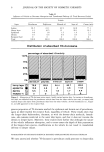
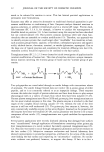
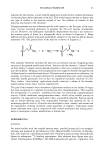
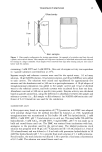
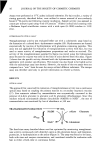
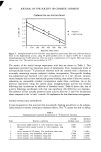
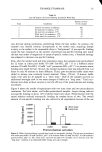
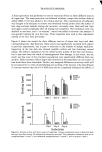
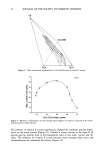
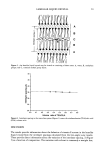
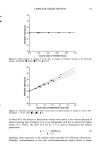
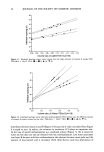
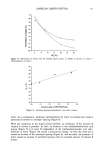
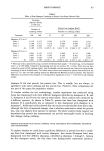
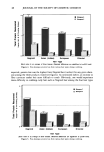
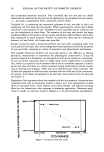
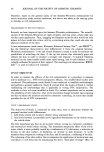
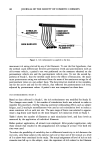
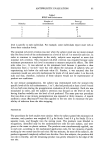
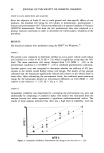
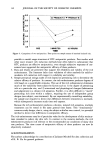
6 JOURNAL OF THE SOCIETY OF COSMETIC CHEMISTS Table II Influence of Vehicle on Docosane Absorption and Transdermal Delivery (% Total Recovered Label) Vehicle Layer Petrolatum Polydecene Mineral oil Soya oil Cream (w/o) Surface 94.5 61.1 62.9 69.8 77.1 Horny layer 4.3 36.5 35 28.3 19.2 Epidermis 0.9 1.8 1.5 1.4 2.7 Dermis 0.3 0.6 0.6 0.5 1.0 Receptor fluid 0 0 0 0 0 Total 100.0 100.0 100.0 100.0 100.0 Distribution of absorbed H3-docosane percentage of absorbed H3-activity 100% 75% 50% 25% O% petrolatum polydec. miner. oil soya oil cream horny layer [7• I 78,9 epidermis ß 15,6 dermis I• 5,5 receptor fl. [• 0 93,9 4,6 1,5 0 94,4 4 1,6 0 93,7 4,6 1,7 0 83,8 11,8 4,4 0 Figure 3. Absorption of 3H-docosane across intact, freshly excised porcine skin. In contrast to hexadecane, less label was absorbed from the petrolatum vehicle than from the other vehicles (see text), yet more label reached deeper skin layers from petrolatum than from the other vehicles. As with hexadecane (cf., Figure 2), no label appeared in the receptor fluid. greater proportion of 3H-docosane reached the epidermis and dermis out of petrolatum, again no label reached the receptor fluid, regardless of vehicle. These results show that the longer-chain hydrocarbon, docosane, as with the shorter-chain molecule, hexade- cane, also remains restricted to the outer skin layers, and that it does not traverse the dermis to deeper layers. Moreover, these studies show further that although the nature of the vehicle influences absorption, and to some extent the depth of skin penetration of the longer-chain species, modifications in the vehicle do not result in transdermal delivery to deeper tissues. PENETRATION OF DOCOSANE THROUGH DAMAGED HAIRLESS MOUSE STRATUM CORNEUM We next ascertained whether 3H-docosane in petrolatum could penetrate to deeper skin
Purchased for the exclusive use of nofirst nolast (unknown)
From: SCC Media Library & Resource Center (library.scconline.org)