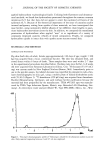
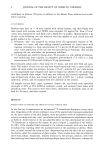
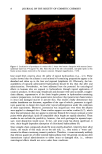
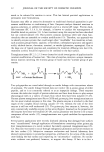
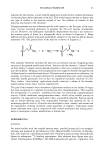
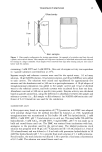
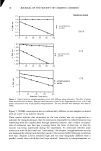
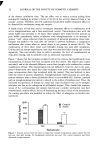
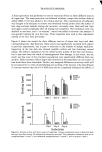
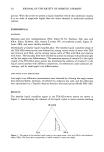
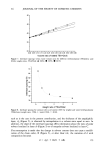
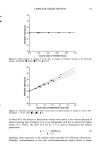
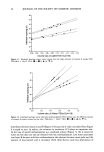
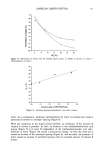
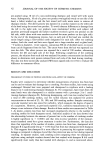
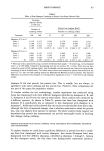
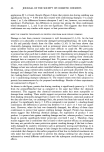
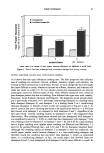
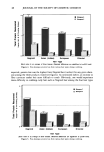
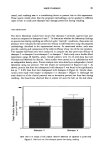
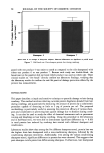
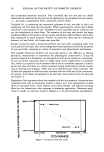
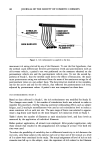
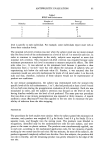
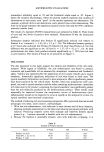
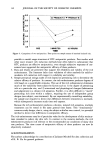
60 JOURNAL OF THE SOCIETY OF COSMETIC CHEMISTS STIMULUS SKIN SURFACE II}111 ///// I DOWNWARD •_•_•_•.• ROUND-ENDED•-• •1•• FILAMENTS Figure 2. Itch esthesiometer as applied to the skin. maximum itch rating elicited by any of the filaments. To test the first hypothesis, that the method could differentiate between pretreatment levels and posttreatment with an oil-in-water vehicle, a paired t-test was performed on the measures obtained on the pretreatment vehicle site and the posttreatment vehicle sites. To test the second hy- pothesis of Study I, that the method could detect the effects of benzocaine, the maxi- mum pretreatment rating was subtracted from the mean of the maximum ratings for all posttreatment times on a per-subject basis. The data reduction resulted in two variables, one for the active and one for the vehicle, that reflected the posttreatment itch level, adjusted by pretreatment values. A paired t-test was computed on these data. ITCH ESTHESIOMETER: STUDY II Based on data collected in Study I, the itch esthesiometer was modified for Study II. Two changes were made: 1) the number of stimulation levels was reduced in order to expedite the procedure, thereby reducing potential confounding effects such as subject fatigue, and 2) multiple monofilaments were used at each stimulation level to induce a more consistent itch at each test site. The new range of forces was selected to approx- imate a log-linear scale based on the most frequent itch induction levels in Study I. Table I shows the number of filaments at each stimulation level, and force levels as measured by the application of individual filaments. Before product application, all stimuli were employed. After product application, only those stimuli that resulted in the preapplication itch ratings of at least 3 for both test sites were used. To reduce the possibility of variability due to differential sensitivity to itch between the test sites, only those subjects who rated at each site at least one of the stimuli at a level of 3 or above were continued in the study. The actual assignment of level of itch to itch stimulus was left up to the subject, since the experience of itch related to the filament

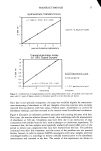
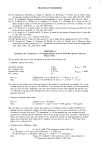
ANTIPRURITIC EVALUATION 61 Table I WEST-itch Esthesiometer Number of Force (g) Stimulus monofilaments each monofilament 5 4 60 4 6 20 3 8 4 2 10 1 1 12 0.25 level is specific to each individual. For example, some individuals report more itch at lower-force stimulus levels. The minimal itch-level criterion was met when the subject rated one (or more) stimuli (the five force levels of the esthesiometer) at a level of itch of 3 or more for each site. In order to continue to completion in the study, subjects were required to meet this minimal itch criterion. This minimal itch-level criterion was required because some minimum pretreatment itch level is necessary to measure antipruritic effects. The 30% scale value (i.e., 3) was selected as the minimum level because it provides a clear distinction from a "no-itch" state but still allows the inclusion of subjects who are experiencing itch below the mid-scale value (5). Further, it was assumed that few consumers would use anti-itch medications for levels of itch rated under 3 on the itch scale and that, therefore, inclusion of these subjects would not be representative of product-use conditions. At one minute postapplication, the subject was restimulated with the stimuli (the specific levels of the itch esthesiometer, ! to 5, that had produced at least a level-3-rated itch on both sites during the preapplication evaluation of itch intensity). Each site was stimulated in order, and the subject's attention was focused on the level of itch by having him/her verbally rate the level of itch produced. The same post-test procedure that was done at one minute postapplication was repeated at thirty minutes. A topical antibiotic cream (Bacitracin ©) was then applied to the test sites to minimize the pos- sibility of infection from the skin stripping. PROCEDURE The procedures for both studies were similar. After the subject passed the minimal-itch criterion, each product was weighed (0.2 g for Study I and 0.4 g for Study II) in a separate room, and brought into the testing room. The products were blinded to recognition, identified only by the randomized-site code for each subject, and were given to the tester on plastic mittens. The products were simultaneously applied, one to each site, according to the randomized application code, for two minutes of gentle stroking by two testers (one for each site). By two minutes, for most of the subjects, the products appeared completely rubbed into the skin. For a few subjects, the products did not rub in entirely, and the remaining product was gently relocated to the edge of the test site.
Purchased for the exclusive use of nofirst nolast (unknown)
From: SCC Media Library & Resource Center (library.scconline.org)