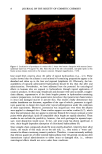
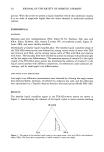
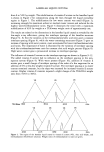
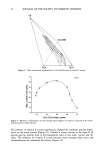
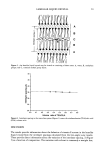
TOPICAL HYDROCARBONS 3 rington, PA) was used to measure transepidermal water loss (TEWL) (8). Chloral hydrate (Rugby Laboratories, Inc., Rockville Center, NY) was utilized for anesthesia of mice by intraperitoneal injection (0.4 mg/g body weight). Acetone, propylene glycol, petroleum ether, and Scintisafe 30% scintillation cocktail were purchased from Fisher Scientific (Pittsburgh, PA). Vaseline © petroleum jelly was from Chesebrough-Ponds (Trumbull, CT). Petrolatum "WITCO," polydecene "Nexbase 2006 FG," mineral oil "USP," soya oil, and w/o cream were laboratory samples from Beiersdorf AG. Liquid scintillation counting was performed on liquid scintillation spectrometers (models LS3801 and LS1800 Beckman Instruments, Houston, TX). Hionic Fluor scintillation cocktail and Solvene 350 tissue solubilizer were acquired from Packard Instruments (Downers Grove, IL). FLUORESCENCE MICROSCOPY Skin biopsies of petrolatum-treated areas from hairless mice were collected, snap-frozen in liquid nitrogen, sectioned at 4 •m, and stained with nile red to show the distribution of topical "neat" petrolatum 2-4 hours after application to full-thickness skin (7). All frozen sections were viewed in a Leitz Ortholux II microscope equipped for epifluores- cence (Leica, Inc., Deerfield, IL). IN VITRO MODEL Pig skin was prepared for penetration studies by scraping away the subdermal fat, gently dry-shaving the outer stratum corneum surface, cutting the skin into 5-cm-diameter discs (thickness •3-4 ram), and freezing at -70øC until needed. Immediately prior to percutaneous transport experiments, the skin discs were thawed, mounted in glass penetration cells (Frantz design, custom made in Hamburg, Germany) at 32øC (skin temperature), and filled with 0.9 M sodium chloride with 1% bovine serum albumen. Test mixtures of petrolatum "WITCO," polydecene "Nexbase 2006FG," mineral oil "USP," soya oil, and a bland cosmetic w/o cream were combined with either 40 ng 3H-docosane in 3 mg of the test mixture/cm 2, or 200 ng •4C-hexadecane in 5 mg of the test mixture/cm 2. Mixtures were applied topically to intact skin discs, incubated for 24 hours, and then harvested as the following skin fractions for liquid scintillation count- ing: a) Skin surface--gently scraped with a spatula and/or three-fold wiping with cotton wool b) Stratum corneum--about 15-20 strippings with "TESA" tape until reaching a "shiny" surface, indicative of removal of the bulk of the stratum corneum c) Epidermal nucleated layers--full-thickness skin discs applied epidermis-side-downward on an 80øC hot plate for 45 seconds, followed by separation of epidermis and dermis with forceps, after prior tape stripping. d) Dermis--the application area (25-mm diameter) cut out of heat-split, whole dermis [see (c) above] e) Receptor fluid--two aliquots taken at the end of each 24-hour incubation. Receptor fluid, surface swabs, and tape strippings with attached stratum corneum were placed in Hionic Fluor and counted directly. Epidermis and dermis samples first were

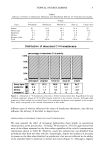
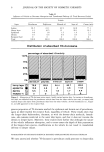
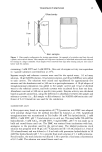
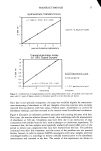
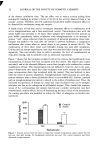
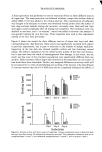
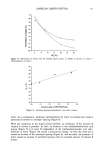
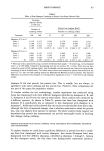
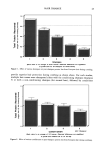
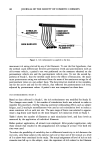
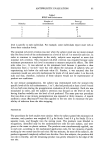
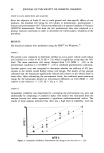
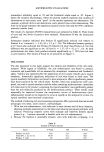
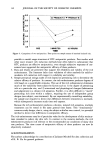
4 JOURNAL OF THE SOCIETY OF COSMETIC CHEMISTS solubilized in Solvene 350 prior to addition to the Hionic Fluor solution and scintil- lation counting. IN VIVO MODEL Hairless male mice (n = 4) were sedated with chloral hydrate, and their flanks were then wiped with acetone until TEWL rates exceeded 2.0 mg/cm2/hr. Four 0.5-cm 2 circles were delineated on each flank with a black felt tip marker. Approximately 3 •1 of each of the following two test solutions was then applied to each circled area and gently rubbed in for 1 minute: 1) Petrolatum "neat" was prepared by drying down the appropriate amount of 3H- docosane in a tube, and then adding warmed petrolatum (in liquid state) with vigorous vortexing to a final concentration of 5.4 p•ci/ml (0.06 •ci/10 •g petrola- tum). Each application of the test mix was preceded by re-warming, then quickly applying the test mix before the petrolatum solidified. 2) 1% petrolatum was made by drying down 3H-docosane in a vial, adding petrolatum, and solubilizing both together in propylene glycol:ethanol (7:3 vols) to a final concentration of 0.08 •ci/•l (0.08 •ci/10 •g petrolatum). Mice remained asleep under a heat lamp for 2V2 hours, and then were bled and sacri- ficed. The surface of each test site was then wiped extensively with a cotton pellet to collect all excess surface test solution. An area 1.25 cm 2, with the 0.5 cm 2 circle within it, was sequentially tape stripped until tape no longer was adherent to the underlying skin layer (usually three strips). Each tape was collected and counted separately. The tape-stripped area of skin was excised and heat split at 60øC for 1 minute, yielding epidermis, dermis, and fat (scraped from the underside of the dermis). All samples (cotton balls, tapes, epidermis, dermis, fat, and blood) were saponified overnight at 50øC in 45% KOH in methanol, cooled, and extracted three times with petroleum ether. The extracts were dried down, redissolved in Scintisafe, kept in the dark for 18 hours, and then counted. RESULTS PENETRATION OF HEXADECANE THROUGH INTACT PORCINE SKIN In the first set of experiments we determined •4C-hexadecane absorption across intact skin. Regardless of the vehicle employed, most of the applied label remained unabsorbed on the outer surface of the skin samples, with the greatest levels of unabsorbed radio- activity occurring with the "neat" petrolatum vehicle (representative experiments shown in Table I). After removal of the non-absorbed label, we then determined the levels of •4C-hexadecane in subjacent skin layers. As seen in Figure 2, regardless of the vehicle, 95-98% of the absorbed label remained in the stratum corneum, with very low levels of radioactivity reaching either the nucleated layers of the epidermis or dermis. More- over, no label reached the receptor fluid, demonstrating that the label did not traverse the dermis under the conditions of these studies. These studies show that the relatively short-chain alkane, hexadecane, remains restricted to the stratum corneum, with little label reaching lower layers and none reaching deeper tissue levels. Moreover, whereas the
Purchased for the exclusive use of nofirst nolast (unknown)
From: SCC Media Library & Resource Center (library.scconline.org)