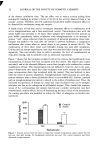
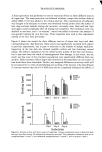
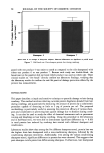
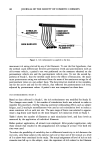
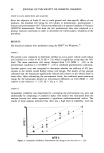
40 JOURNAL OF THE SOCIETY OF COSMETIC CHEMISTS is primarily a proteinaceous material, we hypothesized that measurements of the amount of protein abraded from hair could be used as an index to assess damage caused by abrasive actions. The method involves shaking hair in water (wet abrasion) and quan- titatively measuring, via a colorimetric procedure, the amount of protein abraded/eroded from hair during shaking. During the course of these studies, it was observed that, unless the hair is very badly damaged and totally stripped of cuticle layers, the cuticle is the primary source of protein loss during abrasion (12). We have extended this work to show that protein loss measurements can also be used to quantify hair damage due to combing. We have demonstrated that this technique can also be used to measure hair damage on live heads (half-head tests) from combing. Furthermore, this technique can differentiate the conditioning/protective efficacy of current conditioning shampoos. MATERIALS AND METHODS Caucasian and Oriental Hair fibers used in these studies were commercial samples purchased from DeMeo Brothers, New York. Asian (Indian) and Negroid hair were taken from private individuals. All hair samples used in these studies, with the excep- tion of Negroid hair, were approximately 9-11 inches long the Negroid hair samples were --5.5 to 7 inches in length. Using these hair samples, hair tresses, each weighing 3.0 g (1.0 g for Negroid hair), were prepared for various experiments. Reagents for protein estimation were obtained from Sigma Chemical Company, St. Louis, MO. All other reagents used were of analytical grade. EVALUATION OF POST-SHAMPOO PROTEIN LOSS DURING COMBING Laboratory studies using hair tresses. Laboratory studies to determine protein loss from hair during combing were conducted using a minimum of three tresses for each shampoo treatment as follows: The tresses were wet individually under running tap water (-- 105øF), pre-washed with SLES (20% @ 1 ml per tress, 0.5 ml for Negroid hair) and rinsed extensively for one minute under running tap water to remove any surfactant residue. Each tress was then shampooed individually, with the test product (1 ml per tress, 0.5 ml for Negroid hair) applied uniformly with a syringe, the hair gently rubbed between the fingers and occasionally on the palm of the hand to generate foam for a total of one minute and rinsed extensively for at least one minute to remove any shampoo residue. Finally, each tress was combed gently under running tap water to detangle the hair, and the excess water was squeezed out. To induce protein loss during combing, each tress was combed wet, by hand, using a fine-toothed nylon comb (20-22 teeth per linear inch) @ 50-100 strokes (always the same number of strokes in each test). During combing, the tress was held firmly in one hand and combed with the other hand, using a firm, smooth, vigorous combing action for the entire length of the tress and occa- sionally changing the side of the hair tress being combed. After every five strokes, the comb was dipped into a beaker containing 50 ml of distilled water, and after ten strokes, the tress was also dipped into the same water to recover loose/chipped protein fragments from hair. The water suspension from each tress was then tested for turbidity in a spectrophotometer at 600 nm and for protein concentration as described below. The data was statistically analyzed using an in-house computer program for one-factor analysis of variance (1-way ANOVA) to establish whether the observed differences between treat- ments are significant at 95% confidence level (p = 0.05).

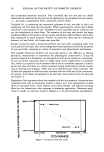
HAIR DAMAGE 41 Estimation of hair protein. Protein concentration in a given solution containing hair pro- tein was determined as previously described (12). This procedure is a modification of the Lowry Method (13), one of the most widely used techniques for protein measurement in biological samples. Briefly, each sample was well shaken by hand, and 1 ml of the turbid liquid was pipetted directly from the beaker and added to a 16 x 125-mm tube containing 0.1 ml of 5N NaOH (for samples suspected to contain protein in high concentration, 0.5 ml of the sample was used and mixed with 0.5 ml of 1 N NaOH). The contents of the tube were mixed well and allowed to sit at room temperature for 30 minutes to solubilize the suspended protein fragments. At the end of the incubation period, 1 ml of alkaline Cu-carbonate solution was added and the samples incubated at room temperature for 20 minutes. At the end of the incubation period, 3 ml of Folin-phenol solution was added to each tube and the sample was vortexed immediately. The samples were further incubated for 40 minutes and the absorbance determined in a spectrophotometer at a wavelength of 750 nm. Protein concentration in each sample was then determined from a standard curve (protein conc. •xg/ml = slope x absorbance - intercept on Y axis this value was then used to calculate the total cuticular protein loss expressed as total protein recovered, mg/g hair) prepared separately using crystalline bovine serum albumin as a standard and assayed under conditions identical to the test samples. A control (water blank) was always run with each assay, and the absorbance value for each test sample was adjusted for the blank. Using this procedure, we were able to determine as little as 5 micrograms of hair protein per ml in a given solution. The sensitivity of the method can, however, be increased to as little as 1 •xg of protein with reasonable precision by certain modifications such as reducing the volumes of sample and reagents and the use of smaller tubes for reaction and microcuvettes for absorbance readings. COMBING STUDIES TO EVALUATE THE PROTECTION EFFICACY OF A SHAMPOO Limited studies were also done to determine the protection efficacy of certain shampoos using the laboratory tress test routinely used for such evaluations. For such studies, hair tresses (three for each product) were pre-washed with a 5 % solution of SLES (1 ml/tress), shampooed with the test product @ 1 ml/tress, rinsed thoroughly with tap water (105øC), and gently combed to remove snags. Wet tresses were then randomly arranged and evaluated by a panel of at least six judges. Judges were asked to rank the tresses for ease of combing from best to worst and also to rate each tress on a scale of 1 (worst) to 10 (best). Tresses were re-wet between evaluations. The data was then statistically analyzed using an in-house computer program of the Friedman test, a nonparametric procedure for multiple comparisons for ranking (14), and one-way ANOVA for rating. HALF-HEAD TESTS Half-head tests provide a side-by-side comparison of the relative efficacy of any two test products under "real-life" conditions. Each half-head test was a double-blind, random- ized block experiment using 40 healthy, adult, female subjects with 16-24-inch-long hair and was carried out as follows: The panelist's hair was wetted with warm water (--105øF, 150 ppm water hardness) and parted down the middle from the forehead to the nape of the neck. To remove any dirt or grease, hair on each side of the head was
Purchased for the exclusive use of nofirst nolast (unknown)
From: SCC Media Library & Resource Center (library.scconline.org)