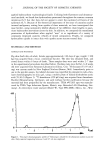
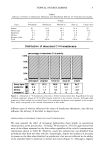
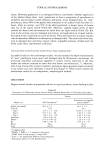
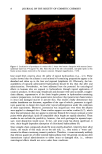
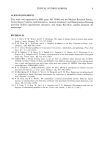
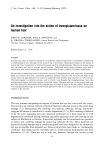
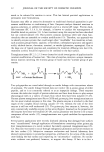
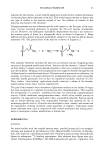
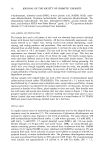
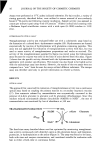
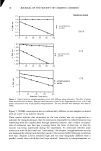
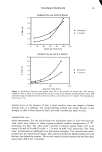
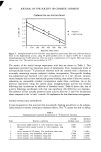
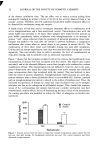
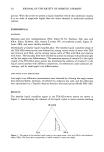
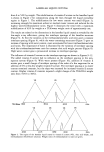
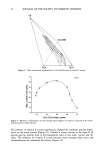
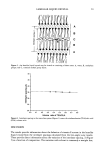
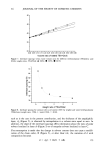
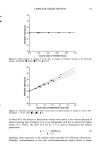
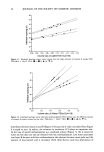
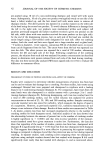
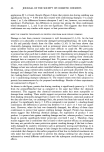
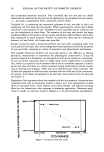
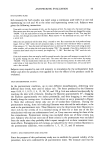
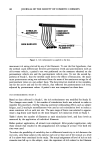
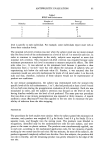
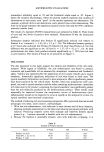
20 JOURNAL OF THE SOCIETY OF COSMETIC CHEMISTS Cadaverine as Amine Donor 1.4 1.3 1.2 1.1 1.0 0.9 0.8 • ß • * ß • ß I ' I ß 0 100 200 300 400 500 600 700 [] + Enzyme © + Inactive Enz. Reaction Time (min) Figure 5. Transglutaminase activity with hair using improved optical assay. Reaction conditions were as listed in the Experimental section, using 40 •l/ml purified active or inactive (100øC for 5 minutes) transglutaminase and 5 mM cadaverine. Hair was used at a concentration of 25 mg/ml. The total reaction volume was 2 ml. The reaction was performed at 37øC. The results of the initial isotope experiment with hair are shown in Table I. This experiment provided two important pieces of information. First, background levels of non-specifically bound •4C-putrescine observed with the controls were a deterrent to accurately measuring enzyme-catalyzed covalent incorporation. Non-specific binding was substantial and increased with time of incubation (2 vs 4 hr). Second, enzyme- treated samples did not have statistically greater binding than either of the two controls, indicating no measurable covalent incorporation under these conditions. As in the previous experiment using the optical assay, transglutaminase activity was retested following hair incubations by addition of dimethyl casein. Table II shows that loss of activity following incubations with hair was significant (30-50%) but not dramatic. The presence of hair actually preserved more activity after the 2- and 4-hr incubations when compared to the "no hair" controls. No explanation for this observation was apparent. RINSING OPTIMIZATION EXPERIMENTS It was recognized at this iuncture that non-specific bindin?4 would have to be substan- tially reduced to further investigate treatment effects. The • C-amine was able to diffuse Table I Transglutaminase Catalyzed Incorporation of •4C-Purrescine Into Hair Average Standard Trial Reaction conditions binding (cpm) deviation 1 No enzyme added (control 1), 4-hr incubation, long rinse 12067 (+ 1478) 2 Heat-inactivated enzyme (control 2), 4-hr incubation, long 11803 (-1401) rinse Active enzyme (0.125 units), 2-hr incubation, short rinse 7728 Active enzyme, 4-hr incubation, short rinse 17080 Active enzyme, 2-hr incubation, long rinse 6106 Active enzyme, 4-hr incubation, long rinse 12767 3 (-+581) 4 (+658) 5 (---296) 6 (-+672)

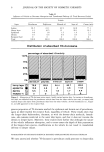
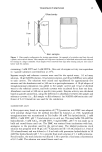
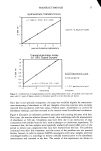
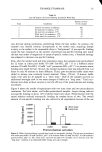
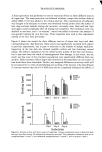
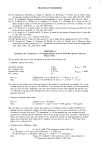
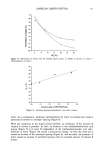
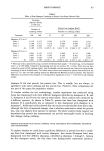
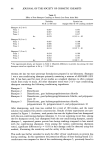
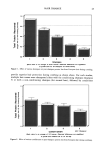
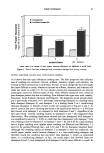
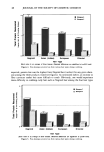
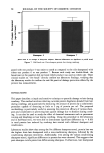
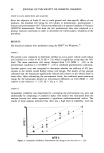
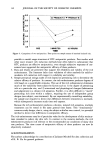
TRANSGLUTAMINASE 21 Table II Loss Of Enzyme Activity Following Incubation With Hair Enzyme activity Trial Conditions (% of control) 1 Control (no hair/no incubation) 100 2 No hair/2-hr incubation, 37øC 54 3 No hair/4-hr incubation, 37øC 50 4 With hair/2-hr incubation, 37øC 70 5 With hair/4-hr incubation, 37øC 63 into the hair during incubation, penetrating below the hair surface. In contrast, the enzyme's size limited covalent incorporation to the surface only, requiring isotope activity at the surface to be measurable above a "background" of non-specific binding inside the hair. Inasmuch as the number of potential non-specific binding sites inside the hair was orders of magnitude in excess of specific surface sites, a threefold strategy was adopted to decrease non-specific binding. First, after the normal wash and rinse preparation steps, hair samples were preincubated for 12 hours in either pure buffer (50 mM Tris-HCl, pH 7.5) or a buffered amine solution (50 mM Tris-HCl, 10 mM "cold" putrescine-HCl, pH 7.5) to saturate amine binding sites inside the hair. Second, the enzyme incubation time was reduced from 2-4 hours to only 30 minutes to limit diffusion. Third, post-incubation buffer rinses were added to remove non-covalently bound material. Three, 250-ml, 15-minute buffer rinses were used for all samples as a "short rinse." Half of the samples received an additional overnight soak in two more changes of buffer as a "long rinse." Trial incu- bations were done without enzyme to test the efficacy of the preincubation and rinsing procedures. Figure 6 shows the results of experiments with two rinse times and two preincubation treatments. For both amine- and buffer-preincubated samples, longer rinsing reduced non-specific binding to about 12% of shorter rinse-time values. Preincubation with the amine solution reduced non-specific binding by another factor of two. The overall amount of non-specific binding was also reduced in all experiments because of the use 12500 10000 7500 5000 2500 0 [] Short rinse [] Long rinse Buffer Amine Preincubation solution Figure 6. Effect of preincubation type and rinse length on non-specific binding. The hair was preincubated with either assay buffer (50 mM Tris-HCl, pH 7.5) or an amine buffer (50 mM Tris-HCl, 10 mM unlabeled putrescine-HC1, pH 7.5). The "short-rinse" used 250 ml soaks (3x) of buffer, for 15 minutes each. The "long rinse" consisted of an additional buffer change and soak overnight.
Purchased for the exclusive use of nofirst nolast (unknown)
From: SCC Media Library & Resource Center (library.scconline.org)