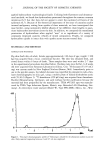
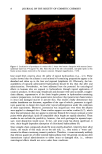
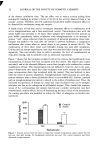
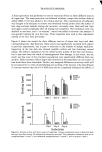
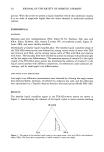
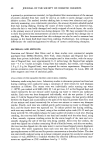
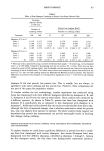
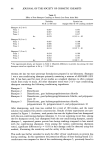
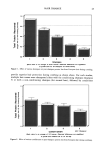
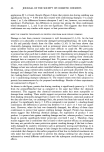
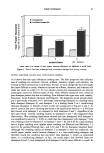
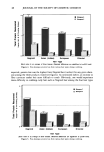
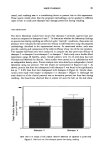
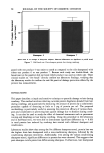
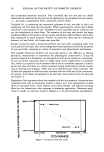
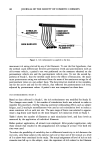
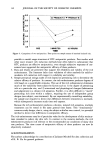
64 JOURNAL OF THE SOCIETY OF COSMETIC CHEMISTS .-. 6.0 • • PRODUCT A •- PRODUCT B • 4.5 ß r 3.5 3.0 • • PRE 3 MINUTES 0.5 HOURS TIME possible to model usage situations of OTC antipruritic products. Past studies with other more invasive itch induction methods have often failed to substantiate that OTC products are effective antipruritics, even though subjective responses of con- sumers have supported the antipruritic efficacy of these products. 3. Data and results are presented that support the reliability and validity of the itch esthesiometer. The literature lacks clear validation of other methods for mild-to- moderate itch induction with respect to reliability and validity. 4. Simple perceptual ratings scales of itch depend on preexisting itch to determine the relative efficacy of products. In contrast, the itch esthesiometer produces degrees of itch based on a quantifiable stimulus. The use of the itch esthesiometer eliminates much of the variability from subjective factors such as 1) the degree of preexisting itch at a particular site, and 2) attentional and physiological changes (habituation and adaptation) to a chronic itch sensation. Further, it is often difficult to "match" preexisting itch sites within a subject, requiring the use of independent group designs (one subject, one treatment). By not experimentally controlling variability, the sample size required to detect real differences between treatments is increased, which subsequently increases study time and expense. Because the itch esthesiometer produces a discrete, isolated itch sensation, multiple treatments can be tested in the same general time frame. This "simultaneous" crossover study design, that is, using the subject as his/her own control, is a powerful method to detect true differences in antipruritic efficacy. The itch esthesiometer may be of particular value for the development of skin moistur- izers intended to relieve dry skin itch. In contrast to the invasive methods, the itch esthesiometer produces itch relevant to the recommended use conditions of many skin care products. The time course of antipruritic efficacy of these products can now be objectively evaluated. ACKNOWLEDGMENTS The authors acknowledge the contributions of Julianne Mitchell for data collection and of K. B. Hu for general guidance.

ANTIPRURITIC EVALUATION 65 REFERENCES (1) D. Sinclair, Mechanisms of Cutaneous Sensation (Oxford University Press, New York, 1981), pp. 256- 259. (2) L. Chapman, H. Goodell, and G. Wolff, "Structures and Processes Involved in the Sensation of Itch," in Advances in Biology of Skin, Cutaneous Innovation, W. Montagna, Ed. (Pergamon Press, New York, 1960), Vol. 1, pp. 161-186. (3) S. Rothman, "Pathophysiology of Itch Sensation," in Advances in Biology of Skin, Cutaneous Innovation. W. Montagna, Ed. (Pergamon Press, New York, 1960), Vol. 1, pp. 189-201. (4) D. Sinclair, "Psychophysiology of Cutaneous Sensation," in The Physiology and Pathophysiology of the Skin, A. Jarrett, Ed. (Academic Press, New York, 1973), Vol. 2, pp. 440-441. (5) E. B. Titchener, A Text Book of Psychology, Part I (Macmillan, New York, 1909). (6) H. E. Torebj6rk, Afferent C-units responding to mechanical, thermal and chemical stimuli in human non-glabrous skin, Acta Physiologica Scandinavica, 153, 374-390 (1974). (7) H. E. Torebj6rk, (1979) "Discussion Section," in Sensory Functions of the Skin of Humans, D. Kenshalo, Ed. (Plenum Press, New York, 1979), pp. 411-412. (8) W. Magerl, R. A. Westerman, B. Moehner, and H. O. Handwerker, Properties of transdermal histamine iontophoresis: Differential effects of season, gender, and body region, J. Invest, Dermatol., 94, 347-352 (1990). (9) P. Bierring, and L. Arendt-Nielsens, A quantitative comparison of the effects of local analgesics on argon laser induced cutaneous pain and on histamine induced wheal, flare and itch, Acta Derre. Venereol., 70, 126-131 (1990). (10) S. Weinstein, "Intensive and Extensive Aspects of Tactile Sensitivity as a Function of Body Part, Sex and Laterality", in The Skin Senses, D. Kenshalo, Ed. (C. C. Thomas, Springfield, Ill, 1968), pp. 195-218. (11) S. Weinstein, Effects of local anesthetics on tactile sensitivity thresholds for cutaneous and mucous membranes, J. Invest. Dermatol., 69, 136-145 (1977). (12) C. Weinstein, R. Drozdenko, and S. Weinstein, Evidence supporting a new model for the evaluation of skin irritation, J. Soc. Cosmet. Chem., 39, 315-320 (1988).
Purchased for the exclusive use of nofirst nolast (unknown)
From: SCC Media Library & Resource Center (library.scconline.org)