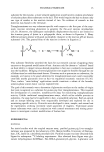
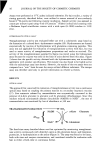
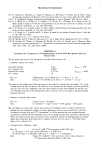
TRANSGLUTAMINASE 13 substrate for the enzyme, a more versatile application would involve covalent attachment of solution-phase donor substrates to the hair. This would require the hair to donate only one type of residue to the reaction instead of two. No evidence of research in this direction was found in the literature. Transglutaminases are very substrate-specific with respect to the first part of the enzy- matic reaction involving glutamine to generate the thio-acyl enzyme intermediate (25,33). However, the subsequent nucleophilic displacement reaction is not limited to the E-amino group of lysine in a polypeptide chain, as shown in Equation 1. Many different primary amines with good nucleophilic character at the reaction pH are known substrates (34). The general form of the reaction is shown in Equation 2: Gin NH 2 + R -- NH 2 • Gin NI-I - R (2) This substrate flexibility provided the basis for our research concept of applying these enzymes to the general modification of hair. Amines could be chosen or "tailored" based on their ability to impart various desired properties to hair once covalently incorporated into the backbone. Bridging of several glutamine sites-might be feasible through the use of bifunctional or multifunctional donors. Diamines such as putrescine or cadaverine, for example, are known to be good substrates for transglutaminases and could conceivably cross-link nearby glutamine sites on hair via sequential enzymatic reactions (35,36). Thus, surface "cross-linking" applications would constitute a subset of the broader, solution-phase amine donor concept explored here. The goal of this research was to determine if glutamine residues on the surface of virgin hair were recognized as a substrate for guinea pig liver transglutaminase. This required the development of a sensitive, nondestructive assay for monitoring transglutaminase activity. Unlike traditional transglutaminase assays, which utilize soluble proteins as substrates, the assay had to be applicable to hair, a nonsoluble substrate. Both an optical and an isotope labeling assay were sequentially developed and explored for use in monitoring specific activity. Protocols were developed to treat, sample, and mount hair for experiments utilizing extremely small quantities of reagents. Traditional amine donor substrates were used in conjunction with control treatments and rinsing proce- dures to investigate covalent modification of human hair. EXPERIMENTAL MATERIALS For initial studies with the coupled enzyme assay, purified guinea pig liver transglu- taminase was prepared by the laboratory of Dr. Martin Griffin, University of Notting- ham, UK, based on a described procedure (26). Purified enzyme was later obtained from Sigma for subsequent •4C labeling experiments. Also obtained from Sigma were glu- tamate dehydrogenase (G1DHase), Nc•-CBZ-L-glutaminyl-L-glycine, L-glutamic acid

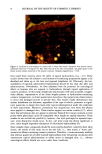
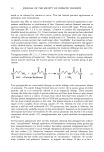
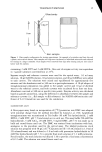
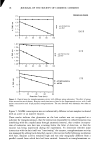
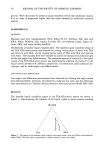
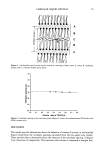
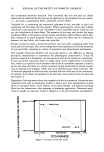
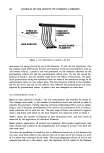
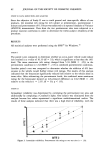
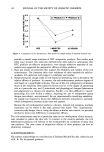
14 JOURNAL OF THE SOCIETY OF COSMETIC CHEMISTS •/-hydroxamate, dimethyl casein (DMC), ot-keto glutaric acid, NADH, NAD, cadav- erine dihydrochloride, histamine hydrochloride, and putrescine dihydrochloride. Tri- ethanolamine hydrochloride, Tris base, dithiothreitol (DTT), calcium chloride dihy- drate, and disodium EDTA were Fisher Biotech TM grade. [ 1,4-•4C]-putrescine dihydro- chloride (115 mCi/mmol) was purchased from Amersham. HAIR SAMPLES AND PREPARATION The human hair used in all phases of this work was obtained from several individual donors with known hair-treatment histories. All hair was chemically unprocessed, com- monly referred to as "virgin" hair, having received only normal shampooing, condi- tioning, and styling products and procedures. Hair used with the optical assay was obtained from an adult female, cut approximately 2 cm from the scalp at the back of the neck, and used in 0.5 cm lengths. The hair used for the first through third isotope experiments was obtained from a child of about eight years of age. This hair was removed from a ponytail cut about 20 cm below the scalp. The fourth isotope experi- ment used three different sources of hair obtained from adult female donors. This hair was collected by donors on a day-to-day basis as it exfoliated during grooming. For isotope experiments, only sections falling within 15 cm of the "root" end were used. The child's hair, even though originally sampled farther from the scalp, was probably the least damaged, due to infrequent grooming. In any event, all hair used in this work had a high probability of having minimal cuticle damage from weathering and other cuticle degradation processes. All hair samples were washed before use with a 30% solution of triethanolamine lauryl sulfate/sodium laureth sulfate (TEALS/SLES). This consisted of a 1-2 minute wash by hand followed by a 5-minute rinse in distilled water, except where noted below. A more rigorous procedure was adopted for the isotope experiments. At this point, the hair was processed as bundles of ten fibers, glued together at their root ends. Hair bundles were wet with water and wound onto stainless steel hair clips, shown in Figure 1. Clips were grouped together and subjected to collective washing and rinsing steps prior to incu- bation. Loaded clips were soaked for 10-30 minutes in a stirred beaker of 5% TEALS/ SLES and _rinsed under-flowing distilled water for a half hour. OPTICAL ASSAY A coupled enzyme assay for monitoring transglutaminase activity was adapted from an enzymatic assay for ammonia (37). The concentration of glutamate dehydrogenase was increased to improve assay response to low levels of ammonia. The assay solution (150 mM triethanolamine hydrochloride buffer, 12 mM ot-keto glutarate, 0.6 mM ADP, 5 mM CaCI2, 5 mM DTT, 2.5 mg/ml dimethyl casein (DMC), pH 7.8) was sterile- filtered through a 0.45-•tm filter and stored frozen. DMC, an amino-blocked glu- tamine-containing protein substrate, was omitted from incubations with hair. NADH solution (16.67 mg/ml NADH in water, stabilized with NaHCO3) was kept at 4øC and prepared fresh daily. Stock solutions of amines were buffered to normality with HC1 or prepared directly as amine hydrochloride salts. The glutamate dehydrogenase solution was used as purchased from Sigma in 50% glycerol (1200 U/ml). The transglutaminase stock solution was approximately 1.0 unit/ml in 10 mM Tris buffer, pH = 7.5,
Purchased for the exclusive use of nofirst nolast (unknown)
From: SCC Media Library & Resource Center (library.scconline.org)