HAIR DAMAGE 41 Estimation of hair protein. Protein concentration in a given solution containing hair pro- tein was determined as previously described (12). This procedure is a modification of the Lowry Method (13), one of the most widely used techniques for protein measurement in biological samples. Briefly, each sample was well shaken by hand, and 1 ml of the turbid liquid was pipetted directly from the beaker and added to a 16 x 125-mm tube containing 0.1 ml of 5N NaOH (for samples suspected to contain protein in high concentration, 0.5 ml of the sample was used and mixed with 0.5 ml of 1 N NaOH). The contents of the tube were mixed well and allowed to sit at room temperature for 30 minutes to solubilize the suspended protein fragments. At the end of the incubation period, 1 ml of alkaline Cu-carbonate solution was added and the samples incubated at room temperature for 20 minutes. At the end of the incubation period, 3 ml of Folin-phenol solution was added to each tube and the sample was vortexed immediately. The samples were further incubated for 40 minutes and the absorbance determined in a spectrophotometer at a wavelength of 750 nm. Protein concentration in each sample was then determined from a standard curve (protein conc. •xg/ml = slope x absorbance - intercept on Y axis this value was then used to calculate the total cuticular protein loss expressed as total protein recovered, mg/g hair) prepared separately using crystalline bovine serum albumin as a standard and assayed under conditions identical to the test samples. A control (water blank) was always run with each assay, and the absorbance value for each test sample was adjusted for the blank. Using this procedure, we were able to determine as little as 5 micrograms of hair protein per ml in a given solution. The sensitivity of the method can, however, be increased to as little as 1 •xg of protein with reasonable precision by certain modifications such as reducing the volumes of sample and reagents and the use of smaller tubes for reaction and microcuvettes for absorbance readings. COMBING STUDIES TO EVALUATE THE PROTECTION EFFICACY OF A SHAMPOO Limited studies were also done to determine the protection efficacy of certain shampoos using the laboratory tress test routinely used for such evaluations. For such studies, hair tresses (three for each product) were pre-washed with a 5 % solution of SLES (1 ml/tress), shampooed with the test product @ 1 ml/tress, rinsed thoroughly with tap water (105øC), and gently combed to remove snags. Wet tresses were then randomly arranged and evaluated by a panel of at least six judges. Judges were asked to rank the tresses for ease of combing from best to worst and also to rate each tress on a scale of 1 (worst) to 10 (best). Tresses were re-wet between evaluations. The data was then statistically analyzed using an in-house computer program of the Friedman test, a nonparametric procedure for multiple comparisons for ranking (14), and one-way ANOVA for rating. HALF-HEAD TESTS Half-head tests provide a side-by-side comparison of the relative efficacy of any two test products under "real-life" conditions. Each half-head test was a double-blind, random- ized block experiment using 40 healthy, adult, female subjects with 16-24-inch-long hair and was carried out as follows: The panelist's hair was wetted with warm water (--105øF, 150 ppm water hardness) and parted down the middle from the forehead to the nape of the neck. To remove any dirt or grease, hair on each side of the head was

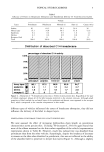
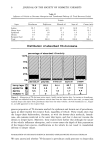
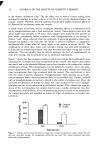
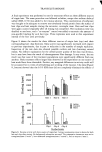
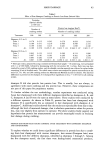
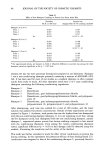
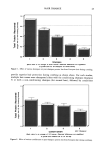
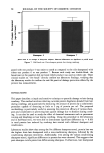
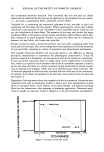
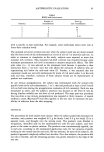
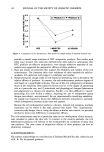
42 JOURNAL OF THE SOCIETY OF COSMETIC CHEMISTS pre-washed using 10 ml of a non-conditioning shampoo and rinsed well with warm water. Subsequently, 10 ml of a given test product was applied evenly to one side of the head, a lather worked up, and the hair rinsed well with warm water to remove all shampoo residue. The above process was repeated in a similar manner on the other side of the head using the second test product. To avoid inherent differences in damage from the left to the right side, test products were randomized within each subject (all panelists previously assigned odd subject numbers received a given test product on the left side, while those with even numbers received the same product on the right side). At the end of the shampooing process, hair on each side of the head was combed the entire length using a fine-toothed comb designated for each side. After ten combing strokes, both the comb and hair were dipped into a large stainless steel or glass bowl, "'9 inches in diameter, l-liter capacity, containing 200 ml of distilled water, to recover loose cuticle fragments from the hair. The excess water from the hair was squeezed out into the dish. The above process was repeated for a total of 100 strokes, alternating between the left and right side of the head. Following completion of the combing process, the solution from each side was analyzed for protein concentration (as described above) to determine total protein released from each side of the head during combing. The data was then statistically analyzed [Wilcoxon signed rank test (15)] to evaluate the difference in treatment effects. RESULTS AND DISCUSSION PRELIMINARY STUDIES ON PROTEIN LOSS FROM HAIR--EFFECT OF COMBING Studies were conducted to determine whether measurements of protein loss from hair can be used to evaluate hair damage due to combing. For these studies, hair tresses using undamaged Oriental hair were prepared and shampooed in triplicate with a leading brand 2-in-1 conditioning shampoo (shampoo A). For comparison, hair tresses from the same batch were also shampooed in a similar manner with a prototype 2-in-1 condi- tioning shampoo (shampoo B). Following shampooing, each tress was combed (wet) for a total of 200 combing strokes, and the turbid solution was analyzed for protein concentration at the end of 25, 50, 100, and 200 combing strokes. Samples containing cuticular material were also tested for turbidity, which measures the degree of opacity of a suspension. However, as previously reported (12), turbidity measurements are not always a true indicator of hair damage. Results of these studies are summarized in Table I. As shown, protein loss from hair increased progressively relative to the number of combing strokes for both shampoos tested. Statistical analysis of the data showed that the relationship between the amount of protein loss vs the number of combing strokes is highly significant (p = 0.0001) and that tress-to-tress variability of the measure- ments (standard error) for a given treatment is rather low. Furthermore, the data also show that regardless of the number of strokes, protein loss from hair, shampooed with shampoo B is significantly less (p = 0.05) than that from hair shampooed with shampoo A. This suggests that shampoo B is more effective in protecting hair against combing damage as compared to shampoo A and that this protection was not lost during repeated combing. In separate studies, rank combing scores comparing these two shampoos in triplicate using multiple combers showed that hair washed with shampoo B did comb significantly more easily than hair washed with shampoo A, and as mentioned above,
Purchased for the exclusive use of nofirst nolast (unknown)
From: SCC Media Library & Resource Center (library.scconline.org)