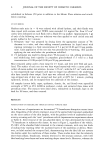
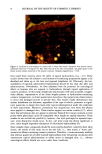
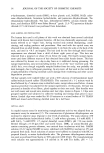
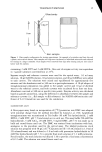
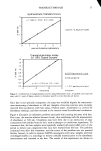
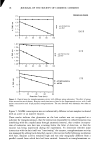
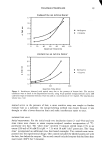
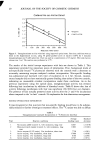
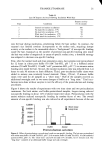
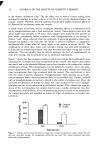
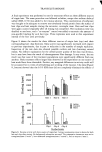
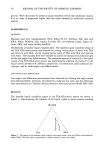
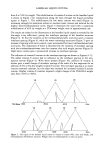
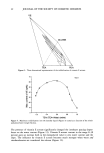
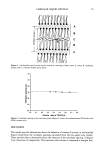
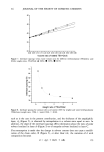
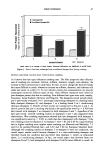
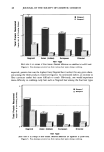
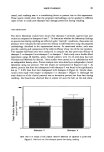
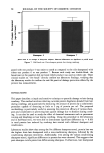
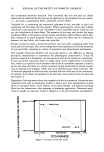
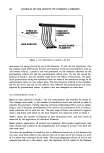
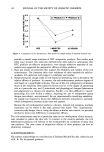
8 JOURNAL OF THE SOCIETY OF COSMETIC CHEMISTS Figure 4. Localization of petrolatum in murine skin 2 hours after barrier disruption with acetone [trans- epidermal water loss •4 mg/cm2/hr, (8)]. Note that all of the nile red-stainable, non-polar lipids in this frozen section remain restricted to the stratum corneum. Original magnification, x250. have raised fresh concerns about the safety of topical hydrocarbons (e.g., 4,5). These studies showed that the alkanes in oral mineral oil-containing preparations appear to be absorbed and taken up in the liver and regional lymphatics (4). Obviously, the bio- availability of topically administered hydrocarbons should be less than that after oral administration. Nevertheless, we have addressed here the potential for toxicological effects in humans who are exposed to hydrocarbons through topical application of cosmetic products. In this study, hexadecane and docosane were used as model, straight- chain alkanes, representative of the chain lengths present in hydrocarbon-containing cosmetic preparations, to obtain quantitative data about their penetration characteristics in intact and damaged murine or porcine skin. Our studies clearly demonstrate that neither hexadecane nor docosane, regardless of the type of vehicle, penetrate in signif- icant quantities to deeper skin layers after topical administration under the conditions of these experiments. Moreover, penetration was insignificant even when the alkanes were applied to damaged skin. These studies support our earlier studies (6,7), which show that petrolatum does not appear to penetrate beneath the stratum corneum at time points when physiologic lipids of comparable chain length are rapidly absorbed. These studies do not exclude the possibility, however, that with prolonged or repeated expo- sure, more absorption would occur. In fact, one prior study has shown significant in vitro, chain-length dependent absorption of chlorinated hydrocarbons (9). Since straight-chain compounds should be more-readily-absorbed, relatively short alkyl chains, the results of this study are on the safe side i.e., they mimic a "worst case" scenario for alkane-containing cosmetic products. Therefore, it seems extremely unlikely that relevant quantities of white mineral hydrocarbons enter the general circulation after intermittent topical administration to either intact or damaged skin i.e., relevant toxicological effects should not occur under these conditions.

TOPICAL HYDROCARBONS 9 ACKNOWLEDGMENTS This work was supported by NIH grant AR 19098 and the Medical Research Service, United States Veterans Administration. Annette Grimmert and Hans-Juergen Duesing provided skillful experimental assistance, and Angie Kho-Kim capably prepared the manuscript. REFERENCES (1) J. T. Bortz, P. W. Wertz, and D. T. Downing, The origin of alkanes found in human skin surface lipids, J. Invest. Dermatol. 93, 723-727 (1989). (2) P. M. Elias, M. L. Williams, and S. J. Rehfled, N-alkanes in the skin: Function or fancy? Arch. Dermatol., 126, 868-870 (1990). (3) D. E. Lester, Normal paraffins in living matter: Occurrence, metabolism, and pathology, Progr. Food N•tr. Sci., 3, 1-66 (1979). (4) M. K. Baldwin, P. H. Berry, D. J. Esdaile, S. L. Linnette, J. G. Martin, G. C. Peristianis, R. A. Priston, B. J. Simpson, and J. D. Smith, Feeding studies in rats with mineral hydrocarbon food grade white oils, Toxico/. Path., 20, 426-435 (1992). (5) CONCAWE: a 90-day feeding study in the rat with six different white mineral oils, N15(H), N70(H), N70(A), P15(H), N10(A), and P100(H), three different mineral waxes (a low melting point wax, a high melting point wax and a high sulfur wax) and coconut oil. BIBRA Toxicology Interna- tional (Sponsor: CONCAWE) (1992). (6) R. G. Ghadially, L. Halkier-Sorensen, and P. M. Elias, Effects of petrolatum on stratum corneum structure and function. J. Amer. Acad. Dermatol., 26, 387-396 (1992). (7) M. Mao-Qiang, B. E. Brown, S. Wu, K. R. Feingold, and P.M. Elias, Exogenous non-physiological vs. physiological lipids: Divergent mechanisms for correction of permeability barrier dysfunction, Arch. Dermato/. (in press). (8) P. M. Elias and B. E. Brown, The mammalian cutaneous permeability barrier: Defective barrier function in essential fatty acid deficiency correlates with abnormal intercellular lipid deposition, Lab. Invest., 39, 574-583 (1978). (9) J. J. Yang, T. A. Roy, W. Nell, A. J. Krueger, and C. R. Mackerer, Percutaneous and oral ab- sorption of chlorinated paraffins in the rat, Toxiol. Ind. Health, 3, 405-411 (1987).
Purchased for the exclusive use of nofirst nolast (unknown)
From: SCC Media Library & Resource Center (library.scconline.org)