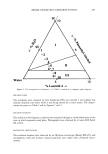
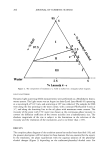
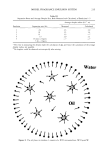
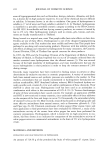
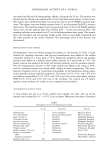
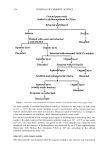
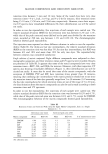
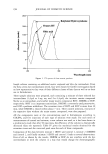
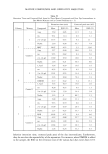
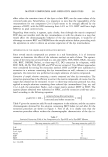
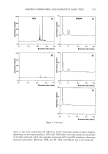
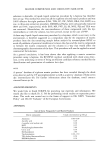
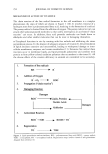
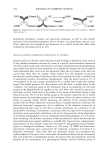
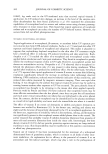
ANTIOXIDANT ACTIVITY OF P. NIGRUM 223 was soaked in 600 ml of dichloromethane (Merck, Germany) for 24 hrs. The mixture was filtered and the flitrate was washed with 25 ml of distilled water (Figure 1) three times. The organic layer (dichloromethane) was extracted with 25 ml of 2N-HCL solution three times. The organic layer was further extracted with 25 ml of saturated NaHCO 3 solution three times. The resulting organic layer was extracted with 25 ml of 1N-NaOH solution three times, and the aqueous layer was acidified (pH = 1) with concentrated HCL. The resulting solution was extracted with 25 ml of dichloromethane three times. The organic layer was discarded, and the aqueous weakly acidic fraction was finally evaporated and the white powder of the extract obtained. The percentage yield of this fraction was determined. PREPARATION OF TEST SAMPLES Hydroquinone cream was freshly prepared according to the formula in Table I. Light mineral oil, isopropyl myristate, and glyceryl monostearate were added to the melted cetostearyl alcohol in a water bath at 70øC. Separately, propylene glycol and paraben solution were added to a sodium lauryl sulfate solution in a water bath at 73øC. The former mixture was added to the latter and stirred constantly until an emulsion formed. The 2% hydroquinone solution in 95% ethyl alcohol was added to the cream at 40øC, and the resulting mixture was stirred while cooling to room temperature. The incor- poration of pepper extract or commercial antioxidants to the fomulation during prepa- ration depends on their solubility properties. The extract (0.1%, 0.5%, and 1.0% w/w) and sodium metabisulfite (0.1%, 0.5 %, and 1.0% w/w) were in the water phase, whereas BHT (0.1%, 0.5%, and 1.0% w/w) was in the oil phase. The control was 2% hydro- quinone cream without the extract or any commercial antioxidants. ANTIOXIDATIVE ACTIVITY STUDY A 10-g sample was put in a 20-ml, tightly screw-capped, test tube. One set of test samples was incubated at 45 ø + 0.5øC in an incubator (Memmert Incubator, Germany) Table I Formulation of 2% w/w Hydroquinone Cream % w/w Functions Sources Hydroquinone 2 95% ethyl alcohol 8 Light mineral oil 6 Cetostearyl alcohol 5 Isopropyl myristate 4 Glyceryl monostearate 10 Sodium lauryl sulfate 5 Propylene glycol 5 Paraben solution 20% w/w 1 Extract or antioxidants qs BHT Sodium metabisulfite Distilled water qs to 100 Active ingredient Solvent for hydroquinone Emollient Emollient Emollient Emollient stabilizer Emulsifier Humectant Preservative Antioxidant Solvent for water phase Merck, Germany Merck, Germany Honghuad, Bangkok Honghuad, Bangkok Honghuad, Bangkok Chemikit, Bangkok Sunnyworld, Bangkok Vithayasom, Bangkok Kech's, USA Sunnyworld, Bangkok May & Baker, England

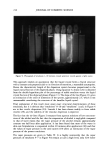
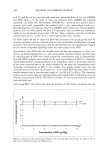
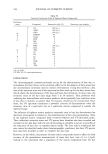
224 JOURNAL OF COSMETIC SCIENCE Ex•acts Aqueous layer Discarded Ground peper seeds Soaked in dichloroTethane for 24 hrs. Extracted •d filtered Re•fidue Discar• Washed with water and extracted with 2N-HC1 Organic layer Extracted with saturated NaHCCh solutio AqueOus layer Organi I layer Discarded Extracted wi• 1N-NaOH Aqueo• layer Organi I layer Addified and extrac•d with CH2C12 Discarded Aqueous•layer Organi• layer Discarded (weakly addic fracUon) Evaporate on water bath I Dried powder Figure 1. Extraction and fractionation of aqueous weakly acidic fraction from white pepper seeds. for three months to evaluate formulation stability. Another set was kept in a dark room at 24 ø + 1.0øC for two weeks. Samples at each concentration of the extract and com- mercial antioxidants were done in triplicate. Physical stability behaviors, i.e., changes in color and separation of emulsion, were observed optically every week. For the determination of the average percentages of hydroquinone remaining after two weeks in the dark room and for formulation stability studies at 45 ø + 0.5øC in two weeks and one, two, and three months, one gram of the tested samples was extracted with methanol and the amount of hydroquinone was measured by an UV spectrophotometer (Spectronic 301, Milton Roy Company, USA) at 293 nm according to the official standard hydroquinone assay (11). RESULTS AND DISCUSSION The white powder was obtained when the aqueous weakly acidic fraction was evaporated,
Purchased for the exclusive use of nofirst nolast (unknown)
From: SCC Media Library & Resource Center (library.scconline.org)