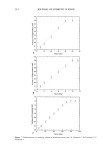
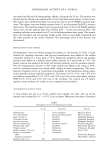
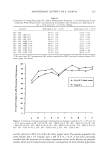
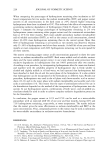
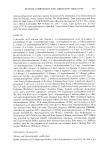
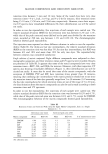
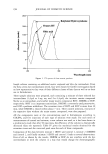
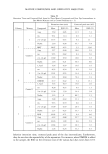
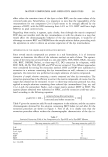
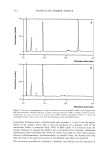
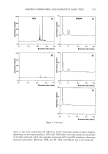
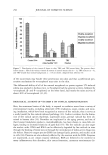
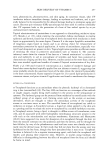
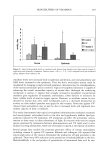
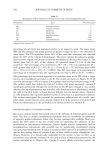
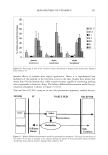
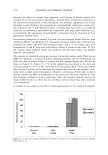
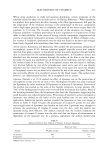
ANTIOXIDANT ACTIVITY OF P. NIGR URI 225 Table II -- Comparison of Average Percentages (X _+ SD) of Hydroquinone Remaining in 2% Hydroquinone Cream Containing White Pepper Extract and Commercial Antioxidants After Incubation in a Dark Room at 24 ø +_ 1.0øC and at 45 ø +_ 0.5øC for 2 Weeks Systems* Dark room at 24 ø +_ 1.0øC Dark room at 45 ø +_ 0.5øC CB + HY 66.76 _+ 1.38 61.33 +_ 4.22 CB + HY + SM 0.1% 85.13 +_ 1.89 73.49 _+ 4.50 CB + HY + SM 0.5% 86.26 _+ 1.65 79.27 _+ 4.92 CB + HY + SM 1.0% 89.63 _+ 1.73 82.11 +_ 4.67 CB + HY + BHT 0.l% 78.00 _+ 2.76 75.35 +_ 4.51 CB + HY + BHT 0.5% 88.65 _+ 1.35 87.52 +_ 5.00 CB + HY + BHT 1.0% 96.60 •: 1.44 85.53 +_ 4.13 CB + HY + EXT 0.1% 90.42 +_ 0.47 86.46 +_ 4.17 CB + HY + EXT 0.5% 91.85 _+ 3.75 84.68 +_ 1.88 CB + HY + EXT 1.0% 93.19 -+ 2.90 88.70 +_ 1.67 * CB, cream base HY, hydroquinone, SM, sodium metabisulfite BHT, butylated hydroxy toluene EXT, white pepper seed extract. 100 - 7o- 50- ao- 80 - 10 - O - + 45•o.5 c I I I I I I I I I I A B C D E F G H I J Figure 2. Comparison of average percentages of hydroquinone remaining incubated at 24 ø _+ 1.0øC and 45 o +_ 0.5øC for two weeks. A, CB + HY B, CB + HY + SM (0.1%) C, CB + HY + SM (0.5%) D, CB + HY + SM (1.0%) E, CB + HY + BHT (0.1%) F, CB + HY + BHT (0.5%) G, CB + HY + BHT (1.0%) H, CB + HY + EXT (0.1%) I, CB + HY + EXT (0.5%) J, CB + HY + EXT (1.0%). and the yield was 1.09% w/w of the dry white pepper seeds. The powder appeared to be water-soluble and a 1% solution gave a pH of 6.75 + 0.25. It has been previously revealed that the structure of the major compounds of this acidic fraction are phenolic amides, which are N-trans-feruloyl tyramine, coumaperine, N-trans-feruloyl piperidine,

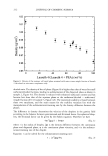
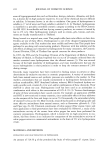
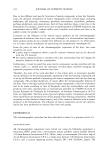
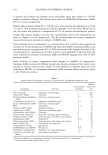
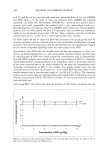
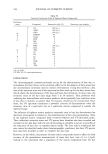
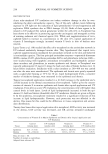
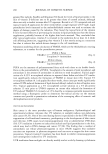
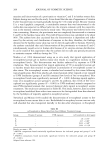
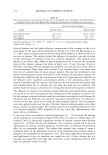
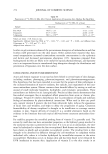
226 JOURNAL OF COSMETIC SCIENCE Table III -- Comparison of Average Percentages (X + SD) of Hydroquinone Remaining in 2% W/W Hydroquinone Cream Containing White Pepper Extract and Commercial Antioxidants Kept at 45 ø _+ 0.5øC for Three Months Incubation periods (weeks) 4 8 12 Systems* 2 (1 month) (2 months) (3 months) CB 0.00 _+ 0.00 0.00 _+ 0.00 0.00 _+ 0.00 0.00 _+ 0.00 CB + HY 61.33 -+ 4.22 59.32 -+ 2.66 41.21 + 2.47 14.55 _+ 4.52 CB + HY + SM 0.1% 73.49 -+ 4.50 65.93 -+ 0.39 62.47 _+ 2.37 16.15 + 3.54 CB + HY + SM 0.5% 79.27 -+ 4.92 70.85 + 1.45 65.53 -+ 1.48 23.65 _+ 3.93 CB + HY + SM 1.0% 82.11 _+ 4.67 74.94 + 2.74 74.14 + 2.01 39.22 _+ 3.96 CB + HY + BHT 0.1% 75.35 + 4.51 65.11 ñ 2.17 67.56 _+ 4.06 25.62 _+ 3.65 CB + HY + BHT 0.5% 84.70 ñ 5.00 72.19 -+ 4.18 73.01 + 2.04 30.80 + 4.06 CB + HY + BHT 1.0% 85.53 ñ 4.13 73.29 ñ 2.73 74.04 + 1.94 35.05 + 4.27 CB + HY + EXT 0.1% 81.86 _+ 4.17 74.37 + 2.30 66.35 ñ 2.17 17.94 ñ 2.59 CB + HY + EXT 0.5% 84.68 ñ 1.88 75.97 _+ 1.48 72.36 + 2.52 20.84 + 3.12 CB + HY + EXT 1.0% 88.70 _+ 1.67 80.05 _+ 2.11 74.96 _+ 3.83 33.12 ñ 2.93 * CB, cream base HY, hydroquinone SM, sodium metabisulfite BHT, butylated hydroxy toluene EXT, white pepper seed extract. feruperine, and N-5-(4-hydroxy-3-methoxy phenyl)-2E-pentenoyl piperidine (6). All phenolic amides had shown significant activity, more effective than ot-tocopherol at the same concentration (0.01%). Some were as highly effective as those of the synthetic antioxidants BHA and BHT at the same level (6). Our extract was used in this study instead of individual pure isolated phenolic amides since it has been our purpose to test the antioxidative activity of the whole group of these compounds derived from pepper. In addition, this extract can be interpreted as an antioxidant from natural sources. The antioxidative activity of separate phenolic amides may not be as effective as when they are combined as a whole in natural pepper seeds. This study has been designed to be as close to nature as possible. Our powder extract showed no skin irritation by a patch test on the back of rabbits. After storage at room temperature (25ø-30øC) for two years, the powder showed good physical stability (data not shown). From physical observation (data not shown), the color of all sample systems was darker starting from the first week, with the darkest intensity in cream without any antioxi- dants (CB + HY) and the least darkness in the systems of 1.0% BHT and 1.0% extract. However, these two systems showed emulsion instability earlier than other systems. The 1.0% extract cream started to crack from the first month, whereas 1.0% BHT cream started at the second month and continued. This may be due to the high concentrations of both antioxidants compared with the other test systems. BHT is a phenolic antioxi- dant for fatty acid and vegetable oil. Usually it is used at a level of 0.01-0.1% in cosmetics containing unsaturated materials (4). The emulsion systems with all concen- trations (1.0%, 0.5%, and 0.1%) of the extract were cracked at three months. Incom- patibility may occur in these systems since the extracts contain more than one single phenolic constituent with acidic properties. Incubation for a longer period at high temperature (45 ø + 0.5øC) may accelerate this incompatibility reaction.
Purchased for the exclusive use of nofirst nolast (unknown)
From: SCC Media Library & Resource Center (library.scconline.org)