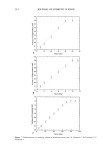
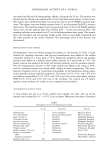
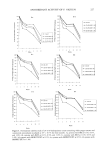
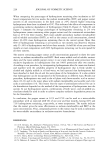
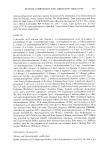
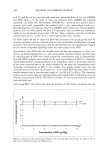
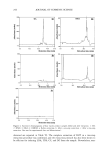
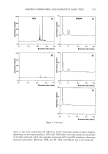
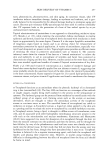
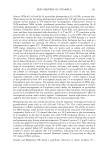
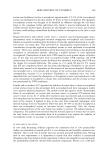
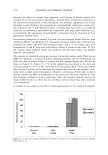
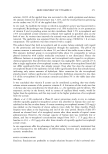
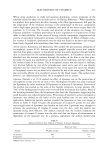
ANTIOXIDANT ACTIVITY OF P. NIGRUM 227 1oo 90 7o• (50- 50' 30- lOO 90 • 7o '• 60 _• 4o • 30 lO 100 • 90 •o •o •o •o •o lO o o 0 2 4 6 e 8 10 12 We ks 8c --•'-CB+HY --e:•CB+HY+EXT0.1• --a--CB+HY+EXT0.5• --•t--CB+HY+EXT1.0• 1oo 9o o_• 8 o 6O • so 30 20- 0 0 0 2 4 6 8 10 12 Weeks 3 e lOO • 90 --•--CB+HY 3 70 --•---CB+HY+SM 0 5• • 60 --•CB+HY+BHT0.5• • 50 o.s t4o •3o •20- • 10- 0 0 2 4 6 8 10 12 CB+HY+BHT 0. I , CB+HY+BHT 0.5 C'B+HY+BXT 1.0 2 4 6 8 10 12 Weeks • CB+HY+SM 0.1% I CB+HY+BHT 0.
CB+ CB+HY+EXT 0.1• 2 4 6 8 10 12 Weeks 3f • CB+I1.0]1.0•1.0% CB+HY+SM CB+HY+BHT CB+HY+BXT 2 4 6 8 10 12 Weeks Weeks Figure 3. Formulation stability study of 2% w/w hydroquinone cream containing white pepper extract and commercial antioxidants incubated at 45 ø _+ 0.5øC for three months. 3a, systems with SM at 0.1%, 0.5%, and 1.0% 3b, systems with BHT at 0.1%, 0.5%, and 1.0% 3c, systems with EXT at 0.1%, 0.5% and 1.0% 3d, systems with SM/BHT/EXT at 0.1% 3e, systems with SM/BHT/EXT at 0.5% 3f, systems with SM/BHT/EXT at 1.0%.

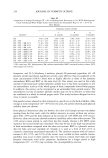
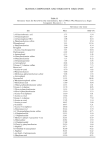
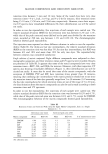
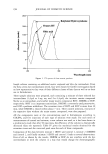
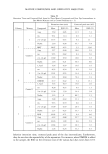
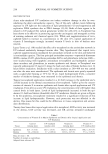
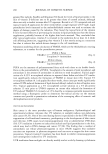
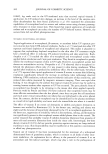
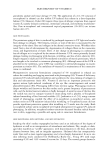
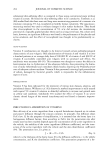
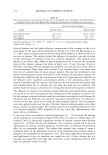
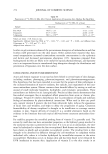
228 JOURNAL OF COSMETIC SCIENCE When comparing the percentages of hydroquinone remaining after incubation at dif- ferent temperatures For two weeks, the sodium metabisulfite, BHT, and pepper extract systems in all concentrations in the dark room at 24øC showed higher remaining hydroquinone than those incubated at 45øC. This indicated the effects of temperature in accelerating oxidative degradation of hydroquinone (Table II, Figure 2). Table III and Figure 3 compares the average percentages of hydroquinone remaining in 2% w/w hydroquinone cream containing white pepper extract and the commercial antioxidants kept at 45øC for three months. Both water-soluble antioxidant (sodium metabisulfite) and oil-soluble antioxidant (BHT), as well as the extract at all concentrations, showed about 10-20% more hydroquinone remaining than in the control system. More than 60% of hydroquinone remaining in all systems at two months was observed, whereas only 25-30% oF hydroquinone was left at three months. A shelf life of one year and four months at room temperature with 60% hydroquinone remaining can be anticipated for all these systems. The system containing pepper extract at all concentrations appeared to show the same activity as sodium metabisulfite and BHT. Both water-soluble and oil-soluble antioxi- dants and the water-soluble pepper extract in our study showed some protection from oxidative degradation in hydroquinone (but not 100% protection) after two months. According to our procedure, by incorporating hydroquinone after the cream was formed, and together with the solubility property of hydroquinone that is freely soluble in alcohol and slightly soluble in oil and water, we had expected that hydroquinone had been absorbed in both the oil and the water phase of the formulation. It is also evident that hydroquinone can be incorporated in the formulation in different ways. Besides our procedure, hydroquinone was used in the oil phase with laevo-ascorbic acid as antioxi- dants (12,13) and in the water phase with sodium metabisulfite and ascorbic and citric acids as antioxidants (14). This meant that the types of antioxidants selected for use in the formulation depended on the method of the incorporation of hydroquinone into the system. In our hydroquinone system, combinations of both water- and oil-soluble an- tioxidants should be used in order to achieve complete oxidative degradation protection for the formulation. In conclusion, the pepper extract at 0.1% and 0.5% can be used as a water-soluble antioxidant with an expected shelf life oF one year and four months, having 66% and 72% hydroquinone remaining, respectively, at room temperature. The results indicate that the extract gives the same effectiveness as sodium metabisulfite and BHT at the same concentrations. Thus, compounds present in the extract may be used as substitutes for water-soluble antioxidants in oxidation-sensitive formulations. REFERENCES (1) A. R. Gennaro, Ed., Remington's Pharmaceutical Sciences, 19th ed., Vol. 2: The Science and Practice of Pharmacy. (Mack Publishing, Easton, PA, 1995). (2) J. E. F. Reynolds, Ed., Martindale's Extra Pharmacopoeia, 31st ed. (Pharmaceutical Press, London, 1989). (3) V. Tangkaew, "The Study of Quality and Monitoring of Acne and Anti-Freckle Cosmetic Products in Thailand." Division of Cosmetic Control, FDA, Ministry of Health (January 1995). (4) R. G. Harry, Harry's Cosmeticology (Chemical Publishing Co., New York, 1973). (5) C. L. Branen, Toxicology and biochemistry of BHA and BHT, J. Am, Oil Chem. Soc., 52, 59 (1975). (6) N. Nakatani, R. Inatani, H. Ohta, and A. Nishioka, Chemical constituents of peppers (Piper spp.) and
Purchased for the exclusive use of nofirst nolast (unknown)
From: SCC Media Library & Resource Center (library.scconline.org)