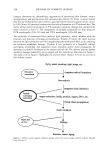
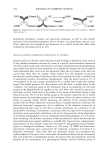
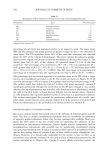
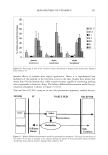
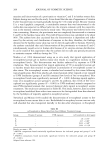
260 JOURNAL OF COSMETIC SCIENCE genated free radicals. Kaidby and Kligman (50) found the levels of lipid peroxides in the skin of vitamin E-deficient rats to be greater than those of control animals, although there was only a modest increase after UV exposure. Record eta/. (45) compared oral and topical vitamin E application for three weeks before a single exposure of UV light. Lipid peroxidation levels measured as the malondialdehyde content was used to estimate the degree of damage caused by the radiation. They found the topical form of the vitamin E to be far more effective at preventing the increase in lipid peroxidation than the dietary supplement, probably because of the higher skin levels attained. They concluded that after topical application, vitamin E is retained in the epidermis for at least 24 h while still affording protection, suggesting that vitamin E is not merely acting as a sunscreen but that it reduces free radical-driven damage to the cell membrane. Simulation modeling allows calculation of TBARS, which are the thiobarbituric reacting substances, as a marker for the peroxidation process: PUFA x Perox TBARS = (Eq. 1) Tocopherol + Antioxidant PUFA x Perox TBARS = (Eq. 2) Log (tocopherol) PUFA are the amounts of polyunsaturated fatty acids with three to six double bonds. Perox is the peroxidizability of PUFA. Tocopherol is the amount of total tocopherol, and antioxidant is the amount of antioxidant in addition to total tocopherol. Topical appli- cation of a 0.25% (x-tocopherol solution in repeated doses before and after UV irradia- tion significantly reduces the formation of TBARS in mouse skin (49). Topical 5% c•-tocopherol sorbate (0.1 ml applied for three weeks, three times per week) significantly reduced UVB-induced formation of lipid-derived alkoxyl radicals in skin of hairless mice (51). Topical application as a 5% c•-tocopheryl acetate solution or a 5% [•-carotene solution 15 min prior to UVB/A exposure on mouse skin reduced the formation of UV-induced TBARS (52). Girard et aL (53) describe a cutaneous peroxide measurement method using a fluorogenic probe to determine free-radical activity on the stratum corneum and provide a quantitative evaluation of the scavenging effect of cosmetic and dermopharmaceutical products. PHOTOCARCINOGENESIS Skin cancer is the most prevalent type of human malignancy. Epidemiological and experimental evidence indicates that UV radiation in sunlight induces non-melanoma skin cancer (54,55). One of the contributing factors is speculated to be the UVB-induced suppression of cell-mediated immunity, predisposing to the development of skin cancer and infection. UVB causes local immunosuppression even at suberythemal UVB doses (56). UV irradiation is known to induce free radicals and lipid peroxidation in the skin, which may lead to DNA damage and cancer (57,58). The finding that a number of antioxidants can reduce photocarcinognesis in mice (59,60) suggests that oxidative reactions are important in photocarcinogenesis and can serve as targets for skin cancer prevention. Topical vitamin E treatment has been found to inhibit immunosuppression and tumorigenesis induced by UV irradiation. UVB irradiation from sunlight can directly modify nucleic acids by forming cyclobutane

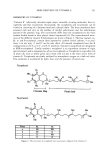
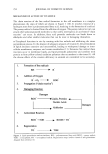
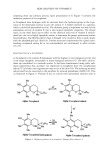
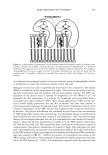
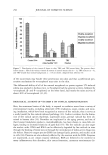
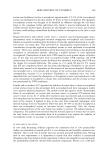
SKIN DELIVERY OF VITAMIN E 261 dimers, CPDs (61-64) and [6-4] pyrimidine photoproducts, [6-4] PDs, in mouse skin. These lesions are the two major photoproducts produced by UV light and are considered primary factors leading to UV-induced skin carcinogenesis. Characteristic lesions in UVB-irradiated DNA include cyclobutane pyrimidine dimers and pyrimidine [6-4] pyrimidone photoproducts, which form between adjacent pyrimidines (65) and photo- hydrates. Pyrimidine dimers can produce deletion, frame shift, and substitution muta- tions, and have been associated with distinctive C • T and CC -- TT transitions in the genome (66). In the sunlight reaching the earth's surface, it is the UVB (290-320 nm) portion that contains the most carcinogenic wavelengths. As DNA damage is a critical event in cancer initiation, inhibition of thymidine dimer formation has been used as a relevant parameter for assessing the efficacy of topically applied o•-tocopherol as a chemopreventive agent (67). Photodimerization serves as a more specific indicator of UVB energy deposition into DNA than end points such as edema and erythema. Although actinically induced erythema is an easily observable response, this end point is only one of a myriad of events triggered in skin by UV insult. McVean and Liebier (67) studied the induction of UV-specific DNA photoproduct using o•-tocopherol and its derivatives. Topical application of 1% tocopherol dispersions in neutral cream re- duced dimer formation to 43% of control. The maximum reduction observed was 84% less than controls for a 10% w/w o•-tocopherol cream. In addition to o•-tocopherol, other forms of o•-tocopherol, including its acetate, succinate, and methyl ether, were also studied. As o•-tocopherol methyl ether is not hydrolyzed to o•-tocopherol, this allowed the authors to investigate whether hydrolysis of the acetate ester to the free form (o•-tocopherol) is necessary for photoprotection. A 10% w/w o•-tocopherol methyl ether dispersion conferred a 50% inhibition of dimer formation (P 0.05), which is similar to that produced by both 10% o•-tocopheryl acetate and 1% o•-tocopherol. Both 'y and 8-tocopherol were less potent. The authors have shown that prevention of DNA pho- todamage could account for much of the antitumor effect of topically applied o•-tocoph- erol in photocarcinogenesis. o•-Tocopherol could inhibit the formation of pyrimidine [6-4] pyrimidone photoproducts. The authors indicated that hydrolysis of o•-tocopheryl acetate to o•-tocopherol may not contribute significantly to the photoprotective effect of o•-tocopheryl acetate when acutely applied. Furthermore, topical application of o•-to- copherol has been shown to reduce UVB-induced immunosuppression (68). Photoprotection also may involve prevention of acute responses, including activation of growth-related genes such as c-los (69) and C-H-ras (70). This could prevent early alterations in cellular metabolism that promote tumor formation. The ability to attenu- ate DNA damage could prevent mutations in critical genes associated with photocar- cinogenesis. Fuchs et•/. (71) showed that there is a 50% reduction in the concentration of o•-tocopherol in the skin of hairless mice after UVB irradiation. Berton et•/. (72) investigated the ability of vitamin E acetate to alter events involved during the initiation and promotion steps during photocarcinogenesis. Vitamin E acetate (5.2 mg/0.2 ml) in acetone was applied 30 min before UV treatment of mice or 30 min after. They observed increased cyclobutane pyrimidine dimer [6-4] PD repair when the natural vitamin E acetate was applied before UV irradiation. A greater repair rate was observed when vitamin E acetate was applied after UV irradiation, indicating that the acetate plays some role in the photoproduct removal. However, vitamin E acetate had no effect on UV-induced DNA synthesis. Gensler and Magdelano (68) found a significant reduction in tumor incidence (P =
Purchased for the exclusive use of nofirst nolast (unknown)
From: SCC Media Library & Resource Center (library.scconline.org)