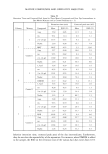
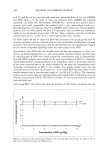
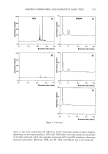
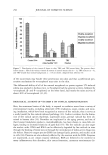
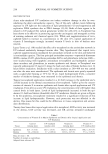
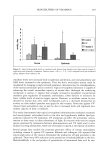
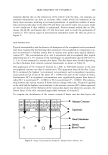
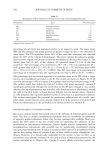
258 JOURNAL OF COSMETIC SCIENCE PHOTOPROTECTION Acute solar-simulated UV irradiation can induce oxidative damage in skin by over- whelming the skin's antioxidative capacity. Two of the early cellular events following exposure to UV light are the induction of lipid peroxidation (42) and suppression and replicarive DNA synthesis due to DNA damage (43,44). Both of these appear to be related to UV-induced free radical generation within the cells (45). (x-Tocopherol has been shown to be effective in protecting against the carcinogenic and mutagenic activity of ionizing radiation and chemical agents (46). While oral supplementation of (x-to- copherol failed to increase its concentration in the skin (47), topical application of vitamin E homologues strongly increased vitamin E levels in skin of hairless mice (38,30). Lopez-Torres eta/. (48) studied the effect of (x-tocopherol on the antioxidant network in UV-induced oxidatively damaged murine skin. They hypothesized that topical (x-to- copherol supplementation modulated the antioxidant network in the skin and bolstered its antioxidant capacity. The four principal antioxidant enzymes--superoxide dismutase (SOD), catalase (CAT), glutathione peroxidase (GPx), and glutathione reductase (GR)• were studied along with lipophilic antioxidant (x-tocopherol and hydrophilic antioxi- dants ascorbate and glutathione in murine epidermis and dermis. (x-Tocopherol was topically administered (5 mg/cm 2) along the back and sides of female hairless mice 24 hours before irradiation. Irradiation with a solar simulator at 290-400 nm was carried out after the mice were anaesthetized. The epidermis and dermis were gently separated with a scalpel after heating at 55øC for 30 sec. Lipid hydroperoxide levels, a sensitive marker of oxidative damage, were measured in the epidermis and dermis. Topical (x-tocopherol application resulted in a 62-fold increase in the epidermal and a 22-fold increase in the dermal concentration of (x-tocopherol. Table I gives the concen- trations of vitamin E in murine epidermis and dermis after topical application and UV irradiation. Even after an acute UV irradiation, the concentrations were still higher than control levels in both layers. Levels of lipid hydroperoxide increased in both the epi- dermis (11-fold) and dermis (threefold) after UV irradiation. Results are given in Figure 8. In the epidermis, (x-tocopherol treatment resulted in a significant reduction of this increase in lipid hydroperoxides. However, such protection was not afforded in the dermis. One reason for this could be the differences in tissue composition and antioxi- dant distribution. Twenty-four hours after topical application of (x-tocopherol, SOD activity was increased in the dermis, CAT activity was decreased, and GR activity remained unchanged. Table I Concentrations of Vitamin E in Murine Epidermis and Dermis After Topical Application and UV Irradiation Control UV-irradiated Vitamin E Vitamin E + Tissue (nmol/g skin) (nmol/g skin) (nmol/g skin) UV (nmol/g skin) Epidermis 16.5 + 4.4 (4) 10.0 + 3.4 (4) 1025.6 + 140.9 (5) 198.2 + 29.7 (4) Dermis 5.6 + 0.94 (4) 3.7 + 0.69 (4) 123.8 + 21.7 (5) 57.4 + 13.9 (5) Data are mean + SE. Number of animals in parentheses. Adapted from reference 48.

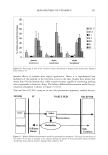
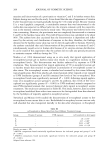
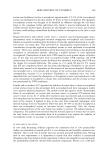
SKIN DELIVERY OF VITAMIN E 259 3 2 1 0 Dermis Epidermis [] Control [] UV+ Vit E Figure 8. Lipid hydroperoxide levels in epidermis and dermis from hairless mice after topical vitamin E application and ultraviolet irradiation. Data are mean _+ SE. n = 5. P 0.05 compared with non-irradiated group. Adapted from reference 48. Ascorbate levels were increased both in epidermis and dermis, and total glutathione and GSH levels increased in the epidermis. Thus the skin's antioxidant system could be modulated by changing a single network parameter, demonstrating the interdependence of the various antioxidant species involved. Topical ot-tocopherol treatment is capable of enhancing the overall antioxidant capacity of murine skin. Although the underlying mechanism is unclear, it appears that strongly increased ot-tocopherol concentrations modulate gene regulation of enzymatic antioxidants, either directly or indirectly by lower cellular levels of reactive oxygen species. However, as ascorbate cannot be syn- thesized by murine skin cells, other mechanisms such as a decreased demand for its activity as a free radical quencher may apply for this vitamin. Protection against UV- induced lipid peroxidation may in part be due to increased levels and improved anti- oxidant capacity of these co-oxidants. This study demonstrated that topical ot-tocopherol administration modulates enzymatic and non-enzymatic antioxidant levels in the skin and significantly inhibits lipid per- oxidation induced by UV irradiation. UV irradiation can affect the antioxidant concen- trations in three ways: (a) direct absorbance of light (b) reaction with reactive oxygen species generated by interaction between photosensitizers and UV light and (c) anti- oxidant recycling mechanisms, where one antioxidant is spared at the expense of another. Several groups have studied the potential protective effects of various antioxidants, including vitamin E, against UV exposure. Khettab and colleagues (49) reported that topical application of the vitamin diminished the production of lipid peroxides in the epidermis. There was a 60% reduction in the production ofmalondialdehyde in the skin. Malondialdehyde is the end product of peroxidation of unsaturated fatty acid by oxy-
Purchased for the exclusive use of nofirst nolast (unknown)
From: SCC Media Library & Resource Center (library.scconline.org)