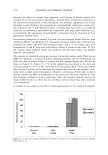
264 JOURNAL OF COSMETIC SCIENCE substantial skin-softening effect as compared to those using conventional soaps without vitamin E acetate. He found the skin-softening effect to be cumulative. Tamburic et (88) studied both the short-term and long-term moisturizing potential of a cosmetic o/w emulsion containing 5 % d-o•-tocopherol on healthy human volunteers. The capacitance- measuring method was used to evaluate changes in skin surface hydration. They found that d-o•-tocopherol in the concentration of 5% w/w did increase the moisturizing potential of a topically applied product when used on a long-term basis. On a short-term basis, however, no significant difference was found in the performance of the placebo and active emulsion, and the effect of o•-tocopherol was thought to be predominantly oc- clusive. ACNE VULGARIS Vitamin E combinations are thought to be directed toward certain pathophysiological characteristics of acne vulgaris. Oral administration of vitamin A and vitamin E to over a hundred patients at an average daily dose of 100,000 IU of vitamin A and 800 IU of vitamin E successfully controlled acne vulgaris with no untoward side effects. No antibiotics were necessary (89-91). This treatment was thought to correct the defects in keratinization due to dysfunction of the sebaceous follicles, thus preventing the forma- tion of milia (whiteheads) and comedones (black heads), depriving the Propio,ibacteri•m ac, es of adequate culture medium. Vitamin E also prevented irritating lipid peroxidation of sebum, damaged by bacterial growth, which is responsible for the inflammatory aspects of acne. MISCELLANEOUS Vitamin E has been indicated for the treatment of various skin diseases, alopecia, and periodontal disease. Williams eta/. (92) observed a marked improvement in nails treated with topical 5 % vitamin E solution in dimethyl sulfoxide to increase nail growth rates in yellow nail syndrome. Goldsmith (93) studied the effect of vitamin E on severe chronic thread fungus of the toenail (onychomycosis) and found a dramatic improve- ment. PERCUTANEOUS ABSORPTION OF VITAMIN E Skin delivery of an active ingredient from a topical formulation depends on its release and passive diffusion through the stratum corneum. In principle, this diffusion obeys Fick's law. If, for the purposes of simplification, it is assumed that the horny layer is a homogenous diffusion barrier, then according to Fick's law the penetration rate after steady state has been reached depends upon the concentration of the active ingredient in the vehicle, the mobility of the active ingredient (diffusion coefficient), and the inter- action of the active ingredient with the vehicle and the skin (distribution coefficient) (94). The penetration rate J is given as J = (K x D x C)/h (Eq. 3) where h is the thickness of the horny layer, D is the diffusion coefficient, c is the vehicle concentration, and K the distribution coefficient. The penetration properties of a for-

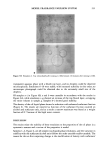
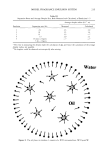
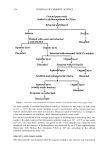
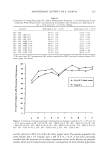
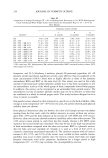
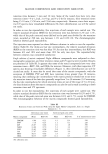
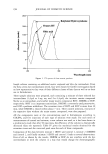
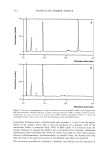
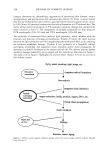
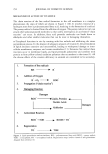
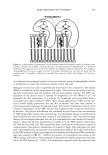
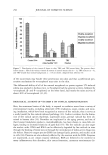
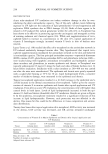
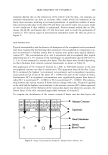
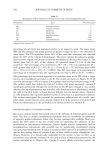
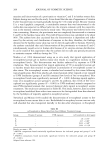
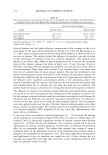
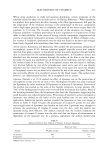
SKIN DELIVERY OF VITAMIN E 265 mulation depend also on the interaction of the vehicle with the skin--for example, an emulsion formulation can have an occlusive effect under which the hydration of the horny layer increases, resulting in increased penetration. A significant number of meta- bolic processes take place in the skin (95) and these can only be taken into account under in vitro conditions if skin viability is maintained. Various animal models like rat (96), mouse (30,38,48), and human skin (35,40) have been used to study the permeation of vitamin E. The various stages of percutaneous absorption across the skin are given in Figure 9. SKIN DISTRIBUTION Topical bioavailability and the kinetics of absorption of the tocopherols and tocotrienols have been evaluated by determining the localization of ot-tocopherol in comparison to or- and •/-tocotrienol in hairless mouse skin at various time points after topical adminis- tration (97). The concentrations of or- and •/-tocotrienol and 0t-tocopherol after topical administration of a 5% solution of the homologues in polyethylene glycol-400 for 0.5, 1, 2, or 4 h was measured in murine skin layers. The skin layers were divided depending on their thickness from stratum corneum downwards, as shown in Table II. The application of 5% vitamin E resulted in a 200- to 2000-fold increase in the skin ot-tocopherol content over that of control mice. The uppermost layer of the skin (5 pm, SC1) contained the highest •/-tocotrienol, ot-tocotrienol, and ot-tocopherol concentra- tions (pmol/cm2/p) of any of the layers (P 0.0001) for each of the vitamin E forms. Furthermore, SC1 ot-tocopherol concentrations were significantly greater than those of either SC1 •/-tocotrienol (P 0.0001) or SC1 ot-tocotrienol (P 0.0001). The relation- ship between the various vitamin E forms did not change with time. Vitamin E applied to the skin had the highest concentrations in the stratum corneum (SC1) when expressed per micron of skin. If the thickness of the various skin layers was taken into account, the lowest layers of the skin contained appreciable amounts of vitamin E. To compare the distribution of the various vitamin E forms into the skin layers, the I II I I II I II I i .• I I • I I • I I • I I I ," Stratum Comeum I II I I ! I I II I [ I I I I I II I I I I I I'• I I I I I I II I I1• I II I I II I ! ß ! ! I N. Pene•tion- Pertcation l•,o•ption •' Epidermi Basal Membrane Dermis Blood Vessel Figure 9. Stages of percutaneous absorption. Adapted from reference 101.
Purchased for the exclusive use of nofirst nolast (unknown)
From: SCC Media Library & Resource Center (library.scconline.org)