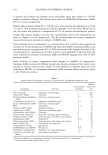
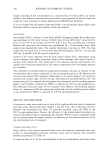
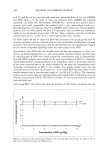
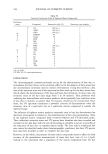
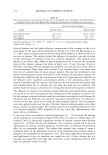
272 JOURNAL OF COSMETIC SCIENCE Table IV Skin Concentrations of tx-Tocopherol Acetate, Free tx-Tocopherol, and y-Tocopherol From Skin Biopsies of Subjects Treated for Three Months With Topically Administered tx-Tocopheryl Acetate Cream Skin concentrations (lag/g) Sample Baseline biopsy 3-Month biopsy o•-Tocopherol acetate 5.9 -+ 11.8 256.3 a _+ 195.5 tx-Tocopherol 38.9 -+ 17.9 36.3 b _+ 20.9 y-Tocopherol 6.0 _+ 3.9 4.4 c -+ 2.3 Statistical significance: a P = 0.068 b p = 0.465 c P = 0.273 vs. corresponding baseline values. Adapted from reference 110. bilizing behavior and the higher effective concentration of the vitamins in the oil or water phase for the same initial added amount. Forster et al. (101) and Kietzmann et (111) have used an isolated perfused bovine udder (BUS) model as a substitute for an in vivo test on humans. The authors studied the influence of emulsion type and structure on the penetration of vitamins E and A as cosmetic ingredients. The vitamins were applied at an infinite dose. Adhesive tape stripping was used to remove the outermost layers of the stratum corneum (ten layers of horny cells, 10 pm). Sections 20 pm in thickness, extending 200 pm through the epidermis into the top layer of the dermis, were dermatomed. Three times more vitamin E was absorbed from a w/o cream than from the oil solution from the same amount applied. This has been attributed to the greater thermodynamic activity of vitamin E in the emulsion. In multiphase systems, the distribution coefficient and the concentration of the active ingredient are dependent on the effective active ingredient concentration present in the solubilizing phase. The vitamin E absorbed into the top skin layer from the two o/w emulsions was greater than that absorbed from the oil solution, but less than that from the w/o emulsion. The authors found the stratum comeurn to be a strong penetration barrier against vitamin E. The influence of vitamin E on stratum corneum hydration and water-binding capacity was tested in o/w and w/o emulsions. The composition of the emulsions is given (112). For the stratum corneum hydration study the emulsions were applied on the forearm by volunteers and the hydration was tested by capacitance measurements. A combined in vitro/in vivo test was carried out to study the water-binding capacity. The test prepara- tions were applied evenly over the sole of the foot. Stratum corneum samples were taken using a stratum corneum scraper. This stratum corneum was completely hydrated in vitro in a humidity chamber (100% humidity, H20) over seven days. Measurements were made with an ultrabalance. In the case of the o/w emulsion, repeated application (n -- 15) increased the stratum corneum hydration, and vitamin E enhanced this effect. In contrast to vehicle alone, 5 % vitamin E led to a statistically significant increase of stratum corneum water-binding capacity (P = 0.0209). For the w/o emulsion, a 5% vitamin E content led to the best enhancement of stratum corneum hydration. In both types of emulsions the hydrating effect led to comparable results. The authors have assumed that vitamin E exerts a stabilizing effect on the bilaminate structure of the epidermal barrier lipids, which is thought to be responsible for the hydration (113). This study suffers from the limitation that application of the o/w emulsion was carried out for 14 days, whereas the w/o emulsion was applied for only eight days, and hence a strict comparison between both types of emulsions cannot be made.

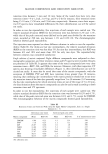
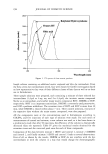
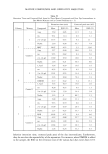
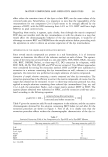
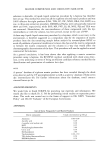
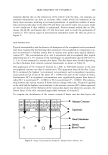
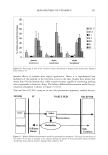
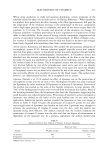
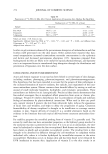
SKIN DELIVERY OF VITAMIN E 273 When using emulsions to study percutaneous absorption, certain properties of the emulsion should be taken into account such as: (a) Drying differences--When emulsions are applied, they spread over the skin, forming a thin film (approximately 400 pm). As the temperature of the emulsion increases to the temperature of the skin, components with a high vapor pressure start to evaporate, and most of the water escapes from the emulsion in 5-10 min. The viscosity and structure of the emulsion can change. (b) Vitamin solubility--Uniform penetration of active ingredients is required even if they differ in their solubility. In the course of drying, volatile components evaporate and the content of nonvolatile components increases correspondingly. (c) Effect of droplet size-- For vitamin E emulsions, penetration into the skin was found to be faster and stronger from finely dispersed microemulsions than from conventional emulsions. Aerosol so/zttion. Kamimura and Matsuzawa (40) studied the percutaneous absorption of ot-tocopheryl acetate (0.5% benzene solution) sprayed topically across skin samples obtained from plastic surgery. ot-Tocopheryl acetate was easily absorbed through healthy skin as determined by the autoradiographic measurements. ot-Tocopheryl acetate was absorbed into the stratum corneum through the surface of the skin in the first place. Secondly, the agent was absorbed into all the layers of the epidermis, and then went into the various tissues in the dermis. The ot-tocopheryl acetate was also found to infiltrate into the hair follicles by way of the pilosebaceous canal, and a part of it was directly absorbed into the connective-tissue sheaths by way of the inner and outer root sheaths. ot-Tocopheryl acetate was not found to be absorbed by way of the sweat gland. There was also noticeable affinity of ot-tocopheryl acetate for the blood vessels. The authors have, however, not differentiated between the ot-tocopherol and its acetate. Liposomes. Natsuki et al. (114) studied the effect of liposome size on the penetration of ot-tocopheryl acetate into the rat skin in vitro. Hydrogented lecithin was used to prepare the liposomes by either sonication (S-liposomes) or injection (I-liposomes). Recovery of the lecithin was studied on the arms of five healthy volunteers. A large amount (50- 70%) of the hydrogenated lecithin was recovered from the human skin surface. More of the lecithin penetrated from the S-liposomes than from the I-liposomes, suggesting that small liposome size enhanced penetration. Penetration of vitamin E acetate entrapped in liposomes was studied on the backs of five male hairless rats 30 min after topical application. Submicron particle analysis revealed the liposomes to have size ranges as shown in Table V. Table VI gives the penetration of vitamin E acetate 30 min after topical application of liposomes into hairless rat back skin. Liposomes were thought to promote the penetration of vitamin E acetate into the skin, with the smaller size liposome being more effective. The authors conclude that the lecithin enhanced the penetration of vitamin E acetate into the skin and that the degree of enhancement is dependent on the liposome size. In a previous experiment the authors showed that Table V Submicron Particle Size Analysis of Vitamin E Acetate Liposomes Mean size (nm) Sample Weight average Number average I-Liposome 188 147 S-Liposome 31 14 Adapted from reference 114.
Purchased for the exclusive use of nofirst nolast (unknown)
From: SCC Media Library & Resource Center (library.scconline.org)