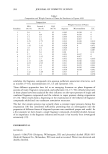
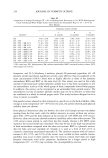
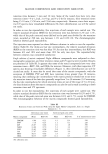
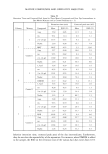
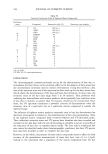
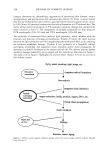
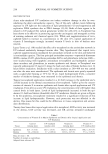
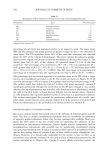
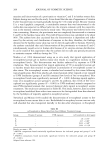
274 JOURNAL OF COSMETIC SCIENCE Table VI Penetration of 14C-VEA 30 Min After Topical Application of Liposomes Into Hairless Rat Back Skin Radioactivity of 14C-VEA (% of dose) Sample Recovery Skin Free VEA 70.64 + 1.35 17.23 + 1.05 I-Liposome 65.75 + 0.03 • 22.60 + 0.54 b S-Liposome 58.13 _+ 2.50 b'd 28.72 _+ 1.13 c'• Values are mean ñ S.E. from six rats. Significantly different from free VEA at •P 0.02, S P 0.01, and c P 0.001, and different from I-liposomes at d p 0.05 and •P 0.01. Adapted from reference 114. lecithin in gel-ointment enhanced the percutaneous absorption of indomethacin and that lecithin itself penetrated into the skin tissues. Other authors have reported that lipo- somal encapsulation increased triamcinolone acetonide concentration in the epidermis and dermis and decreased percutaneous absorption (115). Liposomes prepared from hydrogenated lecithin are likely to be useful for topical pharmacotherapy, and liposome size is an important factor in transdermal drug absorption through the distribution and penetration of liposomes into the skin surface. CONCLUSIONS AND FUTURE DIRECTIONS Acute and chronic exposure to sun rays has been linked to several types of skin damage, including sunburn, photoaging, photocarcinogenesis, and photoimmunosuppression. One hypothesis that has been extended to account for the genesis of skin pathologies is the increased formation of reactive oxidants, free radicals, and impairment of the cuta- neous antioxidant system. Nature counters these harmful effects by arming us with an arsenal of small molecular lipophilic, hydrophilic, and enzymatic antioxidants. These antioxidants are believed to act synergistically. Preclinical data clearly demonstrate that free-radical scavengers like ot-tocopherol afford protection from acute or chronic pho- todamage. Vitamin E inhibits disturbances due to peroxidation of lipids and stabilizes biological membranes by physicochemical interactions. When used in skin care prod- ucts, natural vitamin E protects the skin from ultraviolet light, reduces the appearance of facial lines and wrinkles, and helps to delay the progression of aging. Cutaneous bioavailability of dietary tocopherol is thought to be insufficient to scavenge reactive oxidants in skin. Topical delivery of vitamin E is a suitable alternative based on the evidence in the literature that such topical delivery boosts cutaneous antioxidant func- tion. For stability purposes the esterified prodrug form of vitamin E is generally used. The acetate by itself does not have antioxidant properties, as the hydroxyl group involved in the oxidation reaction is protected in the ester. If it is to act as an antioxidant, the ester must be hydrolyzed to release the free ot-tocopherol. Both human and murine skin have been shown to absorb and accumulate cx-tocopheryl acetate. The prodrug form is then thought to be absorbed by diffusion through the cell membrane to cytoplasm within individual cells, where it is further hydrolyzed by intercellular enzymes to the active cx-tocopherol. Hydrolysis occurs in human skin and has been found to be enhanced by UVB irradiation in murine skin. Application of vitamin E to the skin results in an

SKIN DELIVERY OF VITAMIN E 275 increase in stratum corenum levels of the active. The dermis with its associated sweat glands also has a special affinity for vitamin E. Vitamin E is absorbed into all layers of the epidermis and then goes into various tissues in the dermis. It is thought to infiltrate into the hair follicles by way of the pilosebaceous canal. Few delivery systems of tx-tocopherol have been studied to date, and there is little definitive comparison of the delivery of tx-tocopherol from different formulations. Fur- ther studies on the effect of various formulation parameters on the absorption and release of tx-tocopherol in human skin are necessary. Despite the number of papers on vitamin E, enzymatic bioconversion of vitamin E acetate to the active form and its percutaneous absorption from formulations has not been systematically characterized. In vitro studies should take into consideration skin viability, receptor suitability, and skin manipulation techniques so that the enzyme activities in the skin are not compro- mised throughout the experiment. Knowing that the molecular pathways leading to the various cutaneous pathologies are presumably unique, a suitable biological endpoint is critical in in vivo studies. Optimization of delivery will insure a place for vitamin E in the cosmetic scientist's armamentarium for the next millenium. REFERENCES (1) K. Furuse, Vitamin E: Biological and clinical aspects of topical treatment, Cosmet. Toilerr., 102, 99-116 (1987). (2) B. Idson, Vitamins in emolliency and moisturizing preparations, Cosmet. Toilerr., 93, 77-79 (1978). (3) B. Idson, Vitamins and the skin, Cosmet. Toiletr., 108, 79-94 (1993). (4) J. B. Massey and H.J. Pownall, Interaction of o•-tocopherol with model human high-density lipo- proteins, Bipophys. J., 75, 2923-2931 (1998). (5) C. R. Taylor, R. S. Stern, J. J. Leyden, and B. A. Gilchrest, Photoaging/photodamage and photopro- tection, J. Am. Acad. Dermatol., 22, 1-15 (1990). (6) A.L. Norris, Free radical formation in the skin following exposure to ultraviolet light, J. Invest. Dermatol., 39, 445•448 (1962). (7) M.A. Pathak and K. Stratton, Free radicals in human skin before and after exposure to light, Arch. Biochem. Biophys., 123,468•476 (1968). (8) E. Niki, "Function of Vitamin E as Antioxidant in the Membranes," in Vitamin E: Its Usefulness in Health and in Curing Diseases, M. Minoe, H. Nakamura, A.T. Diplock, and H.J. Kayden, Eds. (Karger, New York, 1992), pp. 23-30. (9) A. Kamal-Eldin and L-A. Appleqvist, The chemistry and antioxidant properties of tocopherols and tocotrienols, Lipids, 31, 671-701 (1996). (10) D. Djerassi, Vitamin E: Biochemical function and its role in cosmetics, Drug Cosmet. Indus., 138, 46•49, 77 (1986). (11) M. Meydani, C. P. Verdon, and J. B. Blumberg, Effect of vitamin E, selenium and age on lipid peroxidation events in rat cerebrum, Nutr. Res., 5, 1227-1236 (1985). (12) K. U. Ingold, G. W. Berton, D. O. Foster, M. Zuker, L. Hughes, S. Lacelie, E. Lusztyk, and M. Slaby, A new vitamin E analogue more active than tx-tocopherol in the rat curative myopathy bioassay, FEBS Lett., 205, 117-120 (1986). (13) K.U. Ingold, A. Webb, D. Witter, G. W. Burton, T. A. Metacalfe, and D. P. Muller, Vitamin E remains the major lipid-soluble, chain-breaking antioxidant in human plasma even in individuals suffering severe vitamin E deficiency, Arch. Biochem. Biophys., 259, 224-225 (1987). (14) K.U. Ingold, G. W. Burton, D. O. Foster, and L. Hughes, Further studies of a new vitamin E analogue more active than tx-tocopherol in the rat curative myopathy bioassay, FEBS Lett., 267, 63-67 (1990). (15) K. U. Ingold, G. W. Burton, D. O. Foster, and L. Hughes, Is methyl-branching in tx-tocopherols "tail" important for its in vivo activity? Rat curative bioassay measurements of the vitamin E activity of three 2RS-n-alkyl-2, 5, 7, 8-tetramethyl-6-hydroxychromans, Free Rad. BioL Med., 9, 205-210 (1990).
Purchased for the exclusive use of nofirst nolast (unknown)
From: SCC Media Library & Resource Center (library.scconline.org)