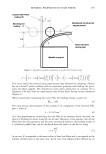
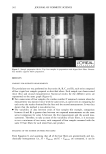
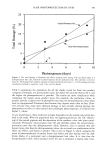
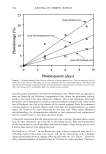
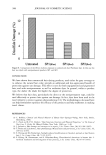
HAIR PHOTOPROTECTION BY DYES 379 and ten minutes, respectively, according to package instructions. Due to obvious busi- ness reasons we have chosen not to identify the products by brand names. These products contain combinations of typical dye ingredients such as phenylenediamines, aminophe- nols, resorcinols, and naphthols (1). A set of undyed fibers was used as the control. Tensile measurements (as described above) were performed on the dyed fibers to deter- mine the damage resulting from the oxidative coloring process. Tensile measurements were repeated after these fibers were exposed to simulated sunlight in the Atlas Fad- ometer Ci35A, maintained at 50øC and 50% RH, [br three, six, and nine days, which is equivalent to cumulative irradiation of 10.4, 20.8, and 31.2 kj/cm 2 respectively. , In general, the total damage was calculated according to the following equation: %Total damage = [(F•5(o ) - F•5(o)/F•5(o))] x 100 (1) where F•5(o ) and F•5(o represent, respectively, the force required for 15% extension at zero time (before dyeing and with no photoirradiation) and after dyeing and photoir- radiation for time t. For oxidatively colored hair, there was an initial damage upon dyeing, which can be represented as: % Chemical damage = [(F15(undyed ) - F15(after dyeing))/F15(undyed) ) 100 (2) Photodamage was calculated by removing the contribution of chemical damage (equa- tion 2) from the total damage measured at any given irradiation time (equation 1), as follows: % Photodamage = [(F15(afterdyeing ) - F15(t))/F15(afterdyeing)] x 100 (3) Photoprotection was then calculated as follows: % Photoprotection = [(slopeu,•dyed - slOpedyed)/SlOpeu,•dycd] X 100 (4) where the slopes were obtained from the plots of photodamage vs time. SEMIPERMANENT PRODUCTS Piedmont hair from DeMeo Brothers (New York) was used in these experiments. Hair tresses typically weighed 2 g and were -6 inches long. Hair dyeing was performed according to the instructions on the product packages. Two shades, the flame (red) and indigo (blue-black) of product 1 and the auburn shade of product 2 were tested as representatives of semipermanent dyes. Semipermanent dye products typically contain a combination of dyes, such as nitrophenylenediamines, nitroaminophenols, and amino- anthraquinones (1). Two tresses were dyed with each shade, according to product in- structions. Two undyed tresses were used as controls. All tresses were mounted in covers, exposing the middle 2 inches of each tress, and irradiated in the Fadometer (Atlas Ci35A) at 50øC and 50% RH. After 12 hours the tresses were flipped and irradiated for another 12 hours. The tresses were then shampooed and dyed again. This whole pro- cedure was repeated three more times. This amounted to a total of 96 hours of irradiation (13.9 kj/cm2), with three dyeings in between. This protocol is somewhat different from that used for the products based on oxidation dyes, and better reflects the in-use conditions associated with this product category.

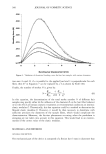
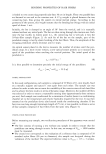
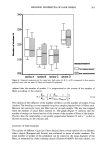
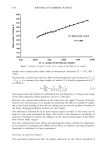
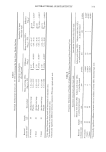
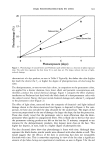
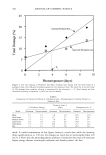
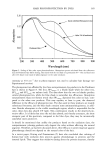
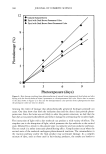
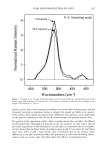
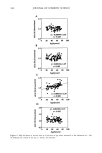
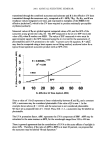
380 JOURNAL OF COSMETIC SCIENCE Raman measurements. Raman measurements were performed on a Nicolet 950 Raman spectrometer using the 1064-nm light beam of the Nd+3-YAG CW laser at a power level of-90 roW. The beam diameter was ca. 1 min. Data were collected at a nominal resolution of 8 cm -1. Each run consisted of 1000 co-added scans. Two measurements were made on the exposed portion of each tress and two on the unexposed area. The data were averaged to obtain the representative spectra for each tress. The averaged spectra for a tress were then combined with the data similarly obtained for the other tress to produce average spectra for a given treatment. The background fluorescence was re- moved using the OMNIC © baseline routine. The spectra were then normalized using 1450 cm- 1 methylene stretch, considered invariant, using the OMNIC © library routine. The characteristic features of the Raman spectra, thus obtained, have been discussed previously (12). It should be noted that the measurement sites on the exposed and the unexposed areas were spatially separated by no more than 2 cm to keep to a minimum the differences between these regions due to natural weathering. This was confirmed by Raman measurements prior to photo-exposure, which showed no measurable difference between these sites. The amount of damage was then calculated from the changes in the intensity of the band at ca. 510 cm -1 due to S--S stretching, as follows: % Damage = [(I(unexposed ) - I(exposed))/l(unexposed)] X 100 (5) Reflectance measurements. Measurements were made using a Perkin-Elmer Lambda 6 in- strument connected to a Labsphere integrating sphere. Hair tresses were measured directly in the reflectance mode and converted into absorbance units by the data manager software. RESULTS AND DISCUSSION The effect of sunlight on the mechanical strength of the pigmented and the unpig- mented hair fibers is compared in Figure 1. The data clearly reveal that the mechanical strength of the unpigmented hair is compromised at a significantly faster rate than that of the natural brown hair. Since the diameter of the pigmented hair fibers was only ca. 5 % larger on average, compared to the unpigmented fibers, the difference in the pho- todamage rate represents the photoprotection afforded by the melanin pigment. The photoprotective aspect of melanin has also been described previously in the literature (5,8,9). Dyeing of hair results in the deposition of color on the cuticles and, depending on the product, a significant amount may also penetrate all the way inside the fibers. In contrast, the natural color is localized in the cortex. Barring any secondary effects such as photochemical reactions, we would expect the hair color to provide protection against sun damage by partially absorbing and thereby attenuating the incident light. Figure 2 shows the effect of permanent hair coloring on the photodamage rate of hair fibers. Notice that the dyed fibers are initially (no photo-exposure) weaker than the control fibers due to oxidative damage to hair during the coloring process. Photoirradiation affects the colored and the control fibers differently the colored fibers are damaged less than the undyed control fibers at each irradiation level. The net effect of this difference in the rate of damage is that beyond a characteristic irradiation time, where the two lines intersect, the dyed fibers are stronger than the control. This crossover time, 7o is
Purchased for the exclusive use of nofirst nolast (unknown)
From: SCC Media Library & Resource Center (library.scconline.org)