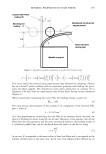
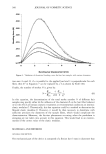
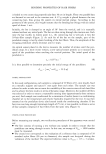
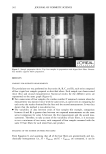
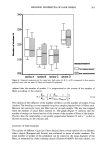
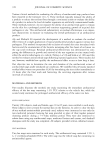
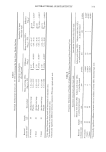
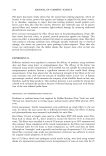
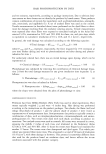
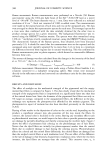
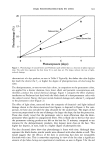
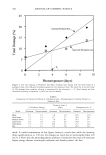
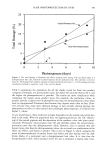
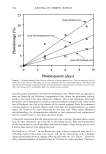
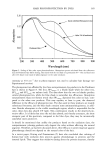
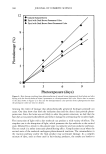
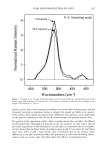
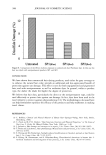
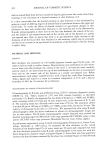
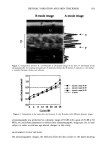
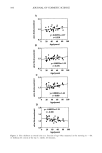
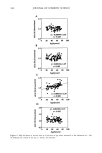
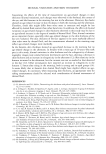
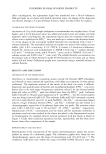
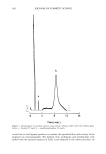
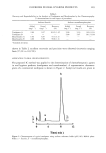
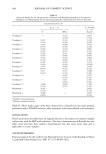
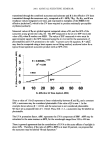
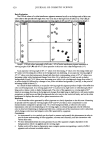
HAIR PHOTOPROTECTION BY DYES 381 20 air 0 3 6 9 Photoexposure (days) Figure 1. Photodamage of natural brown and Piedmont (pale yellow) hair as a function of photo-exposure time. The solid lines represent the best linear fit to each data set. The slopes indicate the rate of light- induced damage. characteristic of a dye product, as seen in Table I. Typically, the darker the color (higher dye load) the shorter the x c, or higher the degree of photoprotection, all else being the same. The demipermanent, or tone-on-tone hair colors, in comparison to the permanent colors, are applied for a shorter duration, have lower alkali and peroxide concentrations and, therefore, produce less initial chemical damage. Figure 3 compares the effect of photo- irradiation on Piedmont hair dyed with the black shade of a demipermanent color with the undyed control. Notice the lower initial chemical damage and a shorter x c compared to the permanent color (Figure 2). The effect of light alone, extracted from the composite of chemical- and light-induced damage shown in the above-mentioned two figures, is depicted in Figure 4. For com- parison, we have also included the data obtained for the undyed hair. The slopes of the curves are proportional to the rate of damage: the larger the slope, the less the protection. These data clearly reveal that the permanent color is more efficacious than the demi- permanent when applied to unpigmented fibers. This is likely due to the fact that since the permanent coloring products are left on the hair for 25 minutes, compared to ten minutes for the demipermanent products, they deposit more dyes on the hair. This higher dye deposit, in turn, leads to a higher degree of photoprotection. The data discussed above show that photodamage is linear with time. Although these represent the black shades, similar results were obtained with other shades as well. This would suggest that the efficacy of the dyes in protecting hair does not measurably diminish with time. This is somewhat surprising in view of the fact that a significant amount of dye fades during our experimental conditions, as seen in Figure 5 for the red

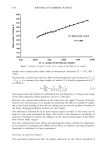
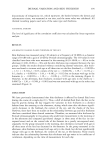
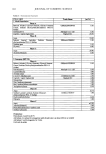
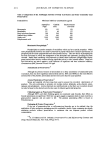
382 JOURNAL OF COSMETIC SCIENCE 25 20 15 10 Untreated Piedmont Hair..,x•. • [] Dyed with Permanent color I I I ! 0 2 4 6 8 10 Photoexposure (days) Figure 2. The total damage to Piedmont hair fibers resulting from dyeing with the black shade of a permanent hair color, followed by photo-exposure for the indicated times. The solid line is the best linear fit. The damage from oxidative coloring is represented by the intercept (t : 0). Total damage has been calculated according to equations 1 and 2 (see text for details). Table I. Comparison of Various Attributes of a Permanent and a Demipermanent Coloring Product on Piedmont Hair % Oxidative damage Crossover time, ' c (days) Photoprotection, % Shade Permanent Demipermanent Permanent Demipenmnent Permanent Demipermanent Black 5.7 2.3 3.8 3.0 62.9 35.8 Dark brown 7.2 5.4 6.7 5.7 39.6 36.1 Medium brown 7.4 4.1 7.8 6.1 34.3 25.7 Light brown 6.9 2.8 9.0 6.0 24.8 13.5 Dark blonde 7.9 3.3 10.0 5.5 27.2 24.1 Red 7.3 3.5 9.5 5.8 29.5 24.2 shade. A careful examination of this figure, however, reveals that while the intensity drops significantly at ca. 520 nm, the changes are much less at wavelengths below 420 nm. It is likely that the photodegradation products of oxidation dyes may still attenuate higher energy (shorter wavelength) radiation and thereby protect the hair.
Purchased for the exclusive use of nofirst nolast (unknown)
From: SCC Media Library & Resource Center (library.scconline.org)