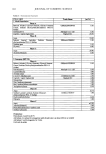
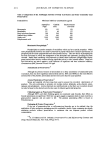
424 JOURNAL OF COSMETIC SCIENCE Table 2 Comparison of the Antifungal Activities of Fatty Acid Esters and Some Commonly Used Preservatives Food additives Minimum inhibitory concentration (lag/ml) Aspergillus Candida Saccharomyces Niger utilis cerevisiae Monocaprin 123 123 123 Monolaurin 137 69 137 Butyl-p-hydroxybenzoate 200 200 200 Sodium lauryl sulfate 100 400 100 Sorbic acid 1000 1000 1000 Dehydroacetic acid 100 200 200 4 Biomimetic Phospholipds Phospholipds are another example of emulsifiers which can have special properties. While some phospholipids 0ecithin) can inactive preservatives, lipids which mimic structure and function of phospholipids have been prepared that have antimicrobial activity. This new family ofphospholipids has been developed in which the arrangement of the phosphate and quaternary groupings has been reversed. Rather than interfering with preservative systems these biomimetic phospholipids display potent antimicrobial activity without showing significant toxicity or skin irritation effects. These new lipid derivatives are active against a wide spectrum of organisms and have minimum inhibitory concentrations (MIC) between 50 and 1250 ppm Antioxidants as Preservatives Although the primary function of antioxidants is to delay autoxidation of unsaturated lipids in products, they also show significant antimicrobial activity. BHA and TBHQ are the most effective antimicrobial of the phenolic antioxidants and are more active than the usual parabens. 6 Aroma Chemicals as Preservatives Spices and essential oils have long been used to prevent the microbial deterioration of products. The active principles in aromatic oils include alcohol, aldehydes, acids, phenols, esters, terpenes and polyphenols. Aroma chemicals are multifunctional so that their use in products should not only be based on the desired scent but also upon its inherent germicidal properties. Chelating Agents as Preservative Potentiators • Although EDTA and other chelating agents are considered weak biocides, their effects as biocide potentiators are significant. With their use gram-negative organisms tends to react more like a gram-positive organism and are easier to kill. The greatest potentiating effect is found on Pseudomonas sp. 8 Packaging & Product Preservation If the use of preservative-free or self-preserving formulas are to be realized, then the application of better protective packaging must be considered a hurdle. Some companies are already marketing products without preservatives in containers that can dispense product without contamination. 1-8 In J.J. Kabara and D.S. Orth(Eds.) Preservative-Free and Self preserving Cosmetic and Drugs. Marcell Dekker, Inc. New York, 1997,pp 45-73.

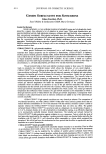
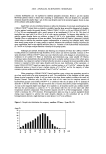
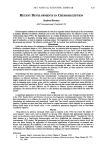
2001 ANNUAL SCIENTIFIC SEMINAR 425 RECENT DEVELOPMENTS IN CHEMORECEPTION Stephen Herman AFF International, Fairfield, NJ Chemoreception embraces the mechanisms by which an organism detects chemicals in the environment. In humans, detection of airborne chemicals can involve the trigeminal nerve, the olfactory system, or the volmeronasal organ (VNO). The trigeminal nerve is a widely distributed nerve network covering the fxont of the head It is a ba?ardous warning signat, creating a stinging sensation to ammonium hydroxide, the pain of toothaches, or tears in response to pealing onions. The trigeminal nerve is of limited importance to the personal care chemist. The olfactory system and VNO, by contrast, have profound significance. Mechanisms Unlike the other senses, the mechanism of off action has defied our total understanding. The modern era of offactory elucidation began in 1991. Before that year, two theories held the interest of investigators• the stereochemical theory of John Arnoore •, and the vibrational theory of Luca Turin 2. Each of these theories successfully explained the odor relationships of certain molecules but failed to explain others. In 1991, a seminal paper by Buck and Axel 3 applied the tools of modern genetics to the offactory mechanism. The odor binding protein was identified as a 74ransmembrane domain protein, similar to hormone receptors. A biochemical amplification cascade triggered an ion channel that sent a signal to the offactory bulb, and thence to the decoding area of the brain. The continuing work under Buck 4 established the combinatorial nature of odor decoding. The ideal benefit of this research, from the perspective of the fragrance industry, would be to finally understand the structure/function relationship for odors• this has not been achieved. There are approximately 1000 odor receptors for detecting 10,000 odors, so there cannot be a one-to-one correspondence between receptors and odor molecules. Aromascience Azomatherapy has been claimed as a feature of many personal care products, but it is more proper to apply the term "aromascience" rather than "aromatherapy". Aromascience studies the temporary effects on emotions via olfactory pathways. The most that can be functionally beneficial for these products is a slightly improved mood. Aromascience has been extensively utilized to influence behavior in environments such as shopping areas, casinos, gyms, and the workplace. A personal care application using olfacfion to influence mood was launched by Hirsch s, using his data showing that certain food odors increased penile or vaginal blood flow. A quite different use of olfaction to enhance product positioning is to employ synesthesia, the relation between the senses, to color products and packaging to most effectively match the aroma 6. VNO A significant application of the chemical senses in personal care may come through increased attention to the VNO. Realm (Erox) and Perceive (Avon) are two fragrances containing pheromones. The intent of these pheromones is to enhance the mood of the wearer, not as sex-ual attractants. Well-known human pheromones are androstenone and androstenal. Astrid Jutte 6 has recently reported pheromonal activity in copulins. Copulms are short chain fatty acids found in vaginal secretions, which allegedly act as attrac•mts during fertile times of the female cycle. A few commercial pheromone fragrances such as Date-Mate incorporate copulins. Pherins Drug delivery by pherms, chemicals which cause a response in the VNO, have been lhe subject of recent patents ?. Some work, such as Dorries 8 on the pig VNO, indicates that pheromonal response can occur via the olfactory system when the VNO is blocked. Berliner and Monfi-Block 9'•ø consider the VNO in adult humans as a functioning chemoreceptor, and have established the anatomical foundations of contemporary VNO studies. The perception of pheromones as high priced items used at minute levels has been one factor limiting the exploration of mass-market applications of pheromones in personal care. Recent work indicates the availability in the near future of economical pheromones that can be used in a wide range of applications. Cosmetic researchers willing to add VNO actives to new products may revolutionize the effectiveness of these formulations by adding a new sensory dimension. References 1. Arnoore, John E., Molecular Basis of Odor, Charles C. Thomas, 1970. 2. Turin, Luca, A spectroscopic mechanism for primary olfactory reception, Chem. Senses, 21,773- 791, 1996.
Purchased for the exclusive use of nofirst nolast (unknown)
From: SCC Media Library & Resource Center (library.scconline.org)