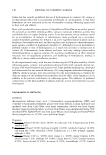
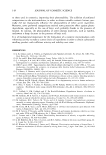
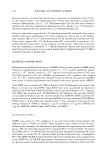
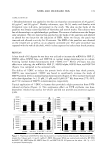
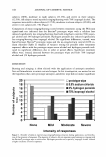
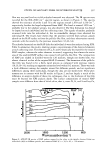
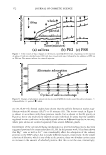
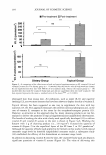
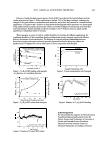
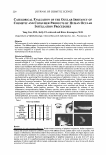
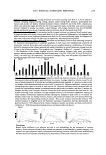
152 JOURNAL OF COSMETIC SCIENCE 6.00 ,-----------------------------------, 71% 5. 00 +-- - - - - ---------------- C 4.00 ·a5 Cl) I C) 2.00 C 1.00 Control Sorbitol 1 00mM 1.25 2.5 10uM (7DHC) concentration uM Figure 2. Expression of HSP70 protein in normal human keratinocytes treated with 7-DHC. Keratinocytes were treated for 24 hours with 1.25, 2.5, and 10 µM of 7-DHC. Cells were homogenized and the levels of HSP70 determined by ELISA. Sorbitol was used as a positive control. Data are expressed as nanograms of HSP per well and are the mean of three wells. CONCLUSION 7-Dehydrocholesterol-treated cultured normal human keratinocytes have increased levels of mRNA for the heat shock proteins HSP90 alpha, HSP90 beta, HSP70A, and HSP27. The levels of HSP70 protein as determined by ELISA were also increased as a result of 7-dehydrocholesterol treatment in cultured normal human keratinocytes. Clinical treat ment with 7-dehydrocholesterol on human skin increased the value of the minimal erythemal dose. Previously, 1,25-dihydroxyvitamin D3 was shown to provide a photoprotective effect on human skin (20) and mouse skin (21). This molecule may provide endogenous photo protection, but its mechanism of action is not known. 1,25-Dihydroxyvitamin D3 has been shown to increase the synthesis of heat shock proteins in monocytes ( 13) and of metallothionein in mouse keratinocytes (32), and provide protection against a variety of environmental stresses in these systems ( 12, 13). 7-Dehydrocholesterol may induce heat shock proteins by directly activating heat shock protein synthesis. Alternatively, 7-DHC may be converted to 1,25-dihydroxyvitamin D3. 7-Dehydrocholesterol is converted into vitamin D3 in the stratum spinosum (22,23), and vitamin D3 has been shown to be converted to the active 1,25- dihydroxyvitamin D3 in cultured human keratinocytes and skin models (24). Therefore, 7-dehydrocholesterol may be a pro-ingredient that is converted by the skin into heat

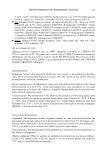
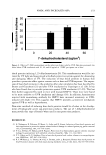
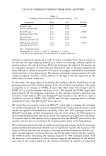
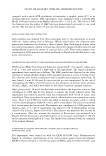
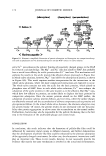
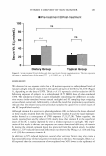
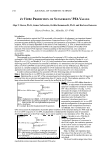
NHEK AND INCREASED HSPs 153 C'CI 50 E m .c 40 m 30 C C 20 0 ::I 10 � 0 o o 20 40 60 7- dehydrocholesterol (ug/cm2) Figure 3. Effects of 7-DHC pretreatment on the induction of skin color by UVB. Skin was pretreated two hours before UVB irradiation with 20, 40, and 60 µg/ml of 7-DHC per square cm of skin. shock proteins inducing 1,25-dihydroxyvitamin D3. This transformation would be ini tiated by UV light and may provide a feedback protective system against the denaturing and damaging effects of UV. The induction of heat shock proteins in human skin provides a protective effect against stresses such as heat and UVB exposure. The expres sion of heat shock proteins in the epidermis after solar simulation has been described by Brunet and Giacomoni (25) and after UVA irradiation by Trautinger et al. (26). It has also been found that it provides protection against UVB irradiation (27-29). This has been further supported by work in mice with mutated HSP70. These mice were found to be more sensitive to UVB irradiation and damage (30). In addition, keratinocytes injected with neutralizing antibody for HSP70 have increased sensitivity to UVB induced cell death (31). This suggests that HSP70 provides a protective mechanism against UVB as well as hypertherma. Non-toxic methods of inducing heat shock proteins would be of value in the develop ment of biologically active sun-protection products. The use of 7-dehydrocholesterol may provide this type of benefit when used in sun-protection products. REFERENCES (1) K. Nakamura, K. Rokutan, N. Marni, A. Aoike, and K. Kawai, Induction of heat shock proteins and their implication in protection against ethanol-induced damage in cultured guinea pig gastric mucosal cells, Gastroenterology, 101, 161-166 (1991). (2) Y. Liu, H. Kato, N. Nakata, and K. Kogure, Protection of rat hippocampus against ischemic neuronal damage by pretreatment with sublethal ischemia, Brain Res., 586, 121-124 (1992). (3) V. L. Gabai and A. E. Kabakov, Rise in heat-shock protein level confers tolerance to energy depriva tion, FEBS Lett., 327, 247-250 (1993). (4) R. S. Williams, J. A. Thomas, M. Fina, Z. German, and I. J. Benjamin, Human heat shock protein 70 (hsp70) protects murine cells from injury during metabolic stress,]. Clin. Invest., 92, 503-508 (1993).
Purchased for the exclusive use of nofirst nolast (unknown)
From: SCC Media Library & Resource Center (library.scconline.org)