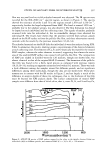
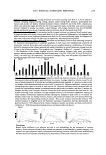
LACK OF BURNING/STINGING FROM FIRST-AID WIPES 159 such a value was not reached, an additional five to ten strippings were performed and the TEWL was remeasured. This continued until a desirable TEWL was reached. Wounding was staggered for each test site. After wounding at the first site was com pleted, the wound was tested with the assigned study formulation. Stripping on the following wound started approximately five minutes from the application of the test formulation to the prior wound, so that there was an interval of at least ten minutes between the sensory assessment of the two wounds. FORMULATIONS AND STINGING/BURNING ASSESSMENT The test article prototype was a first-aid wipe with a cellulose base containing 1.0% pramoxine HCL, 0.13% benzalkonium chloride (Bactine®, Bayer, Morristown, NJ). Three controls were also included: (a) 0.9% sodium chloride (generic, USP) on a cellulose base wipe, used as the no-sting/no-burn control (b) 3% hydrogen peroxide (generic, USP) on a non-woven Webril® cotton pad, used as a first-aid sting/burn control and (c) 70% isopropyl alcohol (generic, USP) on a non-woven Webril® cotton pad, used as a second sting/burn control. This positive control was included to assess the sensory response capability of the subjects. To assure the use of clean cotton pads during the procedure, we used the Webril® pads housed in a 25-mm Hill Top Chamber (Hill Top Research, Cincinnati, OH) and removed them by means of forceps. All wipes and pads were cut to approximately the same size (2 x 2 cm) and were saturated with the assigned test formulation. The prototype wipe was already presatu rated and was cut to match the size of the other wipes. Saturation of the wipes or pads was conducted just prior to application. Each test formulation was applied to one of the four tape-stripped wounds immediately after wounding and was left on the site for 15 seconds. The application was randomized and double-blinded so that neither the applicator-technician nor the subject knew which study formulation was used. During the 15-second application, the subjects were asked to report if they experienced a stinging or burning sensation, and if so, its intensity. The stinging/burning responses were categorized as follows: 0 = none, 1 = mild, 2 = moderate, and 3 = severe. A subject's data was excluded from the analysis if he/she reported a score of O on all the test sites, since this implied a lack of sensory responses also to 70% isopropyl alcohol. The statistical design was a four-period crossover (William's Design) study (9). Wil coxon's signed-rank test was used to compare the test articles. Analyses appropriate for a two-period crossover were conducted with the prototype Bactine® group versus the alcohol control product and the hydrogen peroxide product to test for possible order (treatment sequence) effects. All hypothesis testing was two-sided at the alpha = 0.05 level. RESULTS Six subjects (25%) reported mild burning and stinging with the Bactine® prototype wipes. Seven subjects (29.2%) reported mild burning and stinging with the 0.9% sodium chloride. With 3% hydrogen peroxide, the stinging/burning was mild in twelve

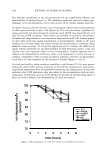
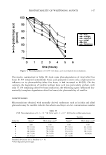
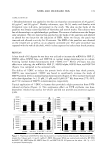
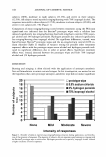
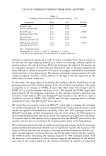
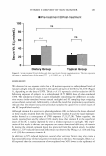
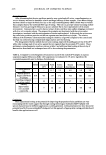
160 JOURNAL OF COSMETIC SCIENCE subjects (50%), moderate in eight subjects (33.3%), and severe in three subjects (12.5%). AH subjects tested reported stinging/burning with 70% isopropyl alcohol. The responses were mild in three subjects (12.5%), moderate in eleven subjects (45.8%), and severe in ten subjects (41.7%) (Figure 1). Comparisons of mean stinging/burning scores between treatments using the Wilcoxon signed-rank test indicated that the Bactine® prototype wipes with a cellulose base induced significantly less stinging/burning than both sting/burn controls (70% isopro pyl alcohol and 3% hydrogen peroxide). Hydrogen peroxide also induced significantly less stinging/burning than isopropyl alcohol. No significant differences, instead, were found between Bactine® prototype wipes and the no-sting/no-burn control (0.9% so dium chloride) (Table I). Analysis of variance testing for possible order (treatment sequence) effects with the prototype wipes versus alcohol and hydrogen peroxide indi cated no significant differences due to order or period effects. Significant treatment effects were, instead, detected between the prototype wipes and both 70% isopropyl alcohol and 3% hydrogen peroxide. DISCUSSION Burning and stinging is often elicited with the application of antiseptic-anesthetic first-aid formulations to minor cuts and scrapes. In this investigation, we wanted to test the hypothesis that a new prototype antiseptic-anesthetic wipe did not induce significant 20 D prototype wipe 18 0.9% sodium chloride .,, 16 ■ 3% hydrogen peroxide 14 ■ 70% isopropyl alcohol GI 12 :I .,, 10 II 0 z ... 8 GI 6 E :I 4 2 0 None Mild Moderate Severe Intensity of responses Figure 1. Number of subjects experiencing stinging/burning sensation during application, and distribu tion of the intensity of responses. The majority of subjects did not experience any burning or stinging with the Bactine® prototype wipe or with saline. Hydrogen peroxide and, especially, isopropyl alcohol induced a higher incidence of severe responses.
Purchased for the exclusive use of nofirst nolast (unknown)
From: SCC Media Library & Resource Center (library.scconline.org)