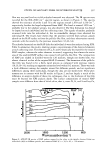
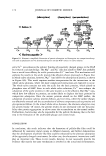
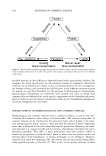
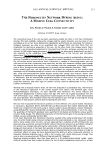
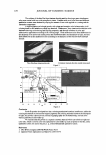
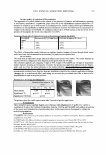
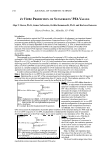
190 JOURNAL OF COSMETIC SCIENCE Powder I Agu. solutions I - ◄--- Emulsion Cooling Quick moisturization Pastes ► Lipids Barrier repair Slow moisturization Figure 1. Revised phase triangle regarding dermatological vehicles. Such a classification has been useful in order to facilitate the choice of a vehicle for specific skin diseases according to the function of its different components. available products is often difficult or impossible based solely upon product labeling. For example, the listed specification for the emulsion systems is commonly abbreviated either as o/w, to delineate oil in water, or w/o, to delineate water in oil. As a consequence, the amount of water, and conversely the lipid fraction, in the different emulsion systems are usually not specified. Therefore, for the purposes of dermatological compounding, pharmacopoeia formulations are sometimes more suitable and easier to handle than commercially available vehicles, as the specific components can be identified and modu lated according to specific disease requirements. Some specific formulation examples are described throughout the text below. SPECIFIC EFFECTS OF DERMATOLOGICAL AND COSMETIC VEHICLES Dermatological and cosmetic vehicles exert a number of effects, in and on the skin, including skin hydration, skin cooling, and barrier effect. The relative cooling effect of cosmetic vehicles can be attributed to the amount of water and/or alcohol in the emul sion system(s) and to water "activity," more precisely the amount of freely evaporating water that is liberated in the early phase after topical application. Moreover, the emul sion structure (e.g., liquid crystals) and the presence of hydrotopes determine the water liberation properties. This effect is more pronounced when the cosmetic vehicle is formed by an aqueous or hydro-alcoholic phase or when these are present within the external phase of the formulation, in lotions, hydrogels, or o/w emulsions. However, relatively non-stable w/o emulsions, like cold creams, also can exert mild cooling effects when applied topically to the skin (5). This is due to the special structure of these

ROLES OF VEHICLES FOR SKIN TREATMENT 191 traditional emulsions. In modern times, some emulsifiers (like sucrose esters) or gelling polymers (e.g., taurates) also provide a cooling effect (1). Cosmetic vehicles also are well known to influence the hydration of the stratum cor neum, for which at least three different mechanisms have been proposed: First, the cosmetic vehicle can exert a direct hydrating effect by liberating water from the for mulation itself (6). In short-term applications, this hydrating effect is more pronounced with formulations containing a high percentage of free water, compared to lipid-rich and low-free-water-containing preparations (7). As expected, the hydrating effect of o/w systems in short-term applications depends primarily on the water activity (unbound water content) of the formulation (5), since only the presence of free (unbound) water insures immediate hydration of the stratum corneum. In contrast, long-term applica tions of either w/o or o/w emulsions with different water content revealed hydration of the stratum corneum with the w/o but not with the o/w emulsions (8,9). Thus, although a w/o emulsion may be cosmetically less acceptable (but this is only true with older formulations), such a formulation can be expected to achieve better stratum corneum hydration, especially with prolonged use. It should be mentioned that longlasting hydration can be attributed to unbound water and the organization of lipid bilayers. In general, the structure and composition of modern cosmetic vehicles is so diverse that the attribution of their effect based solely on their o/w or w/o structure is no longer adequate. Second, the occlusive effect of the formulation can influence stratum corneum hydration, especially in long-term applications. A standard model for this occlusive effect is pet rolatum (7), for which the highest occlusive effect was detected (5). Water-in-oil emul sions with low water content may have occlusive effects similar to those of petrolatum, while w/o emulsions with high water content very rarely have occlusive properties and behave similarly to o/w emulsions (5). Interestingly, even o/w formulations with high water content can exert an occlusion effect after the unbound water has evaporated. The amount and type of emulsifiers have profound effects on water evaporation (from the vehicle), as well as on the incorporation of applied lipid fractions into the stratum corneum lipids and the spatial organization of the formulation residue in the skin. Occlusion is frequently just a temporary effect, since the emulsions may break after topical application on the skin. However, the occlusive effects are not always desirable. For example, in atopic dermatitis, where a formulation with high lipid content is desired, an occlusive effect may enhance discomfort and induce itching. The occlusive effects also may enhance drug penetration, an effect that may or may not be desired (e.g., it is unwanted in sunscreens). A third mechanism by which cosmetic vehicles influence skin hydration is evident when highly hygroscopic compounds like glycerol or hydrotropes like hyaluronic acid or trimethylglycine are applied. By absorbing water either from the cosmetic vehicle itself, from the surface water, or from water evaporation, these agents are then able to increase stratum corneum hydration (10,11). Recent publications have shown that the epidermal water/glycerol transporter aquaporin-3 (AQP3) plays an important role in stratum cor neum hydration via glycerol content (12, 13 ). In addition, vehicles can exert an emollient effect (by relipidizing or regreasing). This is of great importance in skin conditions where patients express discomfort due to cracked or rigid skin or rough skin surfaces. It has been suggested that this lipid-supplying effect
Purchased for the exclusive use of nofirst nolast (unknown)
From: SCC Media Library & Resource Center (library.scconline.org)