j. Cosmet. Sci., 55,473-479 (September/October 2004) Topical application of Bifidobacterium-fermented soy milk extract containing genistein and daidzein improves rheological and physiological properties of skin KOUJI MIYAZAKI, TOMOKO HANAMIZU, TOSHIRO SONE, KATSUYOSHI CHIBA, TAKASHI KINOSHITA, and SATOSHI YOSHIKAWA, Yakult Central Institute for Microbiological Research, Kunitachi, Tokyo (K.M., T.H., T.S., K.C.), and Yakult Fujisawa Cosmetics Plant, Fujisawa, Kanagawa (T. K., S. Y. ), Japan. Accepted for publit?•tion August 26, 2004. Presented in part at the 47th Annual Meeting of the Society of Cosmetic Chemists of Japan, Tokyo, September 21, 2000. Synopsis The authors examined the effects of Bifidobacterium-ferrnented soy milk extract (BE) containing genistein and daidzein on the hyaluronic acid (HA) content and rheological and physiological properties of hairless mouse and/or human skin. Topical application of BE for six weeks significantly restored changes in the elasticity and viscoelasticity of mouse skin, increased the HA content, and hydrated and thickened mouse skin. Also, topical application of a gel formula containing 10% BE to the human forearm for three months significantly lessened the decrease in skin elasticity. Therefore, BE is expected to become a new cosmetic ingredient to prevent the loss of skin elasticity through enhancement of HA production. INTRODUCTION Cutaneous aging not only induces wrinkles, dryness and thinning, but also decreases elasticity and increases viscoelasticity of the skin (1). Also, the age-dependent loss of cutaneous hyaluronic acid (HA), having specific rheological characteristics, good water- holding capacity, and certain important biological roles (2), has been hypothesized to contribute to the alterations observed in intrinsically aged skin (3,4). All-trans-retinoic acid (RA), a potent stimulus for the production of HA in vitro (2) and in vivo, as well as for thickening of the human epidermis (5), is clinically administered for not only photoaged skin (5), but also intrinsically aged skin (6). However, RA acts as an irritant on human skin, especially in Asians (7). Address all correspondence to Kouji Miyazaki. 473

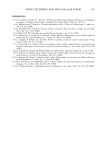
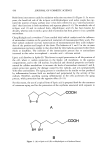
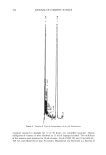
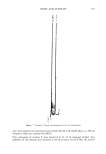
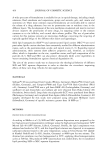
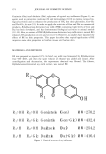
474 JOURNAL OF COSMETIC SCIENCE Genistein (Gen) and daidzein (Dai), aglycones of typical soy isofiavone (Figure 1), are agents used in preventive medicine (8) and dermatology (9,10) to express various bio- logical activities and to enhance the production of HA, but their glycosides, Gen-Glc and Dai-Glc, do not (11). In order to apply the activities of Gen and Dai to commercial products, Bifidob•cteriz/m-fermented soy milk (FSM) containing high levels of Gen and Dai has been developed, and has demonstrated biological activities in animal models (12-14). Also, an extract of FSM (Bifia/ob•cteriz/m-fermented soy milk extract, named BE) enhances HA production i, vitro and i, vivo (15). However, no studies have reported the effects of BE on skin properties. This paper describes that topical application of BE improves some skin properties in hairless mouse and human skin. MATERIALS AND METHODS BE was prepared as reported (15). In brief, soy milk was fermented by Bifia/ob•cteriz/m breve YIT 4065, and then the same volume of ethanol was added and mixed. After centrifugation and decantation, the supernatant obtained was filtered. The flitrate, Bifia/ob•cteriz/m-fermented soy milk extract, was named BE. R= R1 Ri'0H R2'0H 6enJsteiq (6en) Ri'0H R2'G ]c G enJstiq M W '270.2 (G en-G Is) M W '432.4 Ri'H R2'0H Daidzeia •DaJ) M W '254.2 Ri'H R2'G ]c Daidzia (Dai-G ]c) MW :416.4 Figure 1. Chemical structure of soy isofiavones.
Purchased for the exclusive use of nofirst nolast (unknown)
From: SCC Media Library & Resource Center (library.scconline.org)