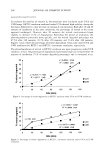
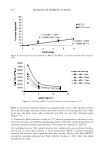
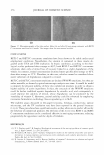
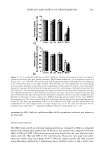
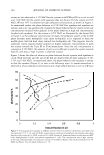
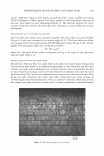
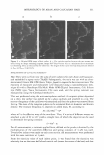
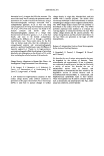
276 JOURNAL OF COSMETIC SCIENCE (a) (b) Figure 17. Microphotographs of the skin surface before (a) and after (b) anti-aging treatment with RETI C concentrate emulsion for 8 weeks. The images show the nose-mental wrinkle. CONCLUSIONS RETI C and RETI C concentrate emulsions have been shown to be stable under usual employment conditions. Nevertheless, the vitamin A contained in these creams de graded under UVA and UVB irradiation. In drastic conditions, according to the rheo logical studies performed after storage at 40 ° C, both RETI C and RETI C concentrate emulsions show only a limited loss of viscosity linked to a slight degradation of the vehicle. In contrast, retinal concentration decreased more quickly after storage at 40 ° C than after storage at 25 ° C. Therefore, in this case, vehicles cannot be considered alter native substrates of degradation compared to retinal. RETI C and RETI C concentrate emulsions are declared W /0/W emulsions, but they are rather unstable, as shown by optical microscopic analysis over time. It would be useful to improve the physical stability of these two commercial products in order to obtain a higher stability of active ingredients. In fact, the structure of the W/0/W emulsions could be farther stabilized against degradation by ascorbic acid, and consequently it could improve the stability of retinal, whose degradation can be promoted by the instability of vitamin C. Moreover, retinal stability could be enhanced by employing innovative formulation technology like encapsulating it in SLN. The stability assays discussed in this paper (viscosity, rheology, conductivity, optical microscopy, and the UV irradiation test) have been reported in the general literature ( 13, 14). These procedures have significant results, as they allow one to predict efficiently the behavior of commercial products. On the basis of the in vivo test, RETI C and RETI C concentrate emulsions can be considered effective in anti-aging treatments, reducing progressively the appearance and the depth of wrinkles. REFERENCES (1) P. T. Pugliese and C. B. Lampley, Biochemical assessment of the anti-aging effects of cosmetic prod ucts,]. Appl. Cosmetol., 3, 129-138 (1985). (2) M. Galesso, M. Gatta, and F. Galiano, Comparative studies on the stability of ascorbic acid and its derivatives in various mattixes and interaction with commonly used cosmetic preservatives, Cosmet. Toiletr. Ed. Ital., 2, 58-74 (1993). (3) R. Austria, A. Semenzato, and A. Bettero, Stability of vitamin C derivatives in solution and topical formulations,]. Pharm. Biomed. Anal., 15, 795-801 (1997).

ANTI-AGING EFFECTIVENESS OF RETINOL EMULSIONS 277 (4) M. Gallarate, R. Cavalli, E. Gagliardi, and M. E. Carloni, On the use of saccharose esters as emulsifiers for W/O/W multiple emulsions containing ascorbic acid, Acta Techn. Legis MedicamentiJ X(l), 1-16 (1999). (5) M. Gallarate, M. E. Carlotti, M. Trotta, and S. Bova, On the stability of ascorbic acid in emulsified systems for topical and cosmetic use, Int.]. Phann., 188, 233-241 (1999). (6) E. P. Guenin and J. L. Zatz, Skin permeation of retinyl palmitate from vesicles,]. Soc. Cosmet. Chem., 46, 261-270 (1995). (7) A. Vahlquist, What are natural retinoids?, Dermatology, 199 (Suppl. 1), 3-11 (1999). (8) T. Tsunoda and K. Takabayashy, Stability of all-trans-retinal in cream, ]. Soc. Cosmet. Chem.J 46, 191-198 (1995). (9) E. Andersson, I. Rosdahl, H. Torma, and A. Vahlquist, Ultraviolet irradiation depletes cellular retinal and alters the metabolism of retinoic acid in cultured human keratinocytes and melanocytes, Melanoma Res., 4, 339-346 (1999). (10) M. E. Carlotti, V. Rossatto, and M. Gallarate, Vitamin A and vitamin A palmitate stability over time and under UVA and UVB radiation, Int.]. Phann., 240, 85-49 (2002). (11) M. E. Carlotti, S. Sapino, D. Vione, E. Pelizzetti, M. Trotta, and L. Battaglia, Photostability and stability over time of retinyl palmitate in an O/W emulsion and in SLN introduced in the emulsion, ]. Disp. Sci. Technol., 26, 125-138 (2005). (12) S. Sapino, M. E. Carlotti, E. Pelizzetti, D. Vione, M. Trotta, and L. Battaglia, Protective effect of SLNs encapsulation on the photodegradation and thermal degradation of retinyl palmitate introduced in hydroxyethyl cellulose gel,]. Drug Del. Sci. Tech., 15, 159-165 (2005). (13) R. G. Harry, Harry's Cosmeticology, 7th ed., J. B. Wilkinson and R. J. Moore Eds. (George Godwin, London, 1982), p. 226. (14) H. A. Lieberman, M. M. Rieger, and G. S. Banker, Pharmaceutical Dosage Forms: Disperse Systems, Vol. 1 (Marcel Dekker, New York, 1988).
Purchased for the exclusive use of nofirst nolast (unknown)
From: SCC Media Library & Resource Center (library.scconline.org)