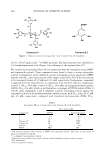
]. Cosmet. Sci.J 57, 279-289 CTuly/August 2006) Inhibitory effects of antioxidant constituents from Melathria heteraphylla on matrix metalloproteinase-1 expression in UVA-irradiated human dermal fibroblasts Y. H. CHO, J. H. KIM, G. S. SIM, B. C. LEE, H. B. PYO, and H. D. PARK, R&D Center, Hanbul Cosmetics Corporation, 72-7, Yongsung-Ri, Samsung-Myun, Umsung-Kun, Chungbuk 369-834 (Y.H.C., ].H.K., G.S.S., B.C.L., H.B.P.), and Department of Biotechnology, College of Engineering, Daegu UniversityJ Gyeongsan 712-714 (H.D.P.), Korea. Accepted for publication February 21, 2006. Synopsis Matrix metalloproteinases ( MMPs) are known to play an important role in photoaging by mediating the degradation of extracellular matrix proteins. To develop a new anti-aging agent for cosmetics from natural products, Melothria heterophylla (Lour.) Cogn. was selected for its antioxidant activity and inhibitory effect on expression of MMP-1 in UVA-irradiated human skin fibroblasts. Two compounds (compounds 1 and 2) were isolated from an ethyl acetate soluble fraction of the ethanolic extracts they were identified as l ,2,4,6-tetra-0-galloyl-�-0-glucopyranose (1) and 3,4,5-trihydroxybenzoic acid (2). These compounds were found to scavenge radicals and reactive oxygen species (ROS) and were measured to have SC 50 values of 3.9 µMand 13.3 µM against 1,1-diphenyl-2-picrylhydrazyl (DP PH) radicals and values of 4.3 µMand 4.0 µM against superoxide radicals in the xanthine/xanthine oxidase system, respectively. Compounds 1 and 2 showed a dose-dependent inhibitory effect on the expression and activity of MMP-1 in UV A-induced human skin fibroblasts, but no inhibition of MMP-1 mRNA expression. Therefore, we concluded that compounds 1 and 2 significantly inhibited MMP-1 expression at the protein level. Also, these compounds were determined to have a potent antioxidant activity. From these results, we suggest that these compounds might be useful as a new anti-aging agent for photodamaged skin, but the in vitro findings must be verified in in vivo studies. INTRODUCTION The skin is increasingly exposed to ambient UV irradiation, thus increasing risks for photooxidative damage with long-term detrimental effects like photoaging, character ized by wrinkles and loss of skin tone and resilience (1). UV irradiation is known to produce reactive oxygen species (ROS), which initiate the degradation of the extracel- Address all correspondence to Y. H. Cho. 279

280 JOURNAL OF COSMETIC SCIENCE lular matrix (ECM), composed of collagen, laminin, fibronectin, and proteoglycan, in skin cells (2). Especially, ROS do not only directly destroy interstitial collagen, but also inactivate tissue inhibitors of metalloproteinases (TIMPs) and induce the synthesis and activation of matrix-degrading enzymes called matrix metalloproteinases (MMPs) (1). MMPs are a family of zinc-dependent endoproteinases that are capable of degrading almost all of the components of the ECM and are classified in more than 20 species (3 ). MMPs can be divided into four categories based on substrate specificity: collagenases, gelatinases, stromelysins, and membrane-associated MMPs (4). The expression of MMPs in UV-irradiated fibroblasts is known to be initiated by reactive oxygen species (ROS) and by activation of a cell-surface growth factor and cytokine receptors (5 ). With increasing age, collagen synthesis becomes lower and MMP-1 levels become higher in sun-protected human skin in vivo (6). UV irradiation and ROS induce the synthesis of MMPs in skin fibroblasts in vitro, and MMP-mediated collagen destruction accounts, in large part, for the connective tissue damage that occurs in photoaging (7). Melothria heterophylla (Lour.) belongs to the family Cucurbitaceae and has been traditionally used for the treatment of conjunctivitis, orchitis, skin eczema, and the tubercle of a lymphatic gland (8). Free-radical scavenging activities and photoprotective activities of compounds from M. heterophylla extracts on MMP-1 mRNA and protein level have not been studied so far. The present paper deals with the isolation and structure identification of com pounds from the roots of M. heterophylla, as well as the evaluation of the antioxidant effect and inhibitory effects of these compounds on MMP-1 expression in UVA irradiated human dermal fibroblasts. MATERIALS AND METHODS GENERAL NMR spectra were measured on a Bruker Avance 500 spectrometer (Bruker, Germany, 500 MHz for 1 H) in a solution with TMS as the internal reference, and chemical shifts were expressed in B (ppm). The FAB-MS was recorded on a Jeol JMS-700 mass spec trometer Qeol, Japan). The UV spectra were obtained with a Cary lE spectrophotometer (Varian, Australia). Analytical HPLC was performed on a Waters HPLC system (Waters, USA) equipped with a 996 photodiode array detector, an alliance 2690 separation module, and a X-Terra RP-C 18 column (5 µm, 250 x 4.6 mm). Column chromatog raphy (CC) was carried out with a Sephadex LH-20 (Sigma Chemical Co., USA). TLC was conducted on precoated Kieselgel 60 F254 (art. 1.0554 and 1.13895) and RP-18 F2545 (art. 1.05559) plates (Merck, Germany). The organic solvents and chemicals were purchased from Sigma-Aldrich Co., Bio Whittaker (USA), and Gibco BRL (USA), and purified by the appropriate methods before use. EXTRACTION AND ISOLATION M. heterophylla was purchased at a herbal market in Korea. The dried roots (466 g) were refluxed with 70% aqueous ethanol, and the extract was evaporated. The extract (84.4 g) was suspended in water, and the suspension was partitioned with hexane (5 .8 g), CH 2 Cl 2 (0.8 g), EtOAc (2.7 g), and butanol (16.3 g), consecutively. The EtOAc extract was subjected to a Sephadex LH-20 CC (55 x 4.5 cm) with a gradient of MeOH and H 2 0
Purchased for the exclusive use of nofirst nolast (unknown)
From: SCC Media Library & Resource Center (library.scconline.org)