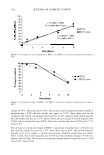
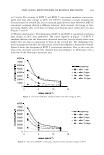
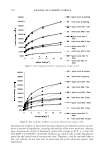
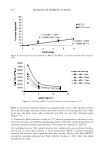
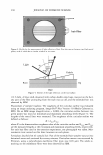
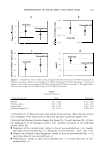
264 JOURNAL OF COSMETIC SCIENCE Comparing the power of radiation per unit area of the lamps with that of standard solar radiation (1.1 x 10- 3 W cm- 2 for UVA and 1.3 x 10⁻⁴ W cm- 2 for UVB), it is clear that our UVA and UVB lamps show an irradiation intensity very similar to that of standard sunlight. Therefore, this radiation stability study has relevance for comparison with real conditions, and it can be useful for understanding the process. (12). Five grams of RETI C and RETI C concentrate emulsions were irradiated in magneti cally stirred closed Pyrex containers (diameter 4.0 cm, height 2.5 cm, volume 5.0 ml) under a TL K05-40 W UV A lamp and a TL 40 W/12 RST40Tl2 UVB lamp (Philips, Eindhoven, Netherlands). The glass cells were placed at a 10-cm distance from the lamps. At predetermined times, 0, 30, 60, 90, 120, and 180 minutes, the samples, after dilution, were analyzed to detect changes in the percentage of retinal. The photodeg radation of retinal was determined by the HPLC method reported above. STUDY OF ST ABILITY OVER TIME AT 40°C The stability of retinal over time was verified by storing RETI C and RETI C concen trate emulsions in the dark at 40°C. An aliquot (10 grams) of each emulsion was stored in a container in an incubator at 40°C. After one, three, seven, and ten days of storage, samples of each emulsion were taken from the container and analyzed after dilution by the HPLC method. Any variation in color, weight loss, and separation was examined, and the physical-chemical parameters were determined. STUDY OF STABILITY OVER TIME AT 25 ° C Samples of each emulsion (10 grams) were stored in hermetically sealed containers at room temperature. HPLC analysis of the diluted samples after one, three, seven, and ten days of storage at 25 ° C was carried out. The retinal concentration in both the emulsions three months after opening was also determined. The organoleptic features and the weight loss over time were verified. Moreover the physical-chemical parameters were investigated: (a) Viscosity. Viscosity before and after storage at 40°C or at 25°C was determined at room temperature (25.0 ± 0.5°C) with a Model DV-II digital viscometer (Brookfield, Stoughton, MA). Experiments were performed on aliquots (13 g) of each emulsion. Apparent viscosity was determined at 5, 20, and 50 rpm. The data were plotted on diagrams of viscosity (mPa s) versus shear rate (s- 1 ). ( b) Rheologic determinations. The flux rheograms were carried out for emulsions main tained ten days at 40°C or at 25°C using the rotational viscometer reported above, equipped with 021 and 029 spindles. The measurements were performed at 25.0 ± 0.5°C. The results were expressed with shear stress (mPa) versus shear rate (s- 1 ) curves. The upper curve was obtained by determining the shear stress at increasing shear rates, maintaining each shear rate for one minute. The back curve was obtained by determining the shear stress at decreasing shear rates. ( c) Conductivity. The conductivity of the emulsions after storage both at 40°C and at 25°C was determined over time at 25.0 ± 0.5°C. The values recorded at 80 Hz with

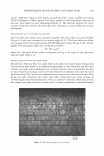
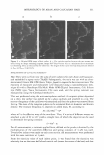
ANTI-AGING EFFECTIVENESS OF RETINOL EMULSIONS 265 conductivity meter Model 101 (Orion Research Inc., Beverly, MA) were expressed in mS. ( d) Centrifugation assay. In order to verify the stability of the creams to separation, samples of both emulsions were placed in a centrifuge tube and centrifuged at 6000 rpm for 20 minutes using a 5417 centrifuge (Eppendorf, Hamburg, Germany) to check any phase separation or creaming. OPTICAL MICROSCOPE ANALYSIS This method allows one to observe the structure of emulsions and to determine the shape and size of their droplets. Both emulsions before and after storage at 40°C were analyzed using a Leitz Labovert optical microscope at 1250 magnification, equipped with a Wild MPS 46 Foto Automat Camera (Wild Leitz, Heerbrugg, CH). The microphotographs of RETI C and RETI C concentrate emulsions at opening and after ten days of storage in the incubator were reported. IN VIVO TEST In order to evaluate the anti-aging effectiveness of the two commercial products, ten volunteers, women aged between thirty-three and seventy, were submitted to trial. All the panelists were treated with the commercial RETI C and RETI C concentrate prod ucts supplied by Vichy, packaged in their original aluminium tubes. They exclusively employed for two months the following suitable products: a milk lotion and a tonic lotion, as cleansers, and the two emulsions, a night cream (RETI C con centrate emulsion) and a day cream (RETI C emulsion), as anti-aging treatments. The measures were repeated at the same hour every day and the volunteers remained at rest fifteen minutes before analysis. These measures are able to identify the microstructure of the skin surface, the wrinkles of the skin, and their evolution over time after application of RETI C and RETI C concentrate emulsions. The test was carried out employing a Microcamera Digital Plus with a monitor Flatron LCD 575 LE (LG Electronics Italia, San Donato Milanese, Italy), which allows a fifty-fold magnification of epidermis. This instrument is an advanced professional system of magnification employed to perform a checkup of the skin. The system magnifies the surface of the skin, giving a color image, and through a powerful magnification factor, allows one to individuate the examined surface particulars that are invisible to the naked eye. RESULTS AND DISCUSSION The emulsions studied were kept in the original aluminum tubes, protected from direct sunlight and sources of heat. Three months after opening, consistency, color, and smell were unmodified, and the concentration of retinol proved to be 83.8% for RETI C emulsion and 99.4% for RETI C concentrate emulsion, in comparison with the initial values found in the two products at opening.
Purchased for the exclusive use of nofirst nolast (unknown)
From: SCC Media Library & Resource Center (library.scconline.org)