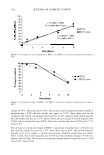
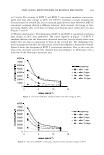
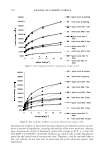
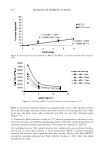
J. Cosmet. Sci.J 57, 327-338 Quly/August 2006) Morphology and properties of Asian and Caucasian hair T. TAKAHASHI, R. HAYASHI, M. OKAMOTO, and S. INOUE, Hair-Care Research Laboratories, Kao Corporation} 1-3, Bunka 2, Sumida-ku, Tokyo, 131-8501 (T. T., R.H.), and Analytical Research Center, Kao Corporation, 1334 Minato, Wakayama-shi, Wakayama, 640-0112 (M.O., S.I.),Japan. Accepted for publication April 4, 2006. Synopsis Various aspects of Asian and Caucasian hairs were investigated and compared. We started by studying their cuticle structures-the number of cuticle layers, width of the cuticle cells, degree of their inclination, and the interval between surface cuticle edges. As a result of this study, on about two hundred subjects for each race, it was shown that there were statistically meaningful differences between all these attributes for the two hair types. Asian hair has more cuticle layers and wider cuticle cells than Caucasian hair, and the cuticular inclination of Asian hair is steeper and its cuticular interval is narrower than in Caucasian hair. In addition, it was also found that there are differences in how cuticle cells begin to fail. U oder extension stress, Asian hair cuticles fail as large pieces while keeping their original shape. On the other hand, Caucasian hair cuticles tend to collapse to form small fragments. AFM measurements revealed that Cau casian cuticles are indeed more fragile than Asian cuticles. These results suggest that the strength of cuticular subcomponents is different between Asian and Caucasian hair and that the weakest point, where stress is first absorbed, differs between races. It was proven that the cuticles of Asian hair are more easily peeled off than Caucasian hair cuticles during daily grooming. This can be attributed to the difference in how stress is absorbed. INTRODUCTION It is well known that there are many differences between Asian and Caucasian hair. As for comparisons of whole hair structures, there has already been much work published concerning hair diameter (1--4), ellipticity (1--4) and the medulla (5). For example, it has been found that Asian hair is thicker and rounder and has a greater occurrence of medulla than Caucasian hair. There has also been some work performed regarding the cuticles, but the number of samples examined was not enough for a convincing comparison between the two races to be made (4). In this study, the difference in the cuticles was especially focused on and compared. Hair fibers cut from near the scalp of about two hundred subjects, which can be considered as undamaged by chemical treatment or aging, were investigated for both Asians and Caucasians. The difference in the structure of cuticle, how it begins to fail, its elasticity, and how it is damaged during daily grooming are reported. 327

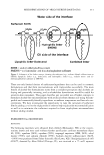
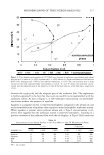
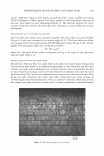
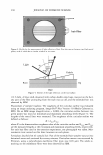
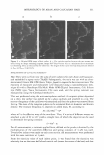
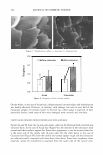
328 JOURNAL OF COSMETIC SCIENCE MATERIALS AND METHODS HAIR SAMPLES Hair samples were cut from within 1 cm of the scalp of each subject. All subjects were female and between 18 and 77 years old. Asian subjects consisted of 89 Japanese and 114 Chinese, while Caucasian subjects consisted of 160 Germans and 50 Americans. The root parts of the hair samples were used for the experiments. For the daily-grooming model experiment, as an exception, chemically untreated Asian hairs were taken from five Japanese volunteers, while chemically untreated Caucasian hairs were purchased from Keding International Haarfabrik GmbH, Backnang, Germany. For each race, five tresses, each with a weight of 10 g and 20 cm in length, were prepared. All hair samples were washed three times with aqueous sodium polyoxyethylene lauryl ether sulfate solution (15 % ) ad justed to pH7 with phosphoric acid, and then air-dried. MEASUREMENT OF THE NUMBER AND THICKNESS OF CUTICLES One hair fiber was taken from each subject. Hair fibers were embedded in epoxy resin (TAAB). Subsequently, the resin was cut with an ultramicrotome Ultracut N (Reichert Nissei, Tokyo, Japan) to expose cross sections of the hairs. The samples were coated with Au (200 A) and observed using an SEM JSM 6330F Qeol Ltd., Tokyo, Japan). An SEM image (magnification x 5,000) was taken for each sample, and then the number and thickness of the cuticles were measured (Figure 1). MEASUREMENT OF THE INTERVAL OF CUTICLES Three hair fibers per subject were measured. Photographs of the hair surface (magnifi- lµm Figure 1. SEM image of a cross section of hair.
Purchased for the exclusive use of nofirst nolast (unknown)
From: SCC Media Library & Resource Center (library.scconline.org)