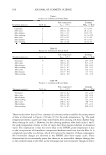
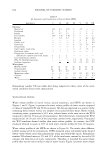
WATER-HANDLING PROPERTIES OF VERNIX CASEOSA 653 Chemical, Gardena, CA), beeswax (Fisher Scientific), isopropyl myristate (McKesson, Dayton, OH), and capric/capylic triglyceride and linoleic (Henkel, Cincinnati, OH). Vernix-like lipids included cholesterol, squalene, linoleic acid, ceramide III and choles terol sulfate. The materials and suppliers are as follows: squalene (Sigma-Aldrich, St. Louis, MO), cholesterol (Rita Corporation, Crystal Lake, IL), cholesterol sulfate (Acros Organic, Morris Plains, NJ), and ceramide III (Cosmoferm, The Netherlands). Emulsifiers used in the preparations were obtained from the suppliers listed in Table I. Glycerin was obtained from Emery (Cincinnati, OH). Magnesium sulfate and sodium chloride, used as electrolytes to enhance the stability of emulsions, were purchased from Fisher Scientic. Methyl paraben and propyl paraben were purchased from Sutton Labo ratories. Polysynlane was a product of the Collaborative Group (Stony Brook, NY). Alkyl methicone was supplied by Goldschmide Chemical Corporation (Hopewell, VA). N terface®, a high-density polyethylene interface dressing, was purchased from Winfield Laboratories (Richardson, TX). Standard oil-in-water (0/W) and water-in-oil (W/0) emulsions were selected from commercially available preparations and compared with native vernix and the synthetic versions for water-handling properties. EQUIPMENT The Cahn C-31 Microbalance® purchased from Cahn Instruments, Inc (Cerritos, CA) was used in the measurement of the water release rate. A Tissue Tearor, model 985-3 70 type 2 (Biospec Products, Bartlesville, OK) was used in the homogenization process. VERNIX COLLECTION Vernix caseosa was collected, as approved by the Institutional Review Board, from full-term infants born at University Hospital, Cincinnati, OH. It was immediately transf�rred into a sterile airtight plastic tube and kept at 4 °C until used. Portions of samples contaminated with blood were discarded. All vernix samples were used within a month following collection. Table I Emulsifiers Used for the Preparation of High Internal Phase Water-in-Oil Emulsions Emulsifiers Span 80® Tween 81 ® Si-Tee™ DMC3071 ® Cremophor WO7® Abil WE09® Arlacel P 13 5 ® Arlacel 83® INCi Sorbitan monooleate Polyoxyethylene 5 sorbitan monooleate Cetyl dimethicone copolyol PEG-7 hydrogenated castor oil Polyglyceryl-4-isostearate (and) cetyl dimethicone copolyol (and) hexyl laurate PEG-30 dipolyhydroxystearate Sorbitan sesquioleate Polyglyceryl-3-diisostearate Suppliers Uniqema Uniqema ISP Technologies BASF Degussa Goldschmidt Chemical Uniqema Uniqema

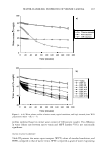
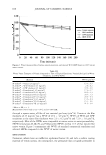
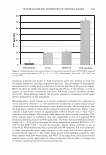
654 JOURNAL OF COSMETIC SCIENCE PREPARATION OF HIGH INTERNAL PHASE WATER-IN-OIL EMULSIONS High internal phase water-in-oil emulsions (HIPE) were prepared with intention to simulate the water/lipid ratio and water-handling properties of native vernix. The for mulation strategy was as follows. First, emulsifier systems suitable for preparation of HIPE were evaluated. The type of emulsifier(s) and the concentration were evaluated and then modified, based upon emulsion stability, visual appearance (e.g., fineness and spreadability), and ability to prevent rapid water loss from the preparations. Initially the oil phase contained conventional lipids (non vernix-like lipids). Later these were replaced by vernix-like lipids. All lipids in the oil phase were selected and combined, and the ratios varied based on the results of water-handling properties. Additional ingredient(s), such as colloidal oatmeal and oil-thickening agents, were incorporated into the formu lations in order to assist the HIPE in retaining the high internal water phase. HIPEs were prepared by the hot-cold method with a batch size of 20 grams. All hydrophilic materials were incorporated into distilled water and all hydrophobic mate rials were combined in a separate container. The oil phase was heated to approximately 75°-80°C over a water bath. Pre-emulsification was achieved by slow continuous ad dition of the water phase, with a temperature of approximately of 35°-40°C for the oil phase. The resulting pre-emulsions were then homogenized for at least five minutes using the Tissue Tearor homogenizer at a speed of 5000 rpm. Finished preparations were stored in the air-tight glass containers and were evaluated for water-handling properties. In general, emulsions contained an oil phase in the range of 19--43 % , a water phase in the range of 53-78%, and an emulsifier at approximately of 2-4%. STABILITY MEASUREMENT All preparations were evaluated for their stability at ambient temperature. Selected emulsions were further investigated for stability under accelerated conditions. Under each of these conditions, visual observation was used to evaluate phase separation. Stability of emulsions at ambient temperature. Twenty milliliters of each test emulsion was placed in an air-tight glass container. The emulsions were kept at room temperature, avoiding direct sunlight for at least three months. The samples were inspected for evidence of phase separation. Stability of emulsions under accelerated conditions. The freeze-thaw process was used to de termine the stability of the test emulsions under accelerated conditions. The test emul sions were kept in test tubes tightly sealed with screw caps. They were then subjected to at least three freeze-thaw cycles at a temperature of -20°C for 12 hours and +22°C for 12 hours per cycle. Visual appearance was observed at the end of each cycle. WATER-HANDLING PROPERTIES Water release profile. Standard commercially available emulsions (0/W and W/0 emul sions) and HIPEs were investigated for evaporative water loss compared to that of native vernix. Briefly, test materials were spread as a thin film of 3.28 mg/cm2 on an aluminum pan (14 mm in diameter) and immediately weighed on the C-31 Microbalance® (23). Gravimetric measurements were made every two minutes for the first 30 minutes and every 30 minutes thereafter for three hours. For calculation purposes, test emulsions were
Purchased for the exclusive use of nofirst nolast (unknown)
From: SCC Media Library & Resource Center (library.scconline.org)