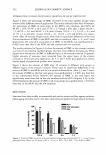
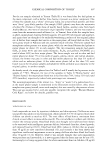
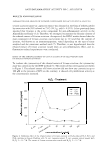
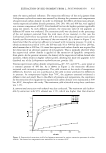
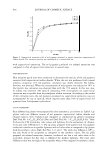
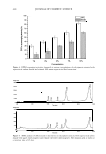
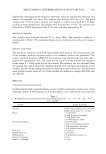
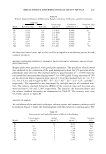
424 JOURNAL OF COSMETIC SCIENCE Nitrite Amount released 120 100 80 60 ·;._ ::::e 0 40 20 o o�· �-0 ..... � """'fJ �'(?G � e d'�-v concentration (µg/ml) Figure 2. Inhibitory effect of the ethanol extract of Crinum asiaticum on LPS-induced nitrite production in Raw 264.7 macrophage cells. N. con.: negative control (DMSO). P. con.: positive control treated with 1 µg/ml LPS. Indomethacin and the extract of Crinum asiaticum were treated with 1 µg/ml LPS. The data are expressed as the mean value (±standard deviations) of four experiments. Inhibition of iNOS mRNA expression Lane 2 3 4 5 6 7 8 9 1 0 11 12 13 iNOS GAPDH Figure 3. Inhibitory effect of the ethanol extract of Crinum asiaticum on LPS-induced mRNA expression of iNOS in Raw 264.7 macrophage cells. Lane 1: negative control (DMSO). Lane 2: 1 µg/ml LPS. Lane 3: 50 µg/ml indomethacin. Lane 4: 100 µg/ml indomethacin. Lane 5: 25 µg/ml EGCG. Lane 6: 3.4 µg/ml quercetin. Lane 7: 50 µg/ml vitamin C. Lane 8: extract of Crinum asiaticum, 1 µg/ml. Lane 9: extract of Crinum asiaticum, IO µg/ml. Lane 10: extract of Crinum asiaticum, 25 µg/ml. Lane 11: extract of Crinum asiaticum, 50 µg/ml. Lane 12: extract of Crinum asiaticum, 100 µg/ml. Lane 13: extract of Crinum asiaticum, 200 µg/ml. the induction period. Once the patches were removed, a reading was done after 30 min. A single challenge application at day 36 was performed following approximately two weeks (rest period) after application of the last induction patch. A challenge patch was applied to a previously unpatched (virgin) site, not adjacent to the original induction patch site, for 48 hr. The challenge site was scored at 30 min, 24 h, and 48 h after the removal of the patch. The patch test was conducted in accordance with the standards of the International Contact Dermatitis Research Group (ICDRG) (11).

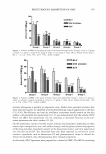
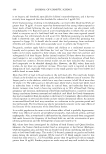
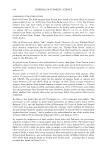
ANTI-INFLAMMATORY ACTIVITY OF C. ASIATICUM 425 RES UL TS AND DISCUSSION PREPARATION AND ANALYSIS OF LYCORINE, THE ETHANOL EXTRACT OF CRINUM ASIATICUM Crinum asiaticum Linne var. japonicum extract was obtained in the form of yellow powder by extraction with 95% ethanol at 75°C (28.3 g, yield = 8.32%). It has previously been reported that lycorine is the active component for anti-inflammatory activity in the Amaryllidaceae family (3,4). Therefore, we attempted to measure the lycorine content of the ethanol extract of Crinium asiaticum. As expected, the HPLC results showed that the main component of Crinum asiaticum was lycorine (up to 1 % ) and that the content of lycorine, well-known as an immunosuppressor, varied depending on the type of tissue analyzed and the extraction method used (7). Therefore, it was hypothesized that the ethanol extract of Crinum asiaticum would show an anti-inflammatory effect, and in flammation-related experiments were conducted. EFFECT OF THE ETHANOL EXTRACT OF CRINUM ASIATICUM ON CELL VIABILITY AND LPS-INDUCED NITRITE SYNTHESIS To evaluate the cytotoxicity of the ethanol extract of Crinum asiaticum, the cytotoxicity assay was carried out by the MTT method (5). The results of this investigation are shown in Figure 1. The ethanol extract of Crinum asiaticum did not show any cytotoxicity up to 100 µM in the presence of LPS on the contrary, it showed cell proliferation activity as the concentration increased. 500 - 400 e C) E: ... 300 C: :::J E ca 200 Q) ,,, ca Q) 100 H 2 O 2 - Treatment .,., I \ -------- . ··O· I \ I \ --.- I I \ I \ I \ I \ I \ I \ I \ I \ I �----....._ --� I ----y- • 0. / IL-6 IL-8 PGE2 .,.,� / / Figure 4. Inhibitory effect of the ethanol extract of Crinum asiaticum on H2O2-induced IL-6, IL-8, and PGE2 synthesis in human fibroblast cells. N. con.: negative control. P. con.: positive control treated with H 2 O2 5 x 10⁻⁴ M. The extract of Crinum asiaticum was treated with H2O2 5 x 10⁻⁴ M.
Purchased for the exclusive use of nofirst nolast (unknown)
From: SCC Media Library & Resource Center (library.scconline.org)