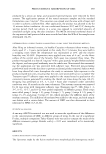
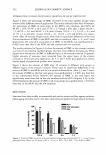
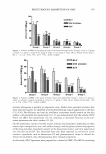
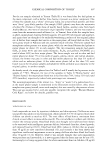
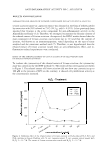
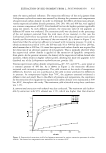
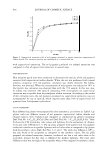
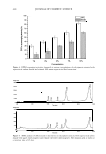
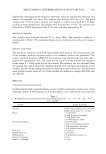
426 - C. - C: ::J 0 E cu Cl) cu Cl) 500 400 300 200 100 0 JOURNAL OF COSMETIC SCIENCE UV - Treatment 0 ____..,__ IL6 · o ILB -�- PGE2 - 0 Figure 5. Inhibitory effect of the ethanol extract of Crinum asiaticum on UV-induced IL-6, IL-8, and PGE2 synthesis in human fibroblast cells. N. con: negative control. P. con.: positive control treated with UVA 2 J!cm 2 + UVB 0.2 J/cm2. The extract of Crinum asiaticum was treated with UVA 2 J/cm2 + UVB 0.2 J/cm2. The addition of LPS stimulated Raw 264.7 macrophages to cause a substantial release of nitrite (Figure 2). The ethanol extract of Crinum asiaticum) especially at 100 µM, sig nificantly reduced the LPS-induced nitrite production. Compared to cell viability, the inhibitory effect of the ethanol extract of Crinum asiaticum on LPS-induced nitrite was not due to the lessening of cell viability. EFFECT OF THE ETHANOL EXTRACT OF CRINUM ASIATICUM ON LPS-INDUCED mRNA EXPRESSION OF iNOS The expression of iNOS is induced in stimulated macrophages, neutrophils, and endo thelial and smooth muscle cells, and catalyzes large amounts of NO production (8). The levels of iNOS and GAPDH mRNA expression were measured by RT-PCR. As shown in Figure 3, 100 µM of the ethanol extract of Crinum asiaticum decreased LPS-induced mRNA expression of iNOS to the control level. This result indicates that the ethanol extract of Crinum asiaticum reduced iNOS synthesis and subsequent NO production, followed by an anti-inflammatory effect. EFFECT OF THE ETHANOL EXTRACT OF CRINUM ASIATICUM ON VARIOUS STIMULI-INDUCED PGE2, IL-6, AND IL-8 SYNTHESIS In response to specific inflammatory stimuli such as H202 , UV, and SDS, the tran scription factors NF-KB, JunD/c-fos, and p53 are subsequently activated (12,13). In turn, NF-KB induces target genes such as IL-1, IL-6, IL-8, TNF-a (tumor necrosis

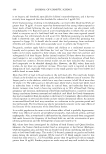
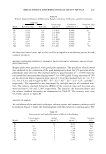
- - C, -E ::I 0 E ca (1) ti) ca � ANTI-INFLAMMATORY ACTIVITY OF C. ASIATICUM 1000 800 600 400 I I I 200 I 0 SDS -Treatment ., ______ I ...._T I I I I I I I I I I I e,o�· \ '\a �- ::f..�'o- \ \ \ \ \ •---- .... 0 -------- IL6 0 IL8 --y- PGE2 �- -- ,, :«' e c.i'� -v concentration (µg/ml) 427 Figure 6. Inhibitory effect of the ethanol extract of Crinum asiaticum on SDS-induced IL-6, IL-8, and PGE 2 synthesis in human fibroblast cells. N. con: negative control. P. con.: positive control treated with 0.05% SDS. The extract of Crinum asiaticum was treated with 0.05% SDS. factor-a, and COX-2 (13-15). COX-2 is induced in a number of cells by proinflam matory stimuli contrary to the constitutive enzyme, COX-1. Prostanoid release is ini tiated by the liberation of the substrate arachidonic acid, which is metabolized by COX to prostaglandin H2. This is further metabolized by other enzymes to prostaglandins, prostacyclin, and thromboxane A2 (16). The addition of H 2 O 2 , UV radiation, and SDS stimulates human fibroblasts 'to induce substantial PGE 2 , IL-6, and IL-8 synthesis. The treatment of the ethanol extract of Crinum asiaticumJ however, reduced IL-6, IL-8, and PGE 2 synthesis by those stimuli to the control level at all of the concentrations tested IL-6 synthesis, in particular, was completely inhibited (Figures 4-6). These results suggest that the ethanol extract of Crinum asiaticum could block the inflammatory response from various stimuli such as H 2 O 2 , UV, and SDS by inhibiting transcription factor activity. INHIBITION OF !3-HEXOSAMINIDASE RELEASE FROM RBL-2H3 CELLS Beta-hexosaminidase is located in the secretory granules of mast cells where histamine is stored, and is released along with histamine when mast cells are immunologically activated (9,17). Therefore, it is generally accepted that the �-hexosaminidase is a degranulation marker of mast cells, and the quantitative determination of the � hexosaminidase released has been used to evaluate the extent of degranulation and anti-allergic activities (18). In order to evaluate the anti-allergic activity of Crinum asiaticum Linne var. japonicum extract, we measured the amount of �-hexosaminidase
Purchased for the exclusive use of nofirst nolast (unknown)
From: SCC Media Library & Resource Center (library.scconline.org)