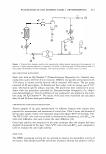
442 JOURNAL OF COSMETIC SCIENCE necessary to manage the amount of heavy metals used in cosmetic products. In this research, a fast and accurate analysis method for the quality control of eight water- 1 bl h 1 h Pb2 + F 2 + C 2 + N.12 + z 2 + C 2 + Cd2 + d M 2 + . so u e eavy meta s sue as , e , u , , n , o , , an n 1n cosmetic products, using IC (ion chromatography) and post-column reaction, is pro posed. The new method is effective in the determination of water-soluble heavy metals in complex matrices such as cosmetic products. ICP-MS, ICP, GF-AAS, and Flame AAS are some examples of heavy metal analysis techniques. ICP-MS is one of the most favored analysis techniques because it is fast and highly sensitive in metal analysis. However, ICP-MS cannot simultaneously analyze trace metals such as Fe, Cu, Zn, and Ni because of the interference from the polyatomic ion that is obtained by the reaction of Ar, N, 0, H, and so on (1,6,7). Also, ICP-MS, GF-AAS, and Flame AAS are not suitable for trace water-soluble metals because of the interference of residual organic materials in the test sample. IC (ion chromatography) is a widely used analyzing technique for ionizable compounds, inorganic cations, and anions. Inorganic ions, transition metals, organometallic com pounds, organic acid, and ionizable surfactant, which were difficult to be analyzed before, can be easily tested since non-chromophoric compounds can be detected by IC. Therefore, IC is a proper method for the separation and determination of water-soluble trace heavy metals in complex matrices because it does not have any interference from residual organic materials. It is useful for the quality control of cosmetic products as it is an inexpensive and accurate technique, for both instrumentation costs and mainte nance. MATERIALS AND METHODS INSTRUMENTATION The ion chromatography was performed on a Dionex ICS 2500 system (Dionex, Sunny vale, CA). The system consisted of a GP50 pump, and AS50 autosampler, a PClO post-column pneumatic delivery package, and a PDA-100 photodiode array detector. Chromeleon software, version 6.60, was used to process all data. The column was a Dionex IonPac CS5A analytical column (4 x 250 mm), which was protected by a guard column (Dionex lonPac CG5A analytical column (4 x 50 mm). REAGENTS The reagents, 4-(2-pyridylazo)resorcino (PAR), pyridin-2,6-dicarboxylic acid (PDCA), formic acid, potassium sulfate, 2-dimethylaminoethanol, ammonium hydroxide, and sodium bicarbonate, were from Sigma-Aldrich (Broendby, Denmark). Metal ion standard solutions of 1000 mg/1 (lead, iron, copper, nickel, zinc, cobalt, cadmium, and manga nese) were purchased from Fluka (Buch, Switzerland). All solvents was analytical grade. SAMPLE PREP ARA TI ON Samples were weighed (1 g) and placed in 15-ml polypropylene centrifuge tubes with 10 ml of ethanol-hexane (1:1, v/v) solution. The mixtures were sonicated for 15 mrn,

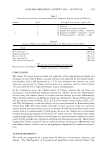
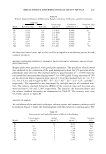
SIMULTANEOUS DETERMINATION OF HEAVY METALS 443 followed by centrifugation for 20 min at 2000 rpm. After the solution was removed, this process was repeated two times. The samples were dried at 60°C for 12 h. The dried samples and 10 ml of eluent solution were heated in a 90°C water bath for 1 h. After cooling to room temperature, the samples were sonicated for 15 min. The solution was filtered on a PVDF membrane filter (0.45 mm) and then analyzed by IC. METHOD OF ANALYSIS The samples were analyzed through IC by using PDA. The operation condition is summarized in Table I. This method utilized a post-column reaction with a color reagent (PAR). METHOD VALIDATION The specificity could be tested with a photodiode array detector. To check the precision of the method, multiple replicate analysis of a standard solution was performed. The relative standard deviations (RSDs) of the retention time and the peak area were calcu lated as the repeatability data. The result for the linearity of the method was evaluated in the range 0.1-1000 µg/ml for the test metals. The recovery rate was obtained from the spiking test, which added the standard solution with constant concentration to the cosmetic product being analyzed in order to check the accuracy of the test. The detection limit (signal-to-noise ration of 3:1) of this method was defined according to IUPAC and the ACS (8). RESULTS CHROMATOGRAPHIC SEPARATION Hydrated and weakly complexed heavy metals could be separated as cations on a cation exchange column. If weak organic acids such as oxalic, citric, and tartaric acid were used Table I IC Operation Conditions for Determination of Water-Soluble Pb2+, Fe2+, Cu2 + , Ni2+, Zn2 + , Co2 + , Cd2+, and Mn2+ System Column Eluent Post-column reagent Flow rate Reagent flow rate Mixing device Column of injection Detector wavelength Dionex ICS 2500 IonPac CS5A analytical (4 x 250 mm) IonPac CG5A guard (4 x 50 mm) 7.5 mM PDCA 66 mM Potassium hydroxide 7 4 mM Formic acid 5.6 mM Potassium sulfate 0.65 mM PAR 1.0 M 2-Dimethylaminoethanol 0.5 M Ammonium hydroxide 0.3 M Sodium bicarbonate 0.7 ml/min 0.35 ml/min 3 75-µl Knitted reaction coil 100 µl 530 nm
Purchased for the exclusive use of nofirst nolast (unknown)
From: SCC Media Library & Resource Center (library.scconline.org)