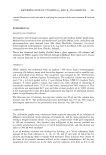
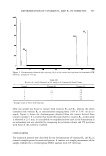
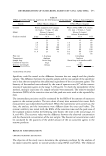
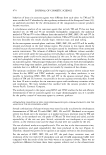
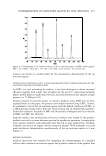
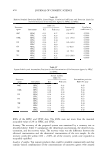
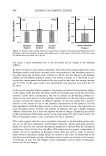
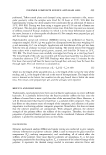
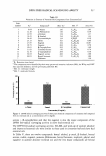
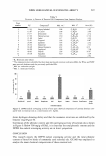
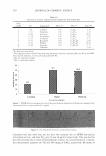
464 JOURNAL OF COSMETIC SCIENCE of the blank), the limits of detection (LOD) and quantitation (LOQ), expressed as nanogram (ng) injected, were calculated as YB + 3 sy/x and YB + 10 sy/x (Table I). Within-day precision was determined using standard solutions at an intermediate con centration within the linearity range. The sample was run on five separate occasions over the course of the day at approximately 60-min time intervals. The within-day variation was minimal, with an R.S.D. of peak areas lower than 0.5%. All the data concerning the linearity, precision, LOD, and LOQ of the method are reported in Table I. In order to evaluate the efficiency of the extraction procedure, two kinds of cosmetic formulations, an O/W and a W/O emulsion, were prepared in our laboratory with compositions similar to those of formulations found on the market. They were spiked with vitamins K 1 and K3 at concentrations of 5% and 0.5% (w/w), respectively, ex tracted, and submitted to HPLC analysis. The compositions of the O/W and W/O model cosmetics, written according to the INCI nomenclature and European Directive 7 6/7 68/ EEC modified by Commission Decision 96/335/EC of 8 May 1996, establishing an inventory and a common nomenclature of ingredients employed in cosmetic products, amended by Commission Decision 2006/25 7 /CE of 09.02.2006, were as presented in the following two subsections. 0/W EMULSION The composition consisted of aqua, glycerin, butylene glycol dicaprilate/dicaprate, de natured alcohol, Cl8-36 acid triglyceride, ceteareth 20, tocopherol, BHT, phenoxyetha nol, methylparaben, propylparaben, and butylparaben. The results, expressed as % re covery, are shown in Table II. W /0 EMULSION The composition consisted of PEG-8-caprylate/caprate, aqua, polyglyceryl isostearate, cyclomethicone, propylene glycol, tetrasodium EDTA, phenoxyethanol, methylparaben, and ethylparaben. The results obtained, expressed as % recovery, are shown in Table II. The recoveries were very satisfactory, confirming that the matrix effects were practically negligible. In fact, at the wavelength of detection all the other emulsion constituents do not display an appreciable absorbance, as evinced from Figure 5, which shows a chro matogram relevant to an extract deriving from the O/W emulsion prepared in our laboratory. Five commercial samples of facial creams found on the European market have been analyzed with the aim of verifying the applicability of the proposed method. The results obtained are reported in Table III. Table II Percentage Recoverya of Vitamins K 1 and K 3 Added to Model Cosmetic Products Compound Vitamin K3 Vitamin K 1 O/W emulsion 97.6 ± 2.8 98.4 ± 2.1 a Each value is the average of three determinations ± S.D. W/O emulsion 99.6 ± 1.9 98.9 ± 2.0

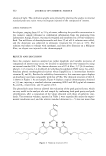
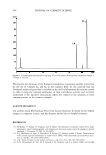
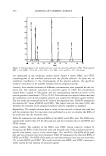
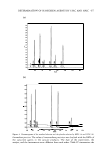
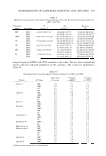
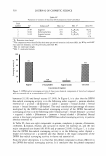
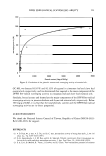
DETERMINATION OF VITAMINS K1 AND K3 IN COSMETICS 465 mAU K1 1H 5 15 mm Figure 5. Chromatogram obtained after injecting 20 µl of the extract deriving from the homemade 0/W emulsion, recorded at 3 3 3 nm. Table III Results (%, w/w/ Obtained in the Analysis of Commercial Facial Creams Sample 2 3 4 5 a Average values of three determinations Vitamin K3 0.5 Vitamin K1 2.0 3.6 4.3 5.5 4.0 Only one sample was found to contain both vitamins K 1 and K3, whereas the others contained only vitamin K 1 at concentrations ranging from 2.0% to 5.5%. As an ex ample, Figure 6 shows the chromatogram obtained from the extract derived from cosmetic sample 5. It is evident that beside the peak related to vitamin K 1 , another peak is observed at 25.3 min. It is ascribable to tocopherol acetate used in the formulation as an antioxidant and was identified by comparing the retention volume and UV spectrum with those of the authentic standard. CONCLUSIONS The analytical method here described for the determination of vitamins K 1 and K3 in cosmetic samples proved accurate and precise. It consists in a simple pretreatment of the sample, followed by a reversed-phase HPLC analysis with UV detection.
Purchased for the exclusive use of nofirst nolast (unknown)
From: SCC Media Library & Resource Center (library.scconline.org)