]. Cosmet. Sci.) 59, 523-525 (November/December 2008) Abstracts International Journal of Cosmetic Science Vol. 30, No. 4, 2008* Review Article Human hair pigmentation - biological aspects D. J. Tobin Centre for Skin Sciences, School of Life Sciences University of Bradford, Richmond Road, Bradford, West Yorkshire, UK Correspondence: Prof. Desmond Tobin Centre for Skin Sciences, School of Life Sciences, Uni��rsity of Bradford, Richmond Road, Bradford, West Yorkshire B07 I DP, UK. Tel.: +44 (0) 1274 233585 fax: +44 (0) 1274 309742· e-mail: d.tobin@bradford.ac.uk ' Skin and hair colour contribute significantly to our overall visual appearance and to social/sexual communication. Despite their shared origins in the embryologic neural crest, the hair follicle and e pidermal pigmentary units occupy distinct, although open, cutaneous compartments. They can be distinguished principally on the basis of the fonner's stringent coupling to the hair growth cycle compared with the latter's continuous melanogenesis The biosynthesis of melanin and its subsequent transfer from melanocyte to hair bulb keratinocytes depend on the availability of melanin precursors and on a raft of signal transduction pathways that are both highly complex and commonly redun dant. These signalling pathways can be both dependent and independent of receptors, act through auto-, para- or intracrine mechanisms and can be modified by hormonal signals. Despite many shared features, follicular melanocytes appear to be more sensitive than epidermal melanocytes to ageing influences. This can be seen most dramatically in hair greying/canities and this is likely to reflect significant differences in the epidermal and follicular microenvironments. The hair follicle pigmentary unit may also serve as an important environmental sensor, whereby hair pigment contributes to the rapid excretion of heavy metals, chemicals and toxins from the body by their selective binding to melanin rendering the hair fibre a useful barometer of exposures. The recent availability of advanced cell culture methodologies for isolated hair follicle melanocytes and for intact anagen hair follicle organ culture should provide the research tools necessary to elucidate the regulatory mechanisms of hair follicle pigmentation. In the longer term, it may be feasible to develop hair colour modifiers of a biological nature to accompany those based on chemicals. Studying the anti-tyrosinase effect of Arbutus andrachne L. extracts R A. Issa, F. U. Afifi and B. I. Amro Faculty of Pharmacy, University of Jordan, Queen Rania Street, 11942 Amman, Jordan Correspondence: Fatma U. Afifi, Faculty of Phannacy, University of Jordan, Queen Rania Street, 11942 Amman, Jordan. Tel.: +%2 6 53 55 000 fax: +962 6 53 39 649 e-mail: fatueafi@ju.edu.jo Arbutus andrachne L. is widely distributed in Jordan. Tyrosinase is the key enzyme in the biosynthesis of melanin. This preliminary study was carried out to assess the possible anti-tyrosinase activity of A. andrachne extracts. Arbutin, hydroquinone and kojic acid were selected as inhibitor standards. Five different extracts (chloroform, butanol, ethanol, methanol and water) were prepared from A. andrachne stems and their activities were compared with the selected tyrosinase inhibitors. IC50 was measured for both, standard and plant extracts. Among the different extracts, the methanolic extract exhibited the highest anttyrosinase activity with an IC50 value (1 mg mL)l ). Furthermore, 9 mg A. andrachne methanolic extract showed 97.49% inhibition of tyrosinase activity. Arbutin, hydroquinone, b-sitosterol and ursolic acid were identified in the different extracts of A andrachne by thin layer chromatography (TLC) and isolated by preparative TLC from the methanolic and chloroform stem extracts, respectively. * Thes : abstracts . appear as they were originally published. They have not been edited by the Journal of Cosmetic Saence. 523

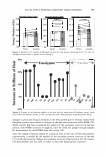
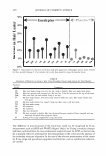
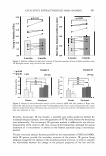
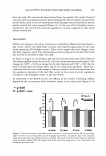
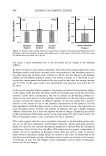
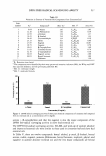
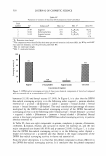
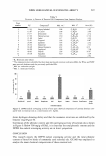
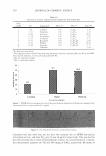
524 JOURNAL OF COSMETIC SCIENCE lrritancy ranking of 31 cleansers in the Indian market in a 24-h patch test C. Lakshmi*, C. R. Srinivas*, C. V. Anand_ and A. C. Mathew_ *Departments of Dermatology, _Biochemistry and _ Community Medicine, PSGIMSR, Peelamedu, Coimbatore-641004, India Correspondence: Chembolli Lakshmi, Department of Dermatology, PSGIMSR, Peelamedu, 'coimbatore-641004, India. Tel.: +91 422 2570 170 fax: +91 422 2594 400 e-mail: cl coimbatore@yahoo.co.in Cleansing trends promise freshness, sensory and health benefits but may also be accompanied by an increase in soap-induced skin irritation. The aim of this study was to evaluate the irritant effect of 31 cleansers (28 bar soaps and 3 liquid cleansers) available in the Indian market. Eight percent w/v solutions of the soaps/cleansers were made and 30 IL of each of the solutions were applied to Finn chambers and occluded for 24 h along with distilled water (negative control) and 20% sodium dodecyl sulphate (SDS) as positive control. The sites were graded for erythema and scaling 30 min after removing the patches. The pH of each of the soap solutions was determined. Mean with SD and ANOVA (F-value) was computed separately for each soap/cleanser with respect to the two parameters, erythema and sealing. The total of the means for both the parameters, erythema and scaling was also computed. The cleansers were listed based on this total from the least irritant to the most irritant. The differences between soaps (F-value) was significant for erythema and scaling [ erythema = 4.106 (P = 0.000) scaling = 6.006 (P = 0.000)]. Cetaphil cleansing lotion had the lowest erythema score of 0.25. Lowest scaling score of zero was recorded for Cetaphil cleansing lotion and Elovera moisturizing body wash. Aquasoft and Lifebuoy soaps had the highest erythema score of 2.13. Acnex had the highest scaling score o f 1.75 Aquasoft, Hamam scrub bath soap and Naturepower sandal soaps were the next with a scaling score of 1.63. Cetaphil cleansing lotion, Aquaderm liquid soap, Dove bar soap and Elovera moisturizing body wash proved to be the least irritant cleansers with a total score of less than I. The four most irritant soaps/cleansers had an average score of 3.65. The irritant potential of the majority of the cleansers fell between these extremes. The pH of all the soap/cleanser solutions was neutral to alkaline (pH 7-9) except that of Dove bar, Cetaphil cleansing lotion, Aquaderm liquid soap and Elovera moisturizing body wash which tested acidic (pH 5-6). The pH of the positive control-20% SDS, was acidic (pH 6). The difference in the irritancy potential between soaps/ cleansers as determined by the 24-h patch test was significant. There were individual variations in the irritant potential of the soaps/cleansers in the volunteers, thus when the patient queries on what soap to use, it may be advisable to test each patient separately and educate him/her regarding the soaps/cleansers less likely to cause irritation. The limitations of the study was that it was single blind and non-randomized as all the 14 soap solutions were applied on 15 volunteers in the first panel and subsequently all the 17 soap solutions were applied on eight volunteers in the second panel. However, we could compare the irritant potential of 31 cleansers. The results of 24-h patch testing of 31 soaps/cleansers in the Indian market in two panels of 14 and 17 soaps/cleansers on 15 and eight volunteers, respectively, are presented. In vitro evaluation of sun protection factors of sunscreen agents using a novel UV spectrophotometric technique M. D. Bleasel and S. Aldous School of Pharmacy, University of Tasmania, Private Bag 26, Hobart, 7001 Tasmania, Australia Correspondence: Stephen Aldous, School of Pharmacy, University of Tasmania, Private Bag 26, Hobart, Tasmania 7001, Australia. Tel.: +61 36 226 2190 fax: +61 36 226 2870 e-mail: stephen.aldous@utas.edu.au A method for the in vitro determination of lowand high value sun protection factors (SPF) of sunscreens using artificial substrates and a novel pseudo double beam (PDB) mode of operation of a standard double beam UV spectrophotometer is described. The method allows transmittance to be calculated from detector responses of reference and sample beams measured at different gain levels and facilitates the accurate quantification of low levels of electromagnetic radiation transmitted through highly absorbing samples. The spectrophotometer was modified to hold quartz diffusing plates on which a substrate [Transpore_ adhesive tape or human stratum comeum obtained from a skin surface biopsy (SSB)] and the sunscreens to be tested were applied. The PDB mode of operation increased the effective linear range of the detector response of the spectrophotometer by a factor of approximately 20000-fold, enabling the in vitro SPF determination technique to be applied to both high and low SPF value sunscreens. Eight commercial sunscreens with known SPF values ranging from 4 to 77, previously determined by in vivo methods, were tested in vitro using both test substrates and correlations between the in vivo and in vitro values were determined. SPF values determined using the in vitro method correlated well with the known in vivo results (Transpore_ tape, R2 = 0.611 SSB, R2 = 0.7928). The in vitro SPF obtained for one of the tested products differed substantially from the cited in vivo SPF value. Independent in vitro and in vivo re evaluation of the SPF of this product matched the value predicted by the present method much more closely than the originally cited in vivo value. All determined SPFs were ordered correctly in comparison to in vivo ranking and the technique appeared to correctly identify a sunscreen that had a labelled SPF value that was significantly higher than its true SPF.
Purchased for the exclusive use of nofirst nolast (unknown)
From: SCC Media Library & Resource Center (library.scconline.org)