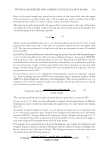
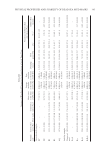
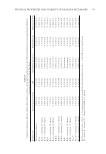
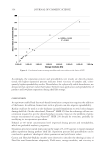
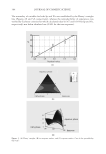
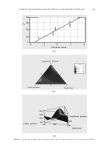
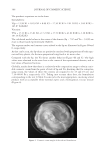
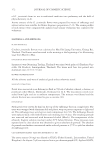
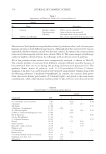
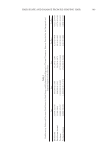
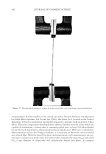
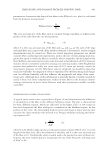
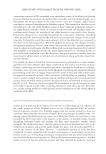
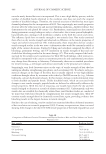
JOURNAL OF COSMETIC SCIENCE 362 To fi nd the optimal mélange, the mixture design (Table I) was applied using MINITAB 15 software. For this, the chosen responses are the spreadability (YSp) and viscosity (YVis), the independent variables being the weight proportions of the fatty phase (X1), the aqueous date extract (X2), and the beeswax (X3). Because of the presence of con- straints, the proportions of components should not vary between 0 and 1, as in the case of absence of constraints. But it is possible to obtain with these constraints a new set of components (named pseudocomponents) that take on the values from 0 to 1, this trans- formation allows making the design construction easier (32). After hot mixing (agitator of type Heidolph-RZR 0, Schwabach, Germany) of the fatty phase compounds, the emulsifi er and aqueous DS extract were added. Once the emulsion was obtained, the heating was stopped and the homogenization was maintained until the fi nal temperature (∼20°C) was reached. Spreadability. The Sp was determined according to the methodology preconized by Czarnecki and Gierucka (33) with minor modifi cations. The principle applied is that of an extensometer. The dispositive was constituted of two rectangular glass plates, one of them being horizontally fi xed on a support. At ambient temperature (∼25°C), 1 g of cosmetic sample was placed at the center of the fi xed plate using stainless steel microspat- ula with tapered end, after which the second plate was put down on the sample. A weight of 1 kg was then gently deposed on the second plate, over the sample. After 8 min, the diameter (D) of the imprint induced by the compressed cosmetic sample was measured. The Sp was expressed as follows: Sp (cm2) = surface of the imprint = π (D/2)2 The measurement was realized in triplicate. Viscosity. Earlier, it was established that the viscosity of an emulsion is correlated with its stability (34). To evaluate the physical stability of each cosmetic cream sample (20 g), the Vis was de- termined using a viscosimeter of type VISCO BASIC Plus/R7 (Barcelona, Spain), with a rate of 10 rpm at temperature of 20°C. Table I Mixture Design in Actual and Pseudocomponents (in Parentheses) Run Fatty phase (%) Aqueous phase (%) Beeswax (%) Sp (cm2) Vis (Pa·s) 1 45 (0) 30 (0) 25 (1) 14.18 ± 0.10 17.23 ± 0.68 2 45 (0) 45 (1) 10 (0) 15.19 ± 0.06 33.81 ± 1.87 3 60 (1) 30 (0) 10 (0) 8.89 ± 0.10 17.23 ± 0.68 4 55 (0.66) 32.5 (0.16) 12.5 (0.16) 11.93 ± 0.17 34.91 ± 2.32 5 47.5 (0.16) 40 (0.66) 12.5 (0.16) 11.93 ± 0.17 28.29 ± 2.44 6 47.5 (0.16) 32.5 (0.16) 20 (0.66) 14.51 ± 0.00 26.34 ± 0.85 7 50 (0.33) 35 (0.33) 15 (0.33) 7.86 ± 0.12 36.13 ± 2.89 8 52.5 (0.5) 37.5 (0.5) 10 (0) 18.58 ± 0.06 38.43 ± 0.54 9 52.5 (0.5) 30 (0) 17.5 (0) 10.55 ± 0.12 22.23 ± 0.07 10 45 (0) 37.5 (0.5) 17.5 (0.5) 10.74 ± 0.17 35.79 ± 0.01 Fatty phase = olive oil + sweet almond oil aqueous phase = aqueous date seed extract.

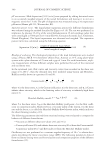
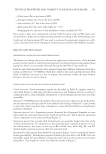
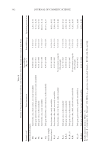
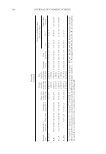
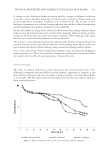
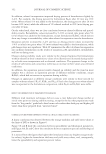
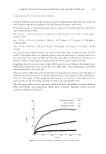
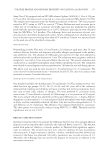
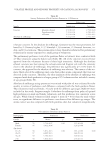
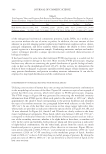
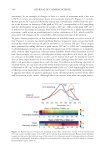
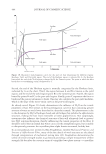
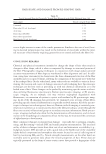
COSMETIC CREAM WITH AQUEOUS EXTRACT AND DATE FRUIT SEED OIL 363 STABILITY OF THE SELECTED FORMULA Experimental Design. The stability study was approached by applying the experience de- sign methodology. In addition to Sp and Vis, the peroxide index (PI, meq of O2/kg) was also considered as response. The PI is a good indicator of the stability of the fatty phase of the cosmetic cream. It was determined according to French standard (35). Independent variables were the concentration of the DSO (x1), the storage temperature (x2), and the storage time (x3). So, 8 tests were performed, considering the two levels (low “−” and high “+”). The factor levels, together with obtained responses are recapitulated in the experience matrix (Table II). Rheological Profi le. The rheological profi le of 0.5 mg of cosmetic sample stored during 24 h was obtained at 20°C during 2 min, using cone-plate rotational viscometer Thermo HAAKE VT-550 (Karlsruhe, Germany). This instrument is equipped with Software Rhéo Win Data Manager. The analysis was performed in Laboratory of Mineral and Com- posite Materials (University of Boumerdès, Algeria). pH, Sp, and Centrifugation Test. The pH was measured at 20°C as described by Anchisi et al. (16), using pH-meter JENWAY-3510. In addition, Ct was carried out by means of HERMLE-Z 323 apparatus (Wehingen, Germany) (3000 rpm for 30 min) at ambi- ent temperature, the stability being expressed as percentages referred to the graduated measuring tube (10 ml) (16). RESULTS AND DISCUSSION OPTIMIZATION OF THE COSMETIC CREAM COMPOSITION The weight proportions of the three ingredients and the two responses considered are summarized in Table I. Table II Experience Matrix No x1 x2 x3 PI Sp Vis 1 −1 −1 −1 4.49 ± 0.47 0.86 ± 0.07 3.33 ± 3.17 2 −1 −1 +1 6.42 ± 1.34 9.24 ± 1.97 32.56 ± 5.60 3 −1 +1 −1 5.78 ± 1.27 8.68 ± 0.18 26.78 ± 5.60 4 −1 +1 +1 8.43 ± 0.19 12.36 ± 0.94 31.66 ± 2.74 5 +1 −1 −1 6.41 ± 0.19 9.52 ± 1.97 34.09 ± 5.37 6 +1 −1 +1 6.13 ± 2.83 8.83 ± 1.50 36.60 ± 2.04 7 +1 +1 −1 14.53 ± 0.97 9.07 ± 0.26 30.99 ± 1.91 8 +1 +1 +1 10.13 ± 2.61 7.95 ± 0.38 26.26 ± 2.05 Level (−) 0.01% 4 days 20°C Level (+) 0.1% 30 days 50°C
Purchased for the exclusive use of nofirst nolast (unknown)
From: SCC Media Library & Resource Center (library.scconline.org)