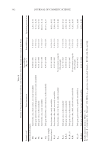
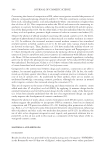
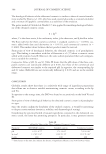
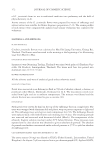
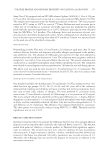
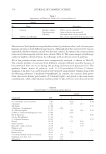
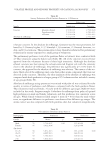
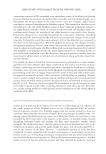
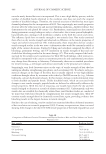
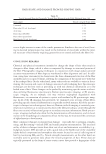
JOURNAL OF COSMETIC SCIENCE 368 Table III pH and Sp Values of the Three Compared Cosmetic Creams Parameter DSO/DSAE cosmetic Standard cosmetic Commercial cosmetic pH 6.33 ± 0.72b 3.71 ± 0.02c 7.92 ± 0.01a Sp (cm2) 14.78 ± 1.92a 14.99 ± 1.55a 15.97 ± 2.82a Ct (%) 100 100 100 a,b,c Same letters on the same line indicate the absence of signifi cant difference (p ≤ 0.05) between values. The rheological behavior of the elaborated cosmetic is similar to those of certain formula- tions studied by Djuris et al. (22), who have used cetearyl glucoside as a natural emulsifi er and a mixture of lipophilic coemulsifi ers as a stabilizer of the emulsion. The power model of Ostwald-de Wealk (37) was applied for modeling rheological behav- ior of the obtained cosmetic cream. τ = kγη where, τ is the sheer strain, k the uniformity index, γ the sheer rate, and η the fl ow index. The fl ow index for the three cosmetics is below 1: standard cosmetic (n = 0.2995), cos- metic added with date seed derivatives (n = 0.4151), and commercial cosmetic (n = 0.4669). The similar values between the last products must be noticed. From point of view of rheological behavior, the obtained cosmetic is of pseudoplastic type. This fi nding is concordant with that of Guaratini et al. (37) about a cosmetic cream added with vitamins A and E. Moreover, the same authors postulated that such confi gura- tion is suitable for cosmetics. Comparative Values of pH, Sp, and Ct. Table III shows that the pH values of the three com- pared cosmetics are statistically different (p ≤ 0.05), but those of the commercial and elaborated cosmetic are similar to the required pH. In opposite, the corresponding Sp and Ct values (Table III) are not statistically different (p ≤ 0.05) and are in the suitable range. CONCLUSION Globally, results show that there is a relatively wide range of ingredient proportions that allows one to obtain a suitable moisturizing cosmetic cream, according to the Sp and Vis. In opposite to the storage time, the DSO was found to act positively on the both Vis and PI. From point of view of rheological behavior, the obtained cosmetic cream is of pseudoplas- tic type. Since the results confi rm the feasibility of the studied cosmetic, it would be interesting to deepen certain analysis (statistics, stability, and dermatological testing). Considering the potential health of natural ingredients contained in the elaborated cos- metic cream, the latter has promising prospects. In particular, it may generate interest

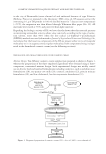
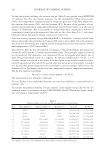
COSMETIC CREAM WITH AQUEOUS EXTRACT AND DATE FRUIT SEED OIL 369 among warned users and health professionals, i.e., those who are aware that natural cos- metics represent safety alternative to conventional ones and that the latter should contain toxic components rarely listed on the labels, thanks to a loophole in the law. REFERENCES (1) Y. A. Alhamed, Adsorption kinetics and performance of packed bed adsorber for phenol removal using activated carbon from dates’ stones, J. Hazard. Mater., 170, 763–770 (2009). (2) A. S. Hussein and G. A. Alhadrami, Effect of enzyme supplementation and diets containing date pits on growth and feed utilization of broiler chicks, Agri. Mar. Sci., 8, 67–71 (2003). (3) A. A. Abou Zied and S. M. Khoja, Utilization of dates in the fermentative formation of citric acid by Candida lipolytica, Zentral Microbiol., 148, 213–221 (1993). (4) A. F. El-Fouhil, A. M. Ahmed, and H. H. Darwish, Hypoglycemic effect of an extract from date seeds on diabetic rats, Saudi Med. J., 31, 747–751 (2010). (5) S. A. A. Jassim and M. A. Naji, In vitro evaluation of the antiviral activity of an extract of date palm (Phoenix dactylifera L.) pits on a pseudomonas phage, Evid. Based Complement. Alternat. Med., 7, 57–62 (2010). (6) A. A. Abdel Nabey, Chemical composition and oil characteristics of date pits of six Egyptian cultivars, Alex. J. Agri. Res., 44, 127–141 (1999). (7) S. Devshony, E. Eteshola, and A. Shani, Characteristics and some potential applications of date palm (Phoenix dactylifera L.) seeds and seed oil, J. Am. Oil Chem. Soc., 69, 595–597 (1992). (8) S. Besbes, C. Blecker, C. Deroanne, N. Bahloul, G. Lognay, N. E. Drira, and H. Attia, Date seed oil: Phenolic, tocopherol and sterol profi les, J. Food Lipids, 11, 251–265 (2004). (9) A. M. Rabasco Alvarez and M. L. Gonzalez Rodriguez, Lipids in pharmaceutical and cosmetic prepara- tions, Grasas Aceitis, 51, 74–96 (2000). (10) A. Pouillot, L. L. Poll, P. Tacchini, A. Neequaye, A. Polla, and B. Polla, “Natural Antioxidants and Their Effects on the Skin,” in Formulating, Packaging, and Marketing of Natural Cosmetic Products, N. Dayan and L. Kromidas. Eds. (John Wiley & Sons, Inc., New York, 2011), 1st Ed, pp. 239–257. (11) N. W. Mazlan and I. M. Said, Physico-chemical properties of the oils and fat from Crotalaria cleomifolia seeds, Sains Malays, 40, 1037–1041 (2011). (12) Ecocert standard, Natural and Organic Cosmetics, (2012), www.ecocert.com, accessed date: December 2012. (13) W. V. Magalhães, A. R. Baby, M. V. R. Velasco, D. M. M. Pereira, and T. M. Kaneko, Patenting in the cosmetic sector: Study of the use of herbal extracts, Braz. J. Pharm. Sci., 47, 693–700 (2011). (14) P. L. Kole, H. R. Jadhav, P. Thakurdesai, and A. N. Nagappa, Cosmetics potential of herbal extracts, Nat. Prod. Rad., 4, 315–321 (2005). (15) M. J. Abdul Afi q, R. Abdul Rahman, Y. B. Che Man, H. A. AL-Kahtani, and T. S. T. Mansor, Date seed and date seed oil, Inter Food Res. J., 20, 2035–2043 (2013). (16) C. Anchisi, A. M. Maccioni, C. Sinico, and D. Valenti, Stability studies of new cosmetic formulations with vegetable extracts as functional agents, Il Farmaco, 56, 427–431 (2001). (17) P. Papageorgiou, A. Varvaresou, E. Tsirivas, and C. Demetzos, New alternatives to cosmetics preserva- tives, J. Cosmet. Sci., 61, 107–123 (2010). (18) W. P. Bowe, Cosmetic benefi ts of natural ingredients: Mushrooms, feverfew, tea, and heat complex, J. Drugs Dermatol., 12, S133–S136 (2013). (19) S. R. Gilani, Z. Mahmood, and M. Hussain, Preliminary evaluation of antimicrobial activity of cream formulated with essential oil of Trachyuspermum ammi, Pak. J. Pharm. Sci., 26, 893–896 (2013). (20) L. E. Millikan, Cosmetology, cosmetics, cosmeceuticals: Defi nitions and regulations, Clin. Dermatol., 19, 371–374 (2001). (21) A. Pieroni, C. L. Quave, M. L. Villanelli, P. Mangino, G. Sabbatini, L. Santini, T. Boccetti, M. Profi li, T. Ciccioli, L. G. Rampa, G. Antonini, C. Girolamini, M. Cecchi, and M. Tomasi, Ethnopharmacognos- tics survey on the natural ingredients used in folk cosmetics, cosmeceuticals and remedies for healing skin diseases in the inland Marches, Central-Eastearn Italy, J. Ethnopharmacol., 91, 331–344 (2004). (22) J. Djuris, D. Vasiljevic, S. Jokic, and S. Ibric, Application of D-optimal experimental design method to optimize the formulation of O/W cosmetic emulsions, Int. J. Cosmetic Sci., 36, 79–87 (2014). (23) I. Nehdi, S. Omri, M. I. Khalil, and S. I. Al-Resayes, Characteristics and chemical composition of date palm (Phoenix canariensis) seeds and seed oil, Ind. Crop Prod., 32, 360–365 (2010).
Purchased for the exclusive use of nofirst nolast (unknown)
From: SCC Media Library & Resource Center (library.scconline.org)