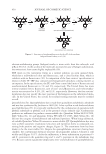
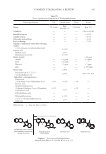
439 HISTORY OF COSMETIC Hygiene in ancient India. In the olden days, Indian women did not use soaps but instead used a combination of grams of wheat husk flour combined with milk and turmeric ger- micidal creams. Wheat husk helps to remove dead cell tissues. Bathing cosmetic ubton is widely used in India even today (1). Ubton is a blend of Cicer arietinum (chickpea, a grain legume cultivated for its edible seeds), Curcuma longa (turmeric), and Santalum album (Indian sandalwood) used primarily for skin lightening and sun-protective properties (55). Betel leaves were used for darkening the lips. Saffron, agar, and chlorophyll green from nettle plants and indigo were used in body decorations (29). Hygiene in ancient China. Around 1600 BCE, the Chinese were using twigs of the aromatic tree as a toothbrush and therefore freshened the mouth, as well as cleaning it. The first toothbrush was invented in China in CE1000, which had an ivory handle and bristles made from horse’s mane. The first bristle toothbrush was also invented from China, which was made from hairs of the Siberian wild boar, which were fixed to a bamboo or bone handle (56). Chinese were using a detergent for bathing and cleaning, not soaps from ancient history. They were using tooth powder/toothpaste for cleaning their teeth. Major ingredients of tooth powder were ginseng, herbal mints, and salt (54). Traditional Chinese Medicine (TCM) TCM is a clinical and evidence-based medical system that is used to treat various diseases it has a history of more than 2,000 years in East Asian country. TCM mineral and herbal products are believed to be toxic but are still prescribed in the clinic (57). Nowadays TCM is used in dermatological related disorders and in atopic eczema, which proved resistant to orthodox treatment. The popularity of TCM produced fear about its uncer- tainty and toxicity about the ingredients. TCM natural products include material origi- nated from animal, mineral sources, and scientifically it is impossible to determine which component shows synergic effects or antagonistic actions (58). Due to the absence of its systemic pharmacology and toxicology assessment, TCM is not approved as a medicine in the Western countries. Nowadays most doctors and scientists are involved in investi- gating the toxicity and pharmacology of the TCM. TCM processing is a pharmaceutical system that transfers the raw material into a form that can be used in decoctions via the use of various adjuvants, such as vinegar, honey. TCM processing makes a major contribu- tion to the transition in chemical profile and the improvement in pharmacological effects and toxicity of TCM products (57). CONCLUSION Cosmetics are products that help in presenting and increasing the personality, beauty of human beings that has both medicinal and practical uses. The ancient science of cos- metology was founded in India and Egypt, but the earliest records of cosmetics and their application date back to the Indus Valley civilization, around 2500 and 1550 BCE. Ancient Egyptians started using cosmetics around 3500 BCE. Cosmetics alone are not sufficient to take care of the skin. It requires other ingredients to check the property of the skin. Plants and herbs have been used in cosmetic preparation since ancient times for simple remedies. Herbs that are used in China for cosmetics are widespread and these are biologically active for today’s cosmetics. The most commonly used herbs in India

440 JOURNAL OF COSMETIC SCIENCE and Egypt were henna, saffron, sandalwood, and amla to enhance the beauty. Due to the increased demand for cosmetic products, the Indian cosmetic industry is growing rapidly. We can see that Indian companies produce cosmetic products both for the Indian market and for other countries, and there is a large possibility that it can become the largest beauty market in the world in the future. REFERENCES (1) S. K. Chaudhri and N. K. Jain, History of Cosmetics, Asian Journal of Pharmaceutics, 3, 164–167 (2009). (2) K. B. Patkar, Herbal cosmetics in ancient India, Indian J Plast Surg Suppl., 41(Suppl), S134–S137 (2008). (3) S. L. Chander, S. Ranganathan, and H. Trimbak, Study on the evolution of various ancient skin care practices into present day beauty care preparations, Shodhganga, Accessed 4 Feb 2020, (2017). (4) A. Tumlinson, Egyptian cosmetics: protection and adornment, Accessed 4 Feb 2020, (2017). (5) D. A. Scott, A review of ancient Egyptian pigments and cosmetics. J Stud Conserv., 16(4), 185–202 (2016). (6) Z. A. Mahmood, I. Azhar, and S. W. Ahmed, Kohl use in antiquity: effects on the eye. Toxicology in Antiquity, 17(3), 93–103 (2019). (7) S. M. Susarla, The colourful history of malachite green: from ancient Egypt to modern surgery, Int J Oral Maxillofac Surg., 46(3), 401–403, (2016). (8) H. Butler, Poucher’s perfumes, cosmetics and soaps, Res Gate., Volume 3, p 14–19 (2000). (9) A. A. Hassan and F. A. Hassan, Source of galena in predynastic Egypt at Nagada, Archaeometry, 23, 77–82 (1981). (10) K. Narender, G. Shweta, G. Satish, and K. Vipin, History of Indian concept of cosmetology—a review, Int J Appl Ayurved Res., 2(9), 1269–1274 (2016). (11) Y. S. Raghuram and Manasa, Anjana—collyrium types, method, uses, side effects, contra indications, (2018). (12) S. Bhagyashri and L. Vithalani, Concept of cosmetology in ancient India with special Sushruta Samhita, Int AYURVEDIC Med J., 6(4), 893–896 (2018). (13) C. Cao, How cosmetics were created in ancient China, (2018). (14) T. Aburjai and F. M. Natsheh, Plants used in cosmetics, Phytother Res., 17(9), 987–1000 (2003). (15) E. N. Abrahart and J. B. Stothers, Dye, Encyclopedia Britannica (2019) Accessed 21 May 2020. (16) R. A. Dennis and A. G. Mans, “A thing of beauty is a joy forever”. Plants and plant-based preparations for facial care in Suriname, Clin. Med. Invest., 2(4), 1–16 (2017). (17) R. Parmar, History of mehndi—history of henna, Accessed 5 Feb 2020, (2013). (18) A. Gupta, The history of bridal mehandi: how the tradition came to be, Accessed 3 Mar 2020, (2018). (19) S. Gediya, R. B. Mistry, U. K. Patel, M. Blessy, and H. N. Jain, Herbal plants: used as a cosmetics. J. Nat Prod Plant Resourse., 1(1), 24–32 (2011). (20) R. S. Pal, Y. Pal, N. Saraswat, P. Wal, and A. Wal, Current review on herbs for derma care, Open Derma- tol. J., 13, 41–46 (2019). (21) P. Shivanand, M. Nilam, and D. Viral, Herbs play an important role in the field of cosmetics, Int. J. PharmTech. Res., 2(1), 632–639 (2010). (22) A. Gupta, 5 reasons why amla is perfect for anyone looking for stronger, thicker hair. Accessed 4 Apr 2020, (2020). (23) A. Gupta, R. Malviya, T. P. Singh, and P. K. Sharma. Indian medicinal plants used in hair care cosmet- ics: a short review, PHCOG J., 2(10), 361–364 (2010). (24) G. D. Noudeh, F. Sharififar, P. Khazaeli, M. Ehsan, and J. Javad, Formulation of herbal conditioner shampoo by using extract of fenugreek seeds and evaluation of its physicochemical parameters. African Journal of Pharmacy and Pharmacology, 5(22), 2420–2427 (2011). (25) K. Robards, P. Prenzler, D. Ryan, and K. A. Afaf, Oat oil. Gourmet and health-promoting specialty oils, AOCS Press 1st Edition, 433–454 (2009). (26) D. D. Depietro, Cosmetics, Egypt, Wiley Online Libr., 2 (2012). (27) J. J. Mark, Cosmetics, perfume, & hygiene in ancient Egypt, World History Encyclopedia, Accessed 2 May 2020, (2017).
Purchased for the exclusive use of nofirst nolast (unknown)
From: SCC Media Library & Resource Center (library.scconline.org)