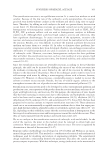
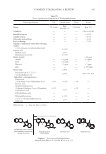
443 COSMETIC COLORATION: A REVIEW There have been many reports (5–10) on colorants used in food products from regulatory perspectives, but reports (11,12) on colorants used in cosmetic products have been some- what limited. In addition, the general properties of cosmetic colorants have not been dis- cussed before. To use cosmetic colorants properly, it is essential to completely understand their regulation, which are based on the colorants’ chemical properties. The objective of this report is to provide the general properties of cosmetic colorants and describe different countries’ regulatory requirements. Ultimately, it is hoped that this report will serve as a useful reference document for those exporting cosmetics. The research described in this report was conducted using the following steps. First, we targeted the European Union (EU), United States, which have the world’s leading markets and regulatory initiatives on cosmetics, and China, as it is the one of the fastest growing markets in the world. Japan was excluded because its regulatory system is similar to Korea’s system. Second, the col- orants were categorized as synthetic, inorganic, and natural according to their chemical characteristics. Then, we determined the colorants’ general features and compared the key features of regulatory systems between countries. Third, the cosmetic labeling regu- lations for synthetic colorants in each country were studied. OVERVIEW OF COSMETIC COLORANT REGULATORY FRAMEWORKS In the EU, cosmetic products must comply with the requirements of European Regula- tion (EC) No 1223/2009, which replaced Council Directive 76/768/EEC (13). It defines colorants as substances that are exclusively or mainly intended to color the cosmetic product, the body as a whole, or certain parts thereof, by absorption or reflection of visible light (13). It does not include colorants colored through photoluminescence, interference, or chemical reactions. Substances intended to be used as a colorant should be listed in Annex IV of European Regulation (EC) No 1223/2009. Annex IV includes substance identification, product type and body parts to which it is applied, and maximum con- centrations. Colorants assigned with an E number have been proven safe for use in food by the member states. Each E number has a separate specification for purity criteria that are defined in Commission Regulation (EU) No 231/2012, and cosmetic colorants follow the same specifications. Colorants labeling is determined according to the nomenclature listed in Annex IV of the European Regulation. In the United States, cosmetic products are regulated by the US Food and Drug Admin- istration (FDA) under the Federal Food, Drugs, and Cosmetic (FD&C) Act and its imple- menting regulations (14). The FD&C Act defines a colorant as any dye, pigment, or other substance that can impart color to a food, drug, or cosmetic or to the human body (14). Colorants approved for use are named in the US Code of Federal Regulation (CFR) Title 21, Parts 70–82. Colorants derived from petroleum and synthetically produced organic colorants are subject to certification. If a manufacturer sends a sample, FDA personnel evaluate the purity, impurities, heavy metals, and so on, and assign a certified lot num- ber. Colorants obtained from minerals, plants, or animal sources are not subject to batch certification requirements. However, they must comply with the identity, specifications, uses, and restrictions in Regulation 21 CFR 73. If the colorant subject to batch certifi- cation requirements is not certified, the cosmetics including that colorant are considered adulterated. Colorant labeling is determined according to the nomenclature listed in 21 CFR Parts 73, 74, and 82, and it is acceptable to use a colorant name with a Color Index (CI) number in parentheses.

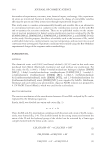
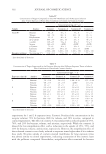
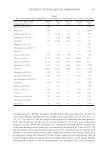
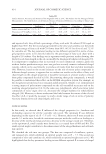
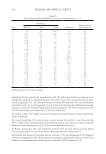
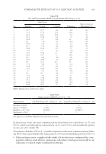
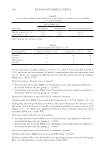
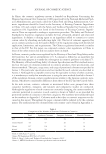
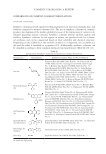
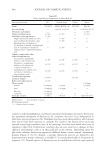
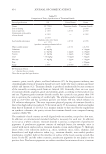
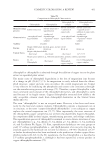
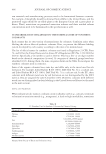
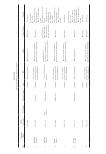
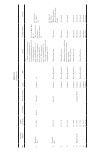
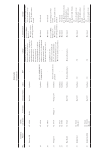
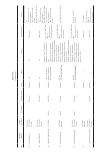
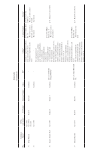
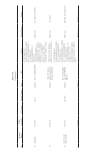
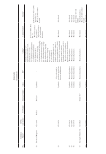
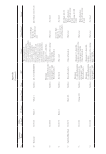
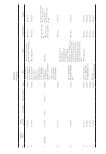
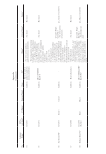
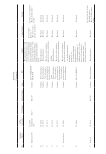
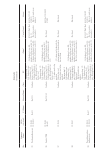
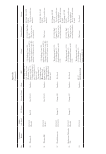
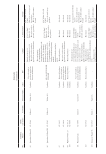
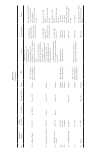
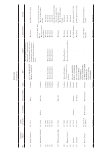
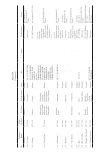
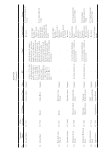
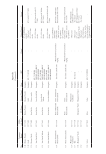
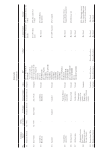
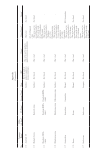
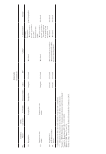
444 JOURNAL OF COSMETIC SCIENCE In China, the cosmetic regulatory system is founded on Regulations Concerning the Hygiene Supervision Over Cosmetics (1989) supervised by the National Medicinal Prod- ucts Administration, previously called the China Food and Drug Administration. Cos- metic ingredients should be listed in the Inventory of Existing Cosmetic Ingredients in China (15) and comply with the Safety and Technical Standard for Cosmetics-2015 regulation (16). Ingredients not listed in the Inventory of Existing Cosmetic Ingredi- ents in China are required to undergo a registration procedure. The Safety and Technical Standards for Cosmetics regulation includes the lists of banned, allowed, and restricted ingredients. It defines a coloring agent as an ingredient added to cosmetics to create certain colors by absorbing and reflecting light (16). The list of colorants approved for use in cosmetic products can be found in Table 6 of the regulation along with the field of application, limitations, and requirements. The Chinese regulatory framework is similar to that of the EU. For this paper, we compared cosmetic color regulations in China to those of the other entities but did not analyze them in depth. In Korea, cosmetic products are regulated by the Ministry of Food and Drug Safety under the Cosmetics Act and its amendments (17). A colorant is defined as an ingredient for which the main purpose is to make the color appear in cosmetic products or on skin (17). The Ministry of Food and Drug Safety’s Colorant Specifications and Test methods notice laid out the types of colorants permitted in cosmetic products, their specifications, and the test methods. The types, usage areas, and usage of permitted colorants are specified in Annex 1. The particular specification and test method for each colorant are described in Annex 2. Although the acceptable criteria may be equivalent to those of other countries, it is mandatory to verify that manufacturer is using the same method detailed in Annex 2 of the regulation. Korean cosmetic regulations are similar to the Japanese cosmetic regu- lations, which have considerable differences from those of the EU and the United States. In the next section, cosmetic colorants as mentioned before were grouped into three categories (synthetic, inorganic, and natural), and comparative studies are conducted. Although the regulations of each country are constantly changing, the current number of colorants permitted in cosmetics in each country is shown in Table I, as are provided the permitted number of colorants in the three categories. The numbers were tabulated based on the numbers in Appendix 1. Colorants used as hair dyes or cosmetic soaps are not dis- cussed in this report. Throughout the paper, colorants will be referred to by the common names. The nomenclature for colorants from each country can be found in Appendix 1. Table I Comparison of the Number of Permitted Colorants in Cosmetics Total Synthetic Colorants Inorganic Colorants Natural Colorants EUa 153 110 29 14 United Statesb 65 37 20 8 Chinac 157 110 31 16 Koread 102 59 30 13 a FDA 21 CFR Parts 73 and 74. b Annex IV, Regulation (EC) No 1223/2009. c Table 6, Chap.3, Safety and Technical Standards for Cosmetics 2015.’ d Annex 1, MFDS Notification ‘Colorants specification and test methods.’
Purchased for the exclusive use of nofirst nolast (unknown)
From: SCC Media Library & Resource Center (library.scconline.org)