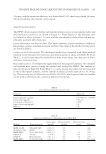
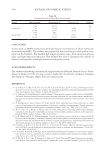
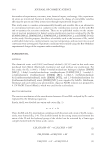
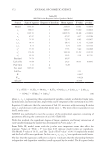
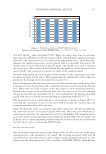
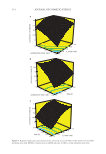
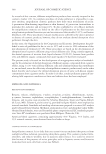
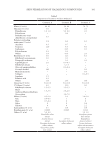
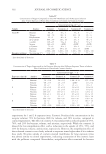
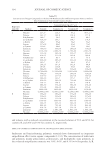
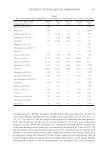
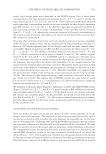
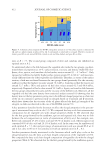
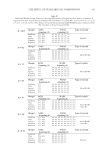
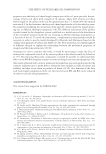
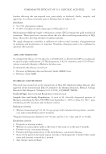
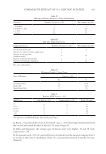
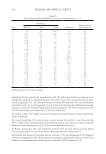
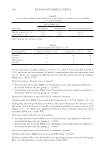
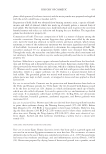
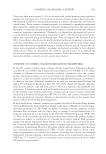
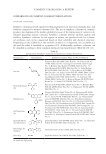
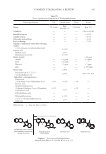
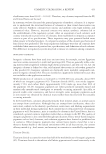
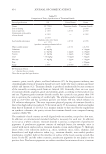
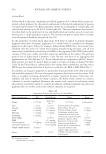
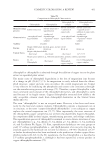
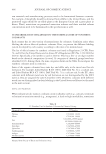
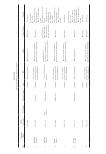
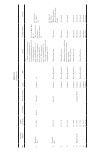
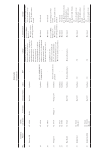
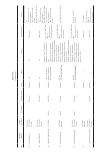
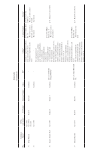
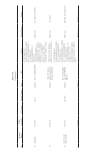
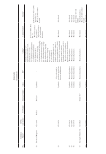
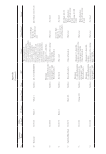
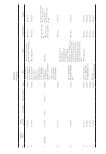
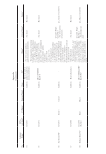
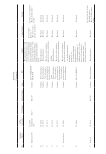
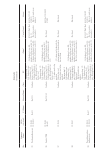
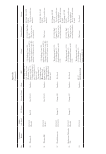
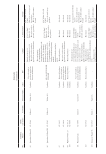
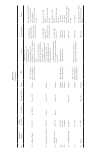
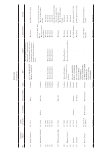
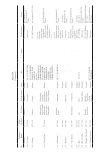
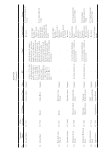
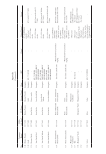
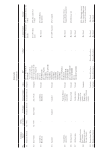
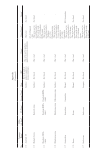
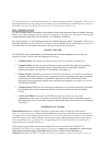
445 COSMETIC COLORATION: A REVIEW COMPARISONS OF COSMETIC COLORANT REGULATIONS SYNTHETIC COLORANTS Synthetic colorants provide superior technical properties in tinctorial strength, hue, and stability compared to natural colorants (18). The use of synthetic colorants in cosmetic products has dominated the market globally because of the limitations of current tech- nologies regarding natural colorants. Synthetic colorants present uniform quality and stability. Synthetic colorants do not appear in nature, are produced only by a chemi- cal synthesis, and can be categorized based on their solubility and chemical structure. Depending on the solubility in the medium in which it is dispersed, one is soluble as a dye and the other is insoluble as a pigment (19). Additionally, synthetic colorants can be classified according to their common chemical structural features (Table II) (20–22). Table II Classification of Synthetic Colorants (US permitted colorants) by Structure Classification Chromophore Examples [Common Name (CI No, US Name)] Azo dye Permaton Red (CI 12085, D&C Red No. 36), Ponceau SX (CI 14700, FD&C Red No. 4),Orange II (CI 15510, D&C Orange No. 4), Brilliant Lake Red R (CI 15800, D&C Red No. 31), Lithol Rubine B (CI 15850, D&C Red No. 6), Lithol Rubine BCA (CI 15850, D&C Red No. 7), Deep Maroon (CI 15880, D&C Red No. 34), Sunset Yellow FCF (CI 15985, FD&C Yellow No. 6), Allura Red AC (CI 16035, FD&C Red No. 40), Fast Acid Magenta (CI 17200, D&C Red No. 33), Tartrazine (CI 19140, FD&C Yellow No. 5), Resorcin Brown (CI 20170, D&C Brown No. 1), Sudan III (CI 26100, D&C Red No. 17) Triarylcarbonium dye Fast Green FCF (CI 42053, FD&C Green No. 3), Brilliant Blue FCF (CI 42090, FD&C Blue No. 1), Alphazurine FG (CI 42090, D&C Blue No. 4) Xanthene dye Uranine (CI 45350, D&C Yellow No. 8), Fluorescein (CI 45350, D&C Yellow No. 7), Dibromofluorescein (CI 45370, D&C Orange No. 5), Eosine YS (CI 45380, D&C Red No. 22), Tetrabromoflu- orescein (CI 45380, D&C Red No. 21), Tetrachlorotetrabromo- fluorescein (CI 45410, D&C Red No. 27), Phloxine B (CI 45410, D&C Red No. 28), Diiodofluorescein (CI 45425, D&C Orange No. 10), Erythrosine Yellowish NA (CI 45425, D&C Orange No. 11) Anthraquinone dye Pyranine Conc (CI 59040, D&C Green No. 8), Alizurine Purple SS (CI 60725, D&C Violet No. 2), Alizurol Purple (CI 60730, Ext. D&C Violet No. 2), Quinizarine Green SS (CI 61565, D&C Green No. 6), Alizarine Cyanine Green F (CI 61570, D&C Green No. 5) Quinophthalone dye (Quonoline) Quinoline Yellow SS (CI 47000, D&C Yellow No. 11), Quinoline Yellow WS (CI 47005, D&C Yellow No. 10) Thioindigo dye (Indigos) Helindone Pink CN (CI 73360, D&C Red No. 30) Nitro dye Naphthol Yellow S (CI 10316, Ext. D&C Yellow No. 7) Ar stands for Aryl group

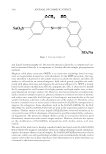
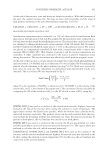
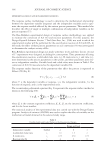
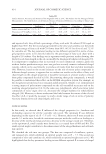
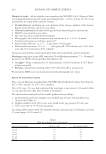
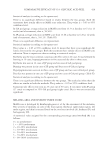
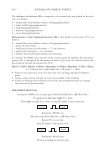
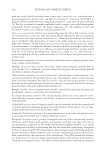
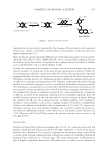
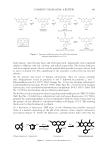
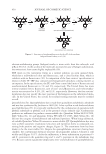
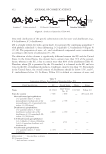
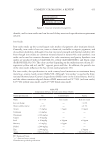
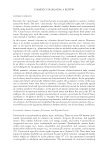
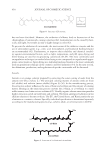
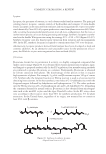
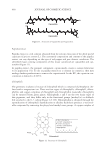
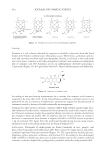
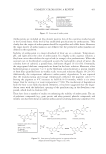
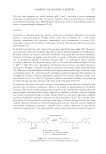
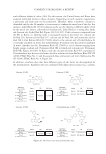
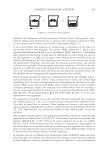
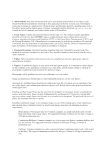
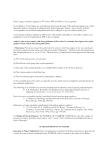
446 JOURNAL OF COSMETIC SCIENCE Synthetic colorants have established specifications for impurities that can be generated through an analysis of synthetic processes and degradation products that may occur during further processing. Each country has set purity requirements for colorants to pro- tect its consumers against unsafe products, adulteration, and fraud. During the synthesis of synthetic colorants, organic and inorganic impurities are determined by the degree of purity of the starting materials, reactants, and solvent. Therefore, it is important to use pure substances during the synthesis to reduce side reactions. Residual starting materials, intermediate products, by-products, and decomposed products are considered organic impurities. Metals included in the substances or used as a catalyst during the synthe- sis are considered inorganic impurities. Specially, impurities known to damage human health must meet the acceptance criteria or they are banned. Because certain levels of impurities may remain in a product, the manufacturing process should be fully under- stood to recognize the diverse sources of impurities. Authorities in each country have established the quality requirements in the specifica- tions for synthetic colorants to ensure consumers’ safety. Specially, the EU and the United States have exemplary criteria for purity tests. The specifications can be broadly catego- rized as either identification tests or purity tests. Identification tests are experiments to prove the presence of the desired compound. Usually, organic structures are determined quickly by spectrophotometric tests that compare the absorption value of infrared (IR) and/or ultraviolet (UV) radiation with that of reference standards. In contrast, purity tests are experiments to determine the purity of the desired compound. To satisfy the purity tests, impurities must be carefully controlled during the synthesis of synthetic colorants. In the next section, synthetic colorants are classified in terms of their chemical structure, and we discuss a representative group of useful dyes. First, azo dyes represent the largest share of the dye industry today. The advantage of this dye is that it is synthesized in only two steps, and various shades of colors can be expressed by simply changing the substit- uents. Second, xanthene dyes are important for their brilliant shades between greenish yellow and purple (23). They are also known to be the most abundant, widely distributed class of fluorescent molecules (24). Third, quinophthalone dyes were chosen because the EU and the United States have different definitions of the colorant. The distinct differ- ence between each country’s specifications also are described. Azo Dyes. Azo dyes, which are characterized by the presence of an azo bond (-N = N-), are the most important colorant and comprise over 50% of world dyestuff production (21). “Azo” group refers to two nitrogen atoms joined by a double bond. Azo dyes can have one or more azo groups in the compound. Azo dyes are simply synthesized in the sequential reaction of diazotization and azo coupling. The diazotization of an aromatic amine starts when it is treated with nitrous acid made from sodium nitrite (NaNO 2 ) and hydrogen chloride (HCl) at 0–5°C. Diazonium salt (a compound containing the N 2 + group) reacts with other nucleophiles such as phenols or amines to yield azo colorants. The greatest advantage of this scheme is that it can produce a wide range of shades by only coupling readily available aromatic amines with phenols or naphthols. Another advantage of this process is that the reaction is carried out in water, which offers economic and environ- mentally friendly benefits. When an azo dye contains a group such as carboxylic acid (-CO 2 – ) or sulfonic acid (-SO 3 – ) in a molecule, it improves the dye’s solubility. It has been
Purchased for the exclusive use of nofirst nolast (unknown)
From: SCC Media Library & Resource Center (library.scconline.org)