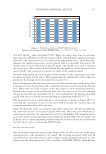
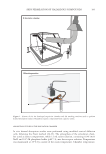
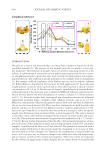
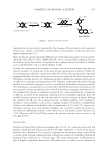
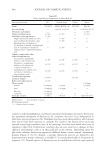
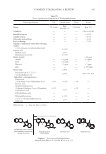
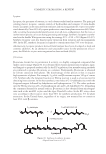
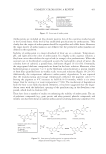
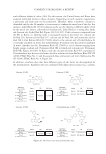
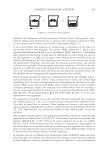
457 COSMETIC COLORATION: A REVIEW NATURAL COLORANTS Recently, the “clean beauty” trend has become increasingly popular in cosmetic markets around the world. The term “clean beauty” has no legal definition right now. Generally, it means a beauty product’s manufacturer should consider human and environmental health, using nontoxic ingredients as a baseline and natural ingredients for active results (54). Clean beauty advocates natural products containing ingredients from plants and nature. Keeping pace with this trend, consumer demand is increasing for natural colo- rants instead of synthetic colorants. In this report, natural colorants are colorants derived from natural sources. However, there is no widely accepted definition of natural colorants, and the term “natural colo- rant” is not used in four entities as it could mislead consumers. In this report, colorants from a natural origin (e.g., plants and insects) that are included on the positive lists in the regulations of each country (excluding the inorganic pigments discussed previously) are grouped as natural colorants regardless of their manufacturing process. Natural colorants can be classified based on their chemical structures (e.g., carotenoid, quinonoid, and fla- vonoid) and origin (e.g., plants and insects). Unlike synthetic colorants, natural colorants are expensive and easily affected by external factors such as pH, oxygen, heat, and light. In an effort to improve the stability of natural colorants, optimal extraction conditions and techniques for encapsulation matrices have been widely studied. While synthetic colorants are tightly regulated because of their historical risks, natural colorants are defined ambiguously and relatively loosely, as currently regulated. For natu- ral colorants, the specifications focus on a general test for residual solvents, an assay, and a test for heavy metals as these colorants are obtained mainly from plants. As the geographic origin and climate substantially influence their quality, the acceptance criteria of the assay test is relatively lower than those of synthetic colorants. There are no generally agreed upon maximum levels and types of residual solvents and heavy metals for natural colorants in cosmetic products. For instance, in the process of annatto extraction, isopropyl alcohol is allowed as an extraction solvent in the United States and Korea but not in the EU. In addition, the acceptable residual concentration of acetone varies from the United States and Korea ( 30 ppm) to the EU ( 50 ppm). The rest of this article encompasses general definitions, a comparison of regulatory requirements, and the practical limitations of natu- ral colorants. As China has not established the specifications for natural colorants, this sec- tion will focus on the regulatory differences between the EU, the United States, and Korea. Carotenoids: Annatto, Lycopene, ß-Carotene, and Paprika Extract. Carotenoids occur naturally in plants, algae, and fungi. There are over 600 known carot- enoids. Carotenoids used in cosmetics are annatto, lycopene, β-carotene, and paprika extract. They exhibit different colors: red, orange, purple, and yellow. Carotenoids are categorized into two types: xanthophylls and carotenes. Xanthophylls contain hydro- carbon and oxygen (e.g., lutein, zeaxanthin, and astaxanthin), and carotenes contains hydrocarbon without the oxygen (e.g., α-carotene, β-carotene, γ-carotene, and lycopene) (55). Carotenoids typically contain eight isoprene units (Figure 8) (56). There have been reports of stability problems in carotenoids because of their extensive conjugated double bonds, which are referred to as the polyene chain (57–61). An unsaturated carotenoid is susceptible to oxidation and isomerization. The mechanism of carotenoid oxidation

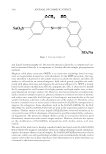
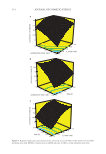
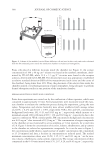
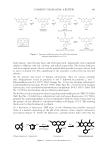
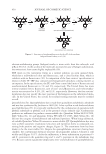
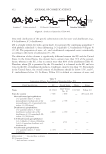
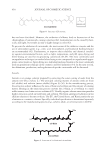
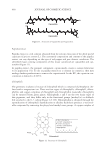
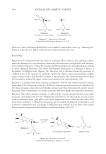
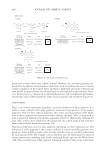
458 JOURNAL OF COSMETIC SCIENCE has not been elucidated. However, the oxidation of alkenes leads to destruction of the chromophore of carotenoids, causing color loss (62). Isomerization can be caused by heat, acids, and light, but results in only a slight change in color (62). To prevent the oxidation of carotenoids, the inactivation of the oxidative enzyme and the use of antioxidant agents (e.g., citric acid, α-tocopherol, and butylated hydroxytoluene) are recommended (62). Furthermore, to improve their solubility and chemical instabil- ity against environmental factors, such as light, temperature, and pH, spray drying and freeze-drying are used for encapsulating carotenoids (63,64). The most commonly used encapsulation technique is a method of enclosing active compounds in capsules with appro- priate carrier matrices. Spray drying in a maltodextrin-based matrix is the most commonly used encapsulation technique in the cosmetic and food industries (64). In the next section, the definitions, production, and regulations of specific carotenoids will be discussed. Annatto. Annatto is an orange colorant prepared by extracting the outer coating of seeds from the annatto tree (Bixa orellana L.). The principal coloring matters of annatto seeds are bixin (oil soluble) and norbixin (water soluble) (Figure 9) (56). In the manufacturing process, the extraction solvent influences the ratio of bixin and norbixin and the amount of coloring matter. Heating in the extraction process converts the cis-bixin, or cis-norbixin to a more stable isomer, trans-bixin or trans-norbixin (65). Usually, organic solvent extraction provides higher extraction yields on both bixin and norbixin. The bixin undergoes hydrolysis in hot alkaline solution to become norbixin. The EU, the United States, and Korea permit the use of annatto as a cosmetic colorant. Specially, individual specification is determined separately according to the manufacturing process (e.g., solvent, alkali, or oil extraction) in the EU. isoprene unit beta-Carotene Figure 8. Structure of β-carotene. HO O O OMe 9' cis-Bixin HO O O OH cis-norBixin Figure 9. Structure of cis-bixin and cis-norbixin.
Purchased for the exclusive use of nofirst nolast (unknown)
From: SCC Media Library & Resource Center (library.scconline.org)