363 SYNTHESIS OF BENZYL ACETATE The esterification reaction is an equilibrium reaction. It is carried out without or with catalyst. Because of the low rate of the carboxylic acid’s autoprotolysis, the reaction proceeds very slowly without catalyst in the medium and takes a long time to equili- brate. Therefore, by adding an acid catalyst to be used as a proton donor, the reaction occurs faster (3). Esterification reactions are generally carried out in the presence of homogeneous or heterogeneous catalysts. Various mineral acids such as H 2 SO 4 , HCl, H 3 PO 4 , HF, p-toluene sulfonic acid are used as homogeneous catalysts in different studies (4–8). Although these acids have high catalytic activity and selectivity, they have significant disadvantages. It causes corrosion of the equipment, excessive side reaction, and severe environmental pollution, and it must be neutralized at the end of the reaction. Besides, it is very difficult to remove the mineral acid from the reaction medium and reuse them as a catalyst (9). In order to eliminate these problems, het- erogeneous catalyst systems have been developed. Zeolites, ion-exchange resins such as Amberlyst 15 and heteropolyacids are used as catalysts in the esterification reactions of carboxylic acids. However, over time, heterogeneous catalysts also have problems that will affect the esterification reaction, such as a low number of active groups, high mass transfer resistance, long reaction times, low thermal stability, and catalyst residue control (10–21). Since the esterification reactions are reversible reactions, according to the Le Chatelier principle, the yield can be increased by shifting the excess of one of the reactants into the medium or removing the water formed at the end of the reaction by shifting the balance to the direction of the product. One of the techniques used to remove water is to add azeotrope with water by adding a water-trapping solvent such as hexane, benzene, toluene (22). However, in these processes, considerable energy is needed to recover the solvent or remove excess reactant. Besides, the loss of volatile organic solvents to the atmosphere increases the cost of production and causes environmental pollution (23). Esterification reaction systems need to be developed to reduce environmental pollution and production costs, easy separation of the product from the reaction medium, and reuse of cat- alysts with high selectivity and reactivity. For this purpose, the importance of ionic liquids (ILs) has been increasing in recent years due to their polarity and hydrophobic structure, and it has been used in many fields such as polymerization (24,25), alkylation (26,27), dehydration (28,29), oxidation (30,31), and acetalization (32,33). Since 2002, ILs have been proposed to be used as catalysts to improve esterification reactions (34). These substances stand out as an environmentally acceptable reaction medium due to their low vapor pres- sure, high thermal stability, adjustable acidity, recoverability, and low toxic effects (35–42). ILs, depending on their solubility, ensure that the reaction medium is homogeneous in the first steps of esterification reactions and heterogeneous toward the end of the reaction. Thus, they are easily separated from the product and reused many times (43). ILs act as catalysts in the esterification reaction of carboxylic acids and alcohols. At the end of the reaction, the water in the medium must be removed to obtain high ester conversion. Water passes into the IL phase and does not react. The ester is separated by decantation at the end of the reaction (44–47). Response surface methodology was developed in 1951 by Box and Wilson as an experi- mental design method (48). This method is a combination of statistical and mathematical techniques used for modeling and analysis of engineering problems. The experimental design establishes a relationship between the parameters that affect the system and the process outputs in processes. With this technique, savings (reduction) can be mentioned in

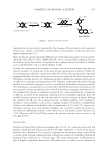
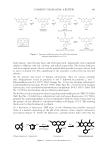
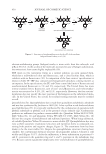
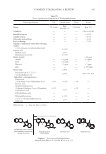
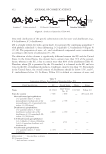
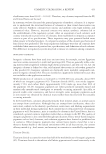
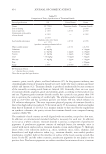
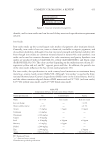
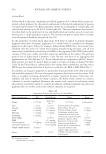
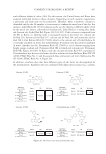
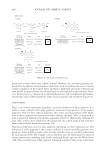
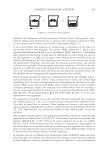
364 JOURNAL OF COSMETIC SCIENCE the number of experiments, reactants, time, financial inputs, and energy. Also, experimen- tal errors are minimized. Statistical methods measure the change of controllable variables affecting the process and their interactions through experimental design (49). This study aims to consider environmentally friendly and reusable ILs as an alternative to conventional solvents used as catalysts in the esterification reaction of AA with BA and to optimize the reaction conditions. There are no published studies on the estima- tion of reaction parameters for benzyl acetate esterification reaction catalyzed by the ILs ([EMIM] [HSO 4 ], [EMIM] [BF 4 ], [OMIM] [BF 4 ], [EMIM] [NTf 2 ], and [DEIM] [NTf 2 ]) in this study. For this purpose, the effects of variables such as the structure of ILs, initial acid/alcohol molar ratio, catalyst amount, reaction temperature, and reaction time on acid conversion were investigated. Optimum conditions were studied using the Box–Behnken experimental design of the response surface methodology. EXPERIMENTAL MATERIALS The chemicals acetic acid (100%) and benzyl alcohol (99.5%) used in this work were purchased from Merck (Darmstadt, Germany) and used without any purification. For this study, the ILs (99%), 1-Ethyl-3-methylimidazolium hydrogen sulphate [EMIM] [HSO 4 ], 1-Ethyl-3-methylimidazolium tetrafluoroborate [EMIM] [BF 4 ], 1-methyl-3- octylimidazolium tetrafluoroborate [OMIM] [BF 4 ], 1-ethyl-3- methylimidazolium bis [(trifluoromethyl)sulfonyl] imide [EMIM] [NTf 2 ], and 1,3-diethylimidazolium bis [(trifluoromethyl)sulfonyl] imide [DEIM] [NTf 2 ] were supplied by IoLiTec (Heilbronn, Germany) and used without any pretreatment. Aqueous NaOH solution was prepared by 0.1 N NaOH Titrisol (Merck), which was used for the acid analysis. REACTION MECHANISM The reaction mechanism of the esterification between AA and BA catalyzed by ILs can be explained by the following equations: Firstly, the IL was divided into anion and cation (Eq. 1). IL A B- → + + (1) Then, the BA and AA, intermediate complexes with the anion and cation of the IL, respec- tively, were formed (Eq. 2–4). The alcohol formed by the strong interaction between the anion of the IL and the hydroxyl group of the alcohol can be activated by a Lewis-type complex formed with the Lewis acidic cation. + → + - C H CH OH B C H CH B OH- 6 5 2 6 5 2 (2) → + - CH COOH CH COO H+ 3 3 (3) + → - CH COO A+ CH COO A 3 3 (4)
Purchased for the exclusive use of nofirst nolast (unknown)
From: SCC Media Library & Resource Center (library.scconline.org)