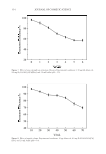
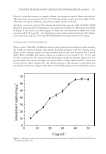
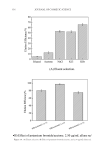
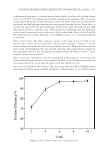
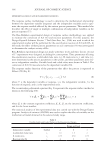
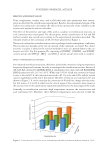
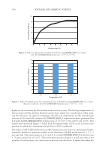
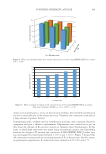
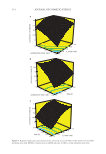
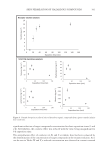
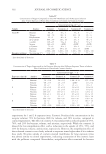
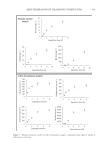
396 JOURNAL OF COSMETIC SCIENCE Permeation of tobacco-smoke pollutants was monitored by control experiment using Franz cells and Strat-M® membranes, being nicotine the major pollutant present in both, Strat-M® membrane and receptor solution, with concentrations of 2.5 µg cm−2 and 11.6 µg L−1 after a 30-min exposition, respectively. In the case of infinite exposi- tion, nicotine concentration significantly increased to 50 µg cm−2 in Strat-M® mem- branes and 1,500 µg L−1 in the receptor solution, after 8 h exposure. The effect of three antipollution cosmetics was demonstrated using the developed conditions, decreasing the permeation of BTEX, styrene, p-Cymene, limonene, and nicotine for exposures of 1 and 2 h. In the case of longer exposure (till 8 h), antipollution effects of the evaluated cosmetics were insignificant, due to a saturation of cosmetic layer over the skin simu- lant. Thus, antipollution cosmetics should be re-applied from time to time to provide a lasting effect. ACKNOWLEDGMENTS We acknowledge the financial support obtained from RNB for the project “Desarrollo de nuevos cosméticos antipolución, urbancream “under the Centro para el Desarrollo Tecno lógico Industrial (CDTI) funding project program (CPI-19-027) and that obtained from the Ministerio de Ciencia, Innovación y Universidades, Spain (PID2019-110788GB-I00). CONFLICT OF INTEREST The authors declare that they have no known competing financial interests or personal relationships that could have appeared to influence the work reported in this paper. REFERENCES (1) International Agency for Research on Cancer, World Health Organization, United Nations, Monographs on the Evaluation of the Carcinogenic Risk of Chemicals to Humans: Tobacco smoke and involuntary smoking, International Agency for Research on Cancer, Lyon (2004). ISBN 92 832 1283 5. (2) S. K. Das, Harmful health effects of cigarette smoking, Mol. Cell. Biochem., 253, 159–165 (2003). (3) E. Randerath, D. Mittal, and K. Randerath, Tissue distribution of covalent DNA damage in mice treated dermally with cigarette “tar”: Preference for lung and heart DNA, Carcinogenesis, 9, 75–80 (1988). (4) W. A. Pryor, M. Tamura, and D. F. Church, ESR spin trapping study of the radicals produced in NOx/ olefin reactions: A mechanism for the production of the apparently long-lived radicals in AS phase cig- arette smoke, J. Am. Chem. Soc., 106, 5073–5079 (1984). (5) D. Bernhard, C. Moser, A. Backovic, and G. Wick, Cigarette smoke- an aging accelerator?, Exp. Geron- tol., 42(3), 160–165 (2007). (6) D. P. Kadunce, R. Gress, R. Kanner, J. L. Lyone, and J. Zone, Cigarette smoking: risk factor for prema- ture facial wrinkling, Ann. Intern. Med., 114(10), 840–844 (1991). (7) R. A. Norman and M. Rappaport, Smoking, Obesity/Nutrition, Sun, and the Skin. in Preventive Derma- tology, R. A. Norman. Ed. (Springer, London), pp. 17–20(2010). DOI: 10.1007/978-1-84996-021-2_2 (8) D. N. Doshi, K. K. Hanneman, and K. D. Cooper, Smoking and skin aging in identical twins, Arch. Dermatol., 143(12), 1543–1546 (2007). (9) J. S. Koh, H. Kang, S. W. Choi, and H. O. Kim, Cigarette smoking associated with premature facial wrinkling: image analysis of facial skin replicas, Int. J. Dermatol., 41(1), 21–27 (2002).

397 SKIN PERMEATION OF HAZARDOUS COMPOUNDS (10) E. Aizen and A. Gilhar, Smoking effect on skin wrinkling in the aged population, Int. J. Dermatol., 40(7), 431–433 (2001). (11) Q. Zhou, U. Mrowietz, and M. Rostami-Yazdi, Oxidative stress in the pathogenesis of psoriasis. Free Radic. Biol. Med., 47(7), 891–905 (2009). (12) C. Juliano and G. A. Magrini, Cosmetic functional ingredients from botanical sources for anti-pollution skincare products, J. Cosmetics, 5, 19 (2018). (13) N. Mistry, Guidelines for formulating anti-pollution products, J. Cosmetics, 4, 57 (2017). (14) J. Soeur, J. P. Belaïdi, C. Chollet, L. Denat, A. Dimitrov, C. Jones, P. Perez, M. Zanini, O. Zobiri, S. Mezzache, D. Erdmann, G. Lereaux, J. Eilstein, and L. Marrot, Photo-pollution stress in skin: traces of pollutants (PAH and particulate matter) impair redox homeostasis in keratinocytes exposed to UVA1, J. Dermatol. Sci., 86, 162–169 (2017). (15) J. Cotovio, L. Onno, P. Justine, S. Lamure, and P. Catrouxet, Generation of oxidative stress in human cutaneous models following in vitro ozone exposure, Toxicol. In Vitro, 15, 357–362 (2001). (16) Y. Qiao, Q. Li, H.Y. Du, Q.W. Wang, Y. Huang, and W. Liu, Airborne polycyclic aromatic hydrocar- bons trigger human skin cells aging through aryl hydrocarbon receptor, Biochem. Biophys. Res. Commun., 488, 445–452 (2017). (17) Organisation for Economic Co-operation and Development, Guidelines for the Testing of Chemicals, Section 4, Test No. 428: Skin Absorption: In Vitro Method, 2004, accessed April 1, 2021, https://doi. org/10.1787/20745788. (18) Organisation for Economic Co-operation and Development, Guidelines for the Testing of Chemicals, Section 4, Test No. 427: Skin Absorption: In Vivo Method, 2004, accessed April 1, 2021, https://doi. org/10.1787/20745788. (19) H. F. Frasch and A. M. Barbero, In vitro human epidermal permeation of nicotine from electronic cig- arette refill liquids and implications for dermal exposure assessment, J. Expo. Sci. Environ. Epidemiol., 27(6), 618–624 (2017). (20) S. Zorin, F. Kuylenstierna, and H. Thulin, In vitro test of nicotine’s permeability through human skin. Risk evaluation and safety aspects, Ann. Occup. Hyg., 43, 405–413 (1999). (21) B. J Aungst, Nicotine skin penetration characteristics using aqueous and non-aqueous vehicles, anionic polymers, and silicone matrices, Drug. Dev. Ind. Pharm., 14, 1481–1494 (1998). (22) H. F. Frasch and A. M. Barbero, In vitro human skin permeation of benzene in gasoline: Effects of concentration, multiple dosing and skin preparation, J. Expo. Sci. Environ. Epidemiol., 28(2), 193–201 (2018). (23) L. Schenk, M. Rauma, M. N. Fransson, and G. Johanson, Percutaneous absorption of thirty-eight organic solvents in vitro using pig skin, PLOS ONE, 13(10), e0205458 (2018). (24) S. Pontes-López, J. Moreno, F. A. Esteve-Turrillas, and S. Armenta, Development of a simulation chamber for the evaluation of dermal absorption of volatile organic compounds, Atmos. Pollut. Res., 11, 1009–1017 (2020). (25) S. Pontes-López, J. Moreno, F. A. Esteve-Turrillas, and S. Armenta, Development of a simulation chamber for the evaluation of dermal absorption of volatile organic compounds, Atmos. Pollut. Res., 11, 1009–1017 (2020). (26) A. Haq, B. Goodyear, D. Ameen, V. Joshi, and B. Michniak-Kohn, Strat-M® synthetic membrane: Permeability comparison to human cadaver skin, Int. J. Pharm., 547, 432–437 (2018). (27) A. Rodgman and T. A. Perfetti, The Chemical Components of Tobacco and Tobacco Smoke, 2nd Ed., (CRC Press, Taylor & Francis Group, Boca Raton, FL), p. 1473, (2013). (28) A. Rodgman, C. J. Smith, and T. Perfetti, The composition of cigarette smoke: a retrospective, with emphasis on polycyclic components, Hum. Exp. Toxicol., 19(10), 573–595 (2000). (29) J. M. Daisey, K. R. R. Mahanama, and A. T. Hodgson, Toxic volatile organic compounds in simulated environmental tobacco smoke: emission factors for exposure assessment, J. Exp. Anal. Environ. Epide- miol., 8(3), 313–334, (1994). (30) S. Fischer, B. Spiegelhalder, J. Eisenbarth, and R. Preussman, Investigations on the origin of tobac- co-specific nitrosamines in mainstream smoke of cigarettes, Carcinogenesis, 11(5), 723–730, (1990). (31) G. Lofroth and Y. Zebuhr, Polychlorinated dibenzo-p-dioxins (PCDDs) and Dibenzofurans (PCDFs) in mainstream and sidestream cigarette smoke, Bull. Environ. Contam. Toxicol., 48, 789–794 (1992). (32) C. Baumung, J. Rehm, H. Franke, and D. W. Lachenmeier, Comparative risk assessment of tobacco smoke constituents using the margin of exposure approach: the neglected contribution of nicotine, Sci. Rep., 6, 35577 (2016).
Purchased for the exclusive use of nofirst nolast (unknown)
From: SCC Media Library & Resource Center (library.scconline.org)