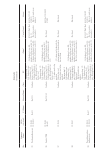
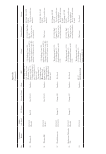
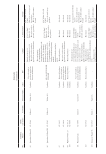
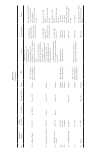
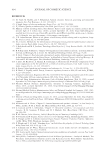
398 JOURNAL OF COSMETIC SCIENCE (33) S. Pontes-López, A. Gonzálvez, F. A. Esteve-Turrillas, and S. Armenta, Skin penetration of hazardous air pollutants in presence of antipollution cosmetics, J. Cosmet. Sci., 72, 33–45, (2021). (34) H. Hashizume, Adsorption of aromatic compounds in water by talc, Clay Sci., 14, 61–64 (2009). (35) Y. Lu, Y. Li, D. Liu, Y. Ning, S. Yang, and Z. Yang, Adsorption of benzene vapor on natural silicate clay minerals under different moisture contents and binary mineral mixtures, Colloids Surf. A Physicochem. Eng. Asp., 585, 124072 (2020). (36) S. Bielfeldt, A. Boehling, G. Springmann, K. Wilhelm, Pollution protection and the skin—testing strategies. Househ. Pers. Care Today, 11, 81–84 (2016). (37) M. Narda, G. Bauza, P. Valderas, C. Granger, Protective effects of a novel facial cream against environ- mental pollution: in vivo and in vitro assessment, Clin. Cosmet. Investig. Dermatol., 11, 571–578 (2018). (38) R. K. Bhogal, S. Gosh Dastidar, D. J. Messenger, J. Muscat, and C. Yuan, WIPO International Patent No. WO/2020/058155, Prevention of pollution damage to the skin of an individual” Inventor: Unile- ver PLC (2020).

399 Address all correspondence to Anne-Laure Fameau at anne-laure.fameau@inrae.fr. J. Cosmet. Sci., 72, 399–417 ( July/August 2021) The Effect of Vegetable Oil Composition on the Structural Properties of Oleogels Based on Behenyl Alcohol/Behenic Acid Oleogelator System MARION CALLAU, NINA JENKINS, KOUDEDII SOW-KEBE, CLEMENT LEVIVIER, and ANNE-LAURE FAMEAU, L’Oréal Research and Innovation, 93000 Saint-Ouen, France (M.C., N.J., K.S., C.L., A.F.). Accepted for publication May 27, 2021. Synopsis Recently, we described that the weight ratio (R) between behenyl alcohol (BO) and behenic acid (BA) in sunflower oil effects the textural and structural properties of the oleogel system. One R (7:3) was found as optimal since it led to an enhancement of the oleogel properties for both the hardness and the stability in terms of oil-binding capacity. However, what remains unknown is the effect of other vegetable oils. There- fore, in this study, we aim to test a range of different vegetable oils that are widely used in the cosmetic industry. All the oleogels were prepared by heating together at 85°C the oil and the fatty components under magnetic stirring. After heating, the samples were allowed to cool down quiescently to room tem- perature without any stirring. The oil properties tested included viscosity, density, and surface tension. The oleogel properties (hardness, oil loss, and gel stability) and their structure as a function of R were characterized at different length scales by coupling optical microscopy, differential scanning calorimetry (DSC), Small-Angle X-ray Scattering (SAXS), and Wide-Angle X-ray Scattering (WAXS) experiments. The same crystal structure evolution determined by SAXS and WAXS as a function of R was observed whatever the oil. In the DSC profiles and optical microscopy pictures, no oil effect was detected. However, our results highlighted two different optimal ratios, giving rise to the best oleogels in terms of stability (oil loss) and hardness as a function of the oil. For sunflower, apricot, and rapeseed oils, R = 7:3 was the optimal ratio, whereas R = 8:2 was the optimal ratio for olive and camelina oil. These observations were correlated with the fatty acid chain length composition of the oil. The results obtained have practical applications for the cosmetic industry since it establishes formulation rules for oleogel systems. Oleogels are based on BO and BA components, which are raw materials widely used for hair and skin applications. Different oils have different fatty acid chain lengths composition and as a result, the ratio between BO and BA needs to be adjusted in order to obtain the best oleogel in terms of texture and stability, which can then be used also to produce oil foams.
Purchased for the exclusive use of nofirst nolast (unknown)
From: SCC Media Library & Resource Center (library.scconline.org)