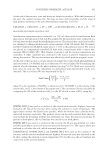
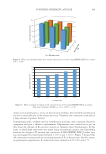
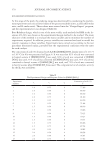
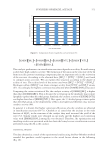
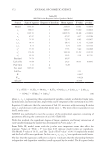
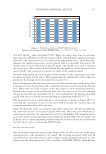
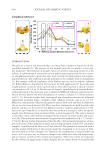
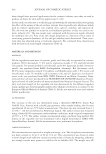
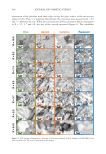
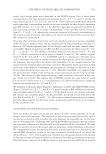
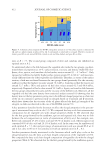
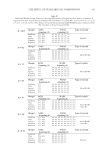
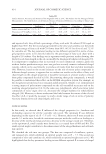
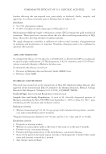
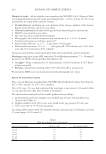
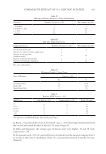
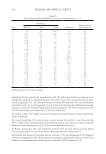
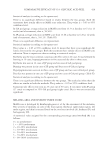
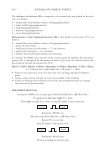
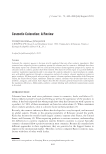
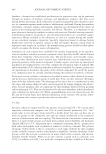
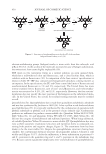
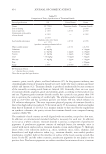
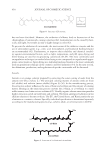
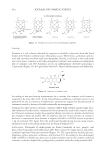
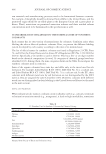
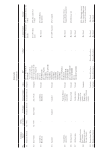
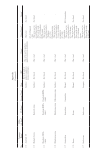
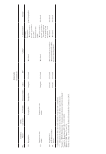
400 JOURNAL OF COSMETIC SCIENCE Graphical Abstract INTRODUCTION Oleogels are a class of soft materials that can entrap large volumes of liquid oils in self- assembled network (1). The presence of this network provides viscoelastic, or even gel- like properties. The formation of oleogels, which are systems containing mostly oil as the solvent, is a phenomena of interest for various applications ranging from food to cosmet- ics and pharmaceuticals to paints but also, more recently, for drug delivery and templat- ing structures (2). The addition of specific polymers to the oil phase leads to oleogelation (3). For example, triblock copolymers of the Kraton type are used in cosmetic industry (4). Ethylcellulose is described in the literature for food application (5). Low molecular weight gelators can also be used to gel oils and are often able to gel oils at already very low concentrations of 0.1–1 wt.%. For this type of oleogels, immobilized oils keep the fluidity of the bulk liquid at the molecular level as shown by NMR self-diffusion experiments (6). One of the best known low molecular gelators in cosmetic industry is 12-hydroxystearic acid (7–11). Recently, studies have investigated new oleogelator systems for industrial applications including waxes, ceramides, ethyl cellulose, proteins, and so on (12–15). Moreover, combinations of known oleogelators such as fatty acids and fatty alcohols have also received a renewed interest (16). These two fatty components are both low molecular gelators and they can be used for food, pharmaceutical or cosmetic applications (17). Fif- teen years ago, Gandolfo et al. were the first ones to show a synergistic effect for specific weight ratio (R) between fatty alcohol and fatty acid in oleogels (18). The authors showed a clear effect of R on the hardness of oleogels for the mixture of stearyl alcohol and stearic acid (18). Two optimums were found for oleogels based on sunflower oil: R = 7:3 and R = 3:7 (w/w). Recent studies demonstrated that the effect of R on textural properties of oleo- gel was because of the formation of small, platelet-shaped mixed crystals (19). An almost complete crystallization for these two R was observed. The parameters associated with a suitable spatial distribution of the crystals inside the oleogel led to an increase of hard- ness and stability of these oleogels (20). Therefore, the combination of stearyl alcohol and stearic acid is an easy way to obtain an oleogel more stable over time and temperature, and to improve as well as their mechanical properties. These two criteria are important for the commercial applications of these oleogels. For the system based on stearyl alcohol

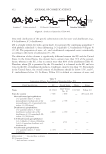
401 THE EFFECT OF VEGETABLE OIL COMPOSITION and stearic acid and by comparing the results previously obtained in different oils, it is possible to see that the synergistic effect varies as a function of the oil (21). For example, only one optimum R = 8:2 was found in rapeseed oil, two optimum R = 3:7 and 7:3 in soybean oil, and two optimum R = 7:3 and 8:2 in canola oil (18). The variation of R as a function of the vegetable oil is still not explained in the literature. Recently, Shaink developed a model based on the Hildebrand equation to better understand these sys- tems and to predict the phase diagram of stearyl alcohol and stearic acid in sunflower oil (22). However, the model does not account for the possible formation of mixed crystals that have been observed experimentally (22). Stearyl alcohol is the only fatty alcohol registered as self-affirmed and generally is recognized as a safe (GRAS) ingredient for oleogelation and therefore, can be used as an oleogelator for the food industry (23–25). For other applications, such as cosmetic or pharmaceutical products, longer alkyl chain fatty acids and fatty alcohols [e.g., behenyl alcohol (BO) and behenic acid (BA)] are more appropriate because of their better gelling properties (1,11,26). In the pioneering work about fatty alcohol/fatty acid oleogelator system, Gandolfo et al. studied the mixture of BO and BA in sunflower oil at 5 wt.% of total structurant (18). There was only a slight effect of the weight ratio for this system in comparison to the stearyl alcohol/stearic acid oleogelator system. Indeed, R seemed to reach a maximum in terms of oleogel hardness around 140 g for R = 7:3 and R = 8:2, but the oleogel hardness was already around 125 g for BO alone (R = 10:0) (18). In order to clarify the effect of R for BO and BA in sunflower oil, we investigated recently this system at higher structurant concentration (10 wt.%) (27). In this previous work, the same trend was obtained as for stearic acid and stearyl alcohol-based oleogels, with a clear enhancement of oleogel properties for specific R (27). One R (7:3) gave oleogels with both the highest hardness and stability in terms of oil-binding capacity. It was defined as optimal. R is a key parameter for oleogels based on BO and BA (27). In the literature, it is known for specific organogelators systems that a change in solvent type can alter the network formation and the resulting oleogel proper- ties such as rheological properties (28–33). The interactions between the oleogelator and the solvent depend largely on the chemical composition and on the polarity of the solvent (28–32). The precise ratio of oleogelator-oleogelator interactions to oleogelator-solvent interactions is known to play a central role in the formation of an oleogel. However, the direct effects of solvent on the oleogel properties are still not well understood. For example, in ethylcellulose oleogels, the rheological properties depend on the polymer– solvent interactions, which are influenced by the molar volume of the solvent linked to the amount of unsaturation in oil (33). In oleogel based on the self-assembly of γ-oryzanol and β-sitosterol, the key parameter is the polarity of the oil (34). Not only the polarity affects oleogelator system, the viscosity of the oil phase which affects the gelation time and the final gel strength (35). In the same way, in oleogels based on monoglycerides, oils with different polarity and viscosity led to different gelation and crystallization behav- ior (36). One key parameter also is the polar minor components present inside the oils (37,38). For example, polyphenols in extra virgin olive oil decrease the oleogel hardness for ethylcellulose oleogels (38). The fatty acid chain length in the oil was also reported to modify the rheological behavior of oleogels (39). All these previous studies highlighted the complexity to make a clear link between oleogel properties and the nature of the oil used since there seem to be several factors contributing to the changes in gel formation and final gel properties (37). In the case of the BO and BA oleogelator system, the effect of the oil on the mixture and the resulting oleogel properties is not known. However, it is very important to determine this effect in terms of oleogels texture and stability, because
Purchased for the exclusive use of nofirst nolast (unknown)
From: SCC Media Library & Resource Center (library.scconline.org)