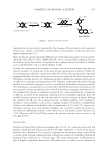
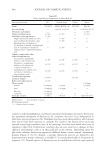
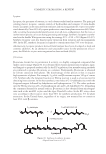
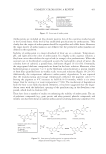
433 HISTORY OF COSMETIC plant called qurtum (Carthamus tinctorius) and the moist powder was prepared and applied with the aid of a small bone or wooden rod (5). Preparation of kohl: Kohl was obtained from burning aromatic resin, a species of frank- incense and shell of almond, which was made up of mainly galena, a mineral form of lead sulfide. The first kohl creation was a dark black shade used to protect the eyes from harmful sunrays and reduce eye infection and keeping the eyes healthier. The ingredient galena has disinfectant property (4). Composition of kohl: The exact composition of kohl is a matter of dispute among the scientific committee. During ancient Egyptian days, galena was called by the name stim. Later the word was identical to Greek stimmi and Latin stibium, which means antimony, so some of the authors say antimony was the major ingredient used instead of lead sulfide. A research was conducted to determine the composition of kohl. The researcher analyzed 30 eye preparations (kohl), which were obtained from Egypt. Through the study, the researcher concluded that galena was the chief constituent and not antimony. Some of the authors say zinc oxide was probably used due to its sunblock property (6). Eyeliner: Malachite is a green copper carbonate hydroxide mined from the Suez Isth- mus and the Sinai and is frequently used as an eye-liner. Egyptians claimed that mala- chite prevented the water-borne eye infections, which is common along the Nile River (7). Women used to paint the underline of eyes and lids with green color made from malachite, which is a copper carbonate ore (8). Galena is a natural mineral form of lead sulfide. The grounded galena was mixed with natural resin and water. Prepared galena paste was kept in shell, vessels, or wrapped in leaves and was applied as black eyeliner (9). Eye care in ancient India. Cosmetic use for protection and beautification dates backs to the Vedic and Puranic periods. In “Vedic Kala” the eye decorated with Anjana is said to be the best in every era (10). Anjana is a thick eyeliner/paste made up of herbs, which was also called collyrium. It is used to protect the eye and maintain eye health and vision. It is popularly called kajal in Hindi (11). In Rig-Veda, eye decorations with collyrium, beautiful garments, perfumed unguents, and flower garlands were mentioned [12). Eye care in ancient China. Women used the soot derived from burning willow branches to paint their eyebrows during the Warring States period (475–221 BCE). Before Qin Dynasty (221–206 BCE) it was popular to have long eyebrows. However, dur- ing the Han dynasty (206 BCE–CE 220) women used to shave their eyebrows and drew new ones. During the Tang dynasty (CE 618–907), there were dozens of eye- brow shapes. Arched and thin eyebrows resembling a willow leaf or a moon were trendy (13). HAIR CARE AND PLANTS USED FOR HAIR CARE Hair care in ancient Egypt. Henna (Lawsonia inermis) has been used as a growth agent and was used in an ancient Egyptian treatment to treat hair loss. The occurrence of contact dermatitis due to the use of henna was extremely rare (Garcia, et al., 1997) because henna leaf extract has moderate antiallergic and anti-inflammatory activity (Dweck, 1997b) (14). Henna was prepared by drying leaves of henna and ground into a powder, mixed

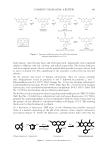
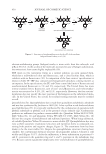
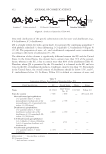
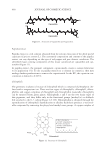
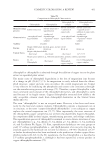
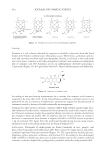
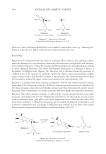
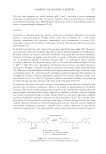
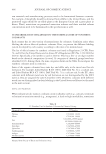
434 JOURNAL OF COSMETIC SCIENCE with one of the liquids including water, lemon juice, strong tea, etc., and made into a paste and applied to the hair, nails, and palm for coloring (5). As early as 10,000 BCE in Egypt, both men and women were using dyes and paints to color the hair, skin, and body (1). The dye is a natural or synthetic substance used to impart color, with Chromosphere (responsible for the coloring) as the major component (15). The mixture of resin and beeswax was used to treat baldness and greying hairs (16). Hair care in ancient India. Indians were using henna since the 4th or 5th centuries, in the art of mehandi or as a hair dye, especially before Hindu wedding (3). The art of applying henna to feet and hand is known as mehandi (17). Mehandi is derived from the Sanskrit word “mendhikā” while henna owes its origin to the Arabic name for “Lawsonia inermis” Hina (18). Henna is obtained from the Lawsonia inermis plant family Lythraceae, which contains Lawsone, a dye molecule. Henna is related to the hair proteins that tend to stain the color of the hair (19,20). Leaves of henna were dried and ground into a powder, mixed with one of the liquids, including water, lemon juice, strong tea, etc., and made into a paste and applied to the hair, nails, and palm, etc. (18). Some of the plants used as hair cosmetics are: Reetha powder (Soapnut): Used for natural hair and body cleanser. Soapnut powder is also used to make a body exfoliant. Shikakai (Acacia concinna): In the olden days, women were using the pod-like fruit to clean the hair. It is considered a superior cleanser for long hair and preventing dandruff and helps to promote hair growth. Amla (Emblica officinalis): It is rich in Vitamin C, with the help of seeds and pulp, oil is extracted and used for the treatment of hair and scalp problems. Amla contains essential fatty acids that strengthen hair follicles (19,21). Calcium and tannins present in amla prevent hair from photodamage. Tannins are phenolic compounds that bind to keratin proteins of hair and prevent them from breaking (22). Brahmi (Centella asiatica) contains sterols, flavonol, essential oils, glycoside, saponins, and triterpenoid, which is used for hair care formulations. Eucalyptus (Eucalyptus globulus): Oil contains mainly cineole and a lesser amount of vol- atile aldehyde, terpenes, phenol, and alcohol. It shows very good results in scruff and chafes dandruff. Gurhal (Hibiscus rosa sinensis): Hibiscus petal is used to stimulate thicker hair growth and to prevent hair loss, premature greying, and scalp disorders. Petals extract acts as a natu- ral hair conditioner and can be used in hair washes. Jatamansi (Nardostachys jatamansi): Jatamansi rhizomes are used in hair tonic preparations to encourage hair growth and to enhance blackness in hair. Fenugreek (Trigonella foenum graecum): Fenugreek seeds are used to prepare hair care for- mulations, which help in hair growth, cure dandruff, and keep hair silky (23). One of the experiments conducted by the authors Gholamreza Dehghan Noudeh, et al. found that fenugreek seed helps in preventing hair loss and retain hair conditioning. Fenugreek seeds were extracted with 50% ethanol, freeze-dried, and processed in the fridge using the maceration process. Foam formation, pH, viscosity, conditioning, and wettability have been evaluated after the preparation of the formulation. The pH of formulated shampoo was found to be 6.6 this was shown to have high stability and foam due to the presence of saponin in fenugreek extract. The pH of formulated shampoo in the normal range was
Purchased for the exclusive use of nofirst nolast (unknown)
From: SCC Media Library & Resource Center (library.scconline.org)