19 Bottle Your Sustainability Goals – Minimize
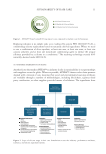
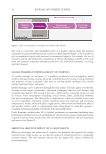
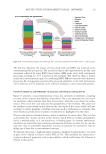
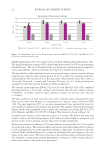
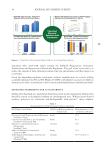
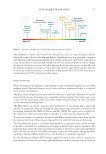
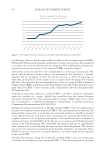
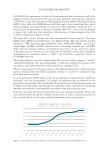
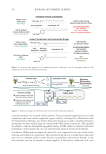
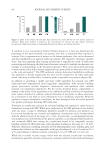
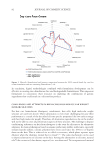
The first bar represents the impact of esters made with non-RSPO raw materials and a
conventional production process. The second bar depicts the improvement in the life cycle
assessment achieved by using RSPO mass balance (MB) grade esters with conventional
processing, resulting in a 47% reduction in CO
2
footprint. The third bar shows a further
reduction in environmental impact by combining RSPO MB raw materials with enzymatic
processing. By incorporating enzymatically processed emollients in the final formulation,
a 67% reduction in CO
2
footprint can be achieved, leading to a more sustainable product.
PHYSIOCHEMICAL PROPERTIES OF LIQUID LIPOPHILIC EMOLLIENTS
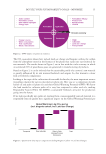
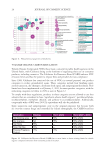
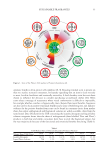
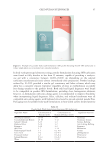
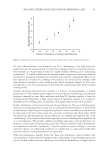
Figure 11 provides a visual representation of four key attributes of emollients, including
viscosity, surface tension, spreadability, and polarity. The x-axis represents the viscosity of
the emollients, which indicates their fatty characteristic, while the y-axis shows the surface
tension. The size of the circle indicates the spreadability of the emollient. The polarity of
the emollient is also shown on this chart by the color depth of the circles, which indicates
its ability to solvate lipophilic crystalline structures such as avobenzone or ceramides. The
esters which are produced via enzymatic esterification are highlighted on this chart.
Of particular interest is Isoamyl Laurate, which is emollient #2 on the chart. This ester has
an extremely low viscosity and low surface tension, which lends to excellent spreadability,
and it is medium polar, so it can function as a solvating agent. In cosmetic applications,
emollients are utilized for their solvating and sensorial attributes on skin, but we can also
view this class of sustainable ingredients as practical solutions for chemistries that are
falling out of favor due to environmental concerns.
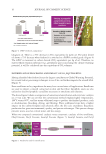
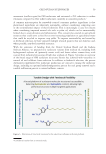
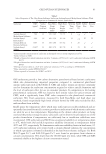
To illustrate this point, a high-spreading enzymatic emollient, Isoamyl Laurate, was used
in place of 6% ethanol to achieve a lower VOC of 55%. This emollient was chosen due to
its physicochemical properties, such as spreadability, which could mimic the behavior of
ethanol in this matrix.
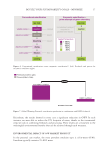
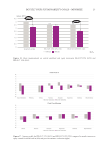
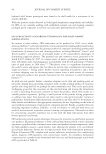
Figure 10. Environmental impact of a market product: Life cycle assessment of an O/W cream – cradle-to-gate.
The first bar represents the impact of esters made with non-RSPO raw materials and a
conventional production process. The second bar depicts the improvement in the life cycle
assessment achieved by using RSPO mass balance (MB) grade esters with conventional
processing, resulting in a 47% reduction in CO
2
footprint. The third bar shows a further
reduction in environmental impact by combining RSPO MB raw materials with enzymatic
processing. By incorporating enzymatically processed emollients in the final formulation,
a 67% reduction in CO
2
footprint can be achieved, leading to a more sustainable product.
PHYSIOCHEMICAL PROPERTIES OF LIQUID LIPOPHILIC EMOLLIENTS
Figure 11 provides a visual representation of four key attributes of emollients, including
viscosity, surface tension, spreadability, and polarity. The x-axis represents the viscosity of
the emollients, which indicates their fatty characteristic, while the y-axis shows the surface
tension. The size of the circle indicates the spreadability of the emollient. The polarity of
the emollient is also shown on this chart by the color depth of the circles, which indicates
its ability to solvate lipophilic crystalline structures such as avobenzone or ceramides. The
esters which are produced via enzymatic esterification are highlighted on this chart.
Of particular interest is Isoamyl Laurate, which is emollient #2 on the chart. This ester has
an extremely low viscosity and low surface tension, which lends to excellent spreadability,
and it is medium polar, so it can function as a solvating agent. In cosmetic applications,
emollients are utilized for their solvating and sensorial attributes on skin, but we can also
view this class of sustainable ingredients as practical solutions for chemistries that are
falling out of favor due to environmental concerns.
To illustrate this point, a high-spreading enzymatic emollient, Isoamyl Laurate, was used
in place of 6% ethanol to achieve a lower VOC of 55%. This emollient was chosen due to
its physicochemical properties, such as spreadability, which could mimic the behavior of
ethanol in this matrix.
Figure 10. Environmental impact of a market product: Life cycle assessment of an O/W cream – cradle-to-gate.