64 JOURNAL OF COSMETIC SCIENCE
A common in vitro assessment of dermal irritation known as a Zein test determines the
percentage of the water-insoluble corn protein Zein that is denatured when exposed to
irritants. Zein is representative of protein in the human epidermis, that can be denatured
and thus solubilized in an aqueous surfactant solution. The experience of having “squeaky
clean” skin after applying skin cleaning productions is typically the result of surfactants
penetrating and damaging the skin barrier (stratum corneum) by multiple mechanisms one
example is causing damage to the skin protein keratin.26 This can be particularly irritating
to more sensitive skin with a thinner epidermal layer, particularly in some areas of face such
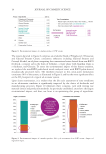
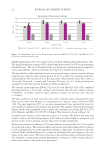
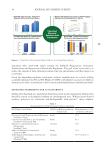
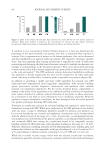
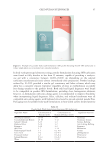
as the scalp and eyelids.27 The OFS surfactant sodium dodecanoyl methylfuran sulfonate
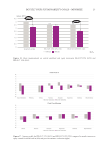
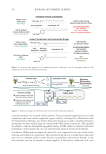
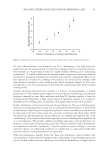
was observed to dissolve significantly less Zein (1%) compared to all other surfactants
tested, indicating a milder effect consumers prefer in personal care products (Figure 4B).
In addition to providing a milder and more stable ingredient for personal care, OFS
surfactants have demonstrated broad ingredient compatibility, with viscosity building
agents, preservative systems, fragrances, moisturizers, and numerous other common
personal care formulation ingredients. For the results described herein, compatibility is
defined as the ability of the ingredients to be combined and fully dissolved all ingredients
must remain dissolved in solution, without formation of precipitate or phase separation,
for a minimum of one week at room temperature to be considered compatible. With the
guidance of expert formulation consultants, we have developed fully functional personal
care product prototypes featuring OFS surfactants.
Versatility in cosurfactant selection for viscosity building has remained a major focus in
formulation testing with OFS. While most surfactants in the OFS platform do not thicken
with salt alone, a range of rheological properties suitable for personal care products can
be accessed through the use of amide and amphoteric cosurfactants, and is further refined
with the addition of salt in the range of 1–3 wt%. In particular, cocoamidopropyl betaine,
lauroamphoacetate, dimethyl lauramide, glyceryl caprylate, cocamidopropyl hydroxysultaine,
and cocoamide MIPA were among the cosurfactants found to be compatible viscosity
building systems for OFS surfactants, with ingredient loadings in the range of 3–10 wt%.
Polymeric thickeners, including naturally derived hydroxypropyl starch, xanthan gum, and
hydroxyethyl cellulose are also compatible, with typical loadings of 3–6 wt% starch or 0.1–2
wt% gum/cellulose to thicken solutions containing 5–10 wt% OFS and 1–3 wt% salt.
While the accessible viscosity ranges varied with the selected cosurfactant or polymer,
formulations generally achieved consistencies consumers prefer for body wash and shampoo
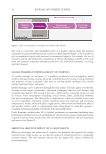
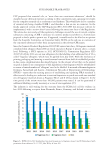
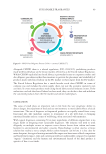
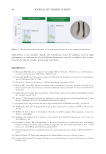
Figure 4. Hard water stability (A) and Zein skin irritation test results (B) for 0.5 wt% anionic surfactant
solutions. Hard water stability is defined as the concentration of calcium salt that induces surfactant
precipitation. Higher percentages of remaining Zein protein indicate less dermal irritation.
A common in vitro assessment of dermal irritation known as a Zein test determines the
percentage of the water-insoluble corn protein Zein that is denatured when exposed to
irritants. Zein is representative of protein in the human epidermis, that can be denatured
and thus solubilized in an aqueous surfactant solution. The experience of having “squeaky
clean” skin after applying skin cleaning productions is typically the result of surfactants
penetrating and damaging the skin barrier (stratum corneum) by multiple mechanisms one
example is causing damage to the skin protein keratin.26 This can be particularly irritating
to more sensitive skin with a thinner epidermal layer, particularly in some areas of face such
as the scalp and eyelids.27 The OFS surfactant sodium dodecanoyl methylfuran sulfonate
was observed to dissolve significantly less Zein (1%) compared to all other surfactants
tested, indicating a milder effect consumers prefer in personal care products (Figure 4B).
In addition to providing a milder and more stable ingredient for personal care, OFS
surfactants have demonstrated broad ingredient compatibility, with viscosity building
agents, preservative systems, fragrances, moisturizers, and numerous other common
personal care formulation ingredients. For the results described herein, compatibility is
defined as the ability of the ingredients to be combined and fully dissolved all ingredients
must remain dissolved in solution, without formation of precipitate or phase separation,
for a minimum of one week at room temperature to be considered compatible. With the
guidance of expert formulation consultants, we have developed fully functional personal
care product prototypes featuring OFS surfactants.
Versatility in cosurfactant selection for viscosity building has remained a major focus in
formulation testing with OFS. While most surfactants in the OFS platform do not thicken
with salt alone, a range of rheological properties suitable for personal care products can
be accessed through the use of amide and amphoteric cosurfactants, and is further refined
with the addition of salt in the range of 1–3 wt%. In particular, cocoamidopropyl betaine,
lauroamphoacetate, dimethyl lauramide, glyceryl caprylate, cocamidopropyl hydroxysultaine,
and cocoamide MIPA were among the cosurfactants found to be compatible viscosity
building systems for OFS surfactants, with ingredient loadings in the range of 3–10 wt%.
Polymeric thickeners, including naturally derived hydroxypropyl starch, xanthan gum, and
hydroxyethyl cellulose are also compatible, with typical loadings of 3–6 wt% starch or 0.1–2
wt% gum/cellulose to thicken solutions containing 5–10 wt% OFS and 1–3 wt% salt.
While the accessible viscosity ranges varied with the selected cosurfactant or polymer,
formulations generally achieved consistencies consumers prefer for body wash and shampoo
Figure 4. Hard water stability (A) and Zein skin irritation test results (B) for 0.5 wt% anionic surfactant
solutions. Hard water stability is defined as the concentration of calcium salt that induces surfactant
precipitation. Higher percentages of remaining Zein protein indicate less dermal irritation.