77 Silicone Alternative Solutions in Personal Care
amodimethicone, which are dimethicones containing a cationic sidechain. In addition to
those and cyclic silicones, silicone elastomers are used. However, they constitute a very
small share of the personal care market products and therefore will not be discussed in this
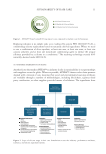
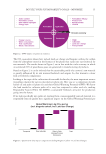
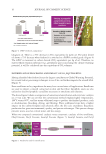
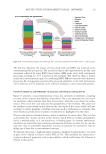
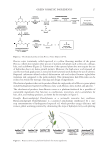
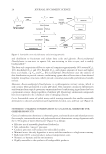
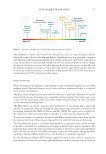
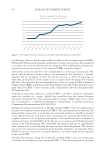
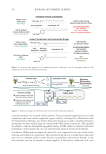
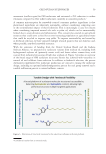
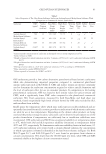
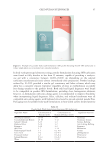
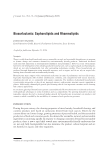
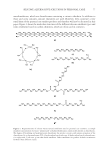
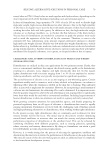
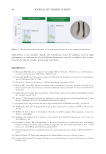
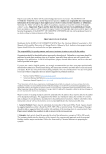
paper. Figure 1 shows the molecular structures of the different silicone emollient types and
some emollients based on carbon chemistry, which are often used in cosmetics.
Figure 1. Representations of silicone versus natural emollients used in personal care cosmetics. a) simple
snapshot representation of a linear “polymerized” polydimethylsiloxanes commercially known as dimethicone.
The degree of branching and polymerization determines the product viscosity and sensory properties of the
dimethicone, b) cyclopentasiloxane (D5), c) hydrocarbon-based tridecane, d) hydrocarbon based isohexadecane,
e) a triglyceride, f) an ester, g) an ether-based emollient. Other emollients are guerbet alcohols or mixtures
between these different classes.
78 JOURNAL OF COSMETIC SCIENCE
In the next sections, we show approaches to explore natural-based alternatives to the
following silicones:
Volatile (cyclic) silicones.
Low molecular weight silicones.

High molecular weight silicones.
CHALLENGES AND ATTEMPTS IN REPLACING VOLATILE (CYCLIC) SILICONES
The special property of cyclic silicones is their volatility, which makes these silicones feel
extremely light on skin. They are used extensively in leave-on applications ranging from
face care, sun care, color cosmetics, hair care, and particularly often in antiperspirants
and deodorants. Volatile silicones provide a light skin feel that remains after their quick
evaporation. Moreover, they are excellent solvents for all other silicones used in cosmetics.
When replacing volatile silicones in cosmetic formulations, several approaches are
undertaken. Currently, the most common approach is to replace them with hydrocarbons.
Their polarities and viscosities are similar to silicones, and they are available in a large
variety of characteristics. In case high volatility is important, low boiling hydrocarbons like
isododecane or undecane are the preferred choice. The usability of these hydrocarbons as
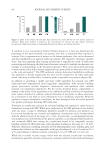
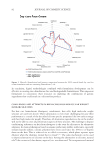
silicone alternatives was proven for a facial foundation: A tinted day care fluid was formulated
with an ultra-fast-spreading emollient mixture (undecane and tridecane). It was shown
that this formulation could match the properties of the silicone containing formulation
for mechanical smear resistance, rain resistance, gloss kinetics, blemish coverage, and color
homogeneity8. In case more substantivity is required, many other options are available, like
isohexadecane, C15–C19 alkanes, (hemi-)squalane9, or petrolatum liquidum10. These are
only some of the most frequently used examples among an abundance of options available.
Hydrocarbons can be used from fossil and bio-based sources as well11.
Although hydrocarbons offer a large flexibility to the formulator, they still miss some
of the desired sensorial aspects of silicones. Therefore, hydrocarbons can be mixed with
a sensorial agent. In these mixtures, often volatile hydrocarbons are used to mimic the
volatility of silicones, and the sensorial aspect is covered by a non-volatile ester such as
diheptylsuccinate. By adjusting the mixing ratio, the viscosity can be set to similar ranges
as known from dimethicones. Volatile hydrocarbons are also used by silicone polymer
producers when they must replace cyclomethicone solvents for these polymers. In all these

approaches, ingredient suppliers try to match the performance of silicones as closely as
possible to reduce the efforts needed by the formulator.
Additionally, another approach worth mentioning is the replacement of unwanted cyclic
silicones with linear dimethicones. On the one hand, this approach is affecting the full
formulation only to a minor extent, making it easier for formulators, but on the other
hand, it does not eliminate silicones completely and should only be seen as an intermediate
solution.
Beyond this ingredient-driven replacement, one could also revise the formulation from
the beginning to replace silicones. This attempt can be found in formulation areas where
silicones played a major role in the past, like anti-perspirants or deodorants formulations.
In these cases, the simple replacement by another ingredient influences so many aspects
of the formulation that a total revision is needed. For example, ester emollients like
isopropylpalmitate or propylheptylcaprylate, or ether types of molecules like PPG-15
Previous Page Next Page